
Gardeners
Orpington
Divide a varied garden into achievable stages rather than clearing more ground than you can maintain. Consider fruit plants, lawn use, distant working areas and the sequence that makes a recovery useful within an agreed budget.
- Map the jobs across separate garden areas
- Treat fruit plants as a specific pruning task
- Recover only the ground you can sustain
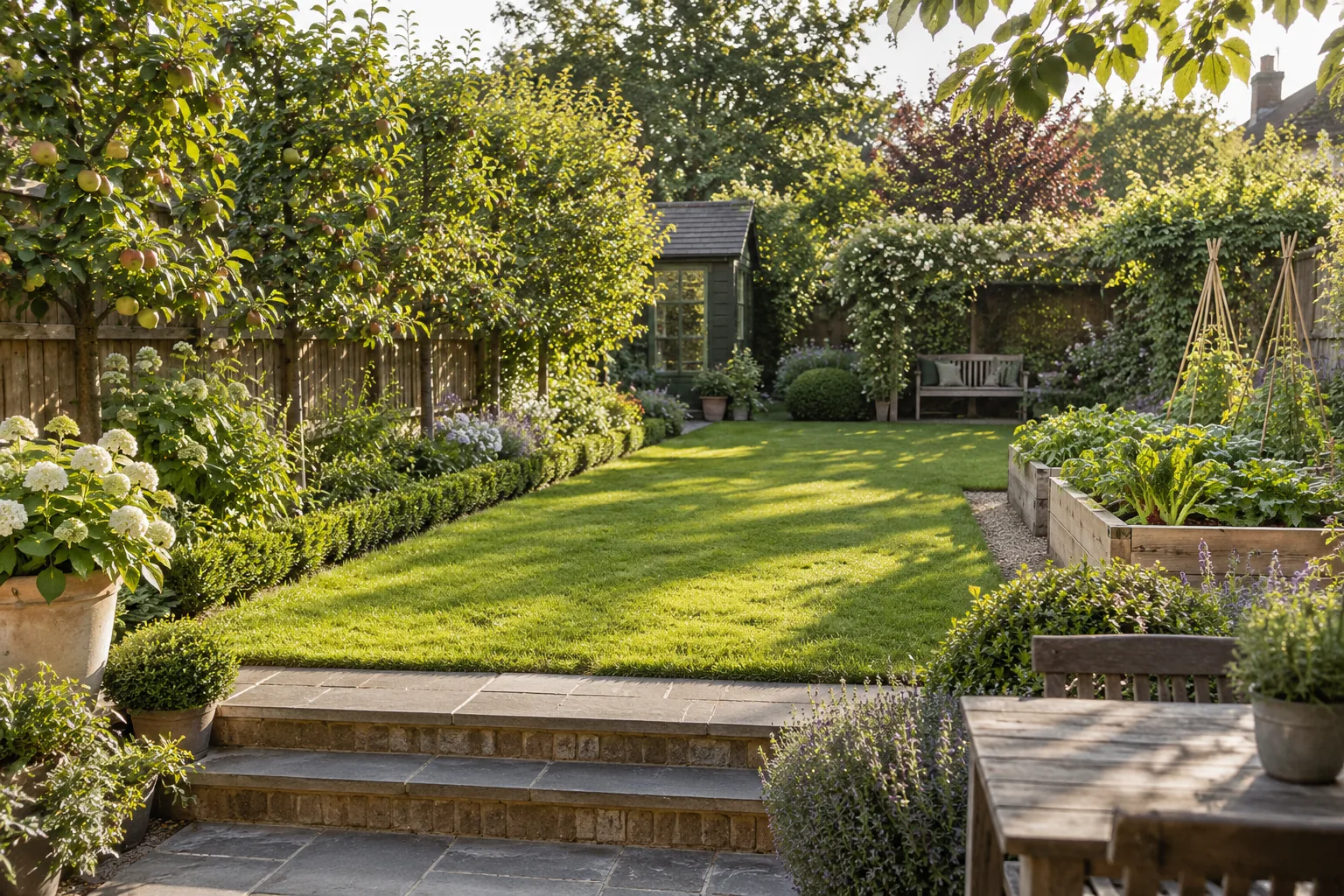
Draw up a working map of the garden
Dividing a garden into manageable jobs is often more useful than planning a single dramatic overhaul. The front may need a reliable mowing routine while the rear needs a boundary opened up, fruit bushes assessed and a neglected bed brought back into use. For an Orpington booking, Go Gardeners can discuss those jobs separately and put them in a sensible order. Tell us which spaces you use now, which you want to recover and how much work you intend to keep doing yourself.
A rough sketch can make a long task list clearer. Mark the lawn, beds, shed, composting area and routes that must remain passable. Add the places that are difficult to reach or have been left for several seasons. Photographs should show their relationship as well as close details. This prevents an estimate based only on the attractive part nearest the house.
Decide the useful endpoint for each section. Reopening a path, cutting back encroaching grass and clearing a planting strip are distinct outcomes. Routine maintenance can then concentrate on the parts already in use while a separate recovery session tackles the neglected area. There is no benefit in clearing more ground than you can reasonably care for afterwards.
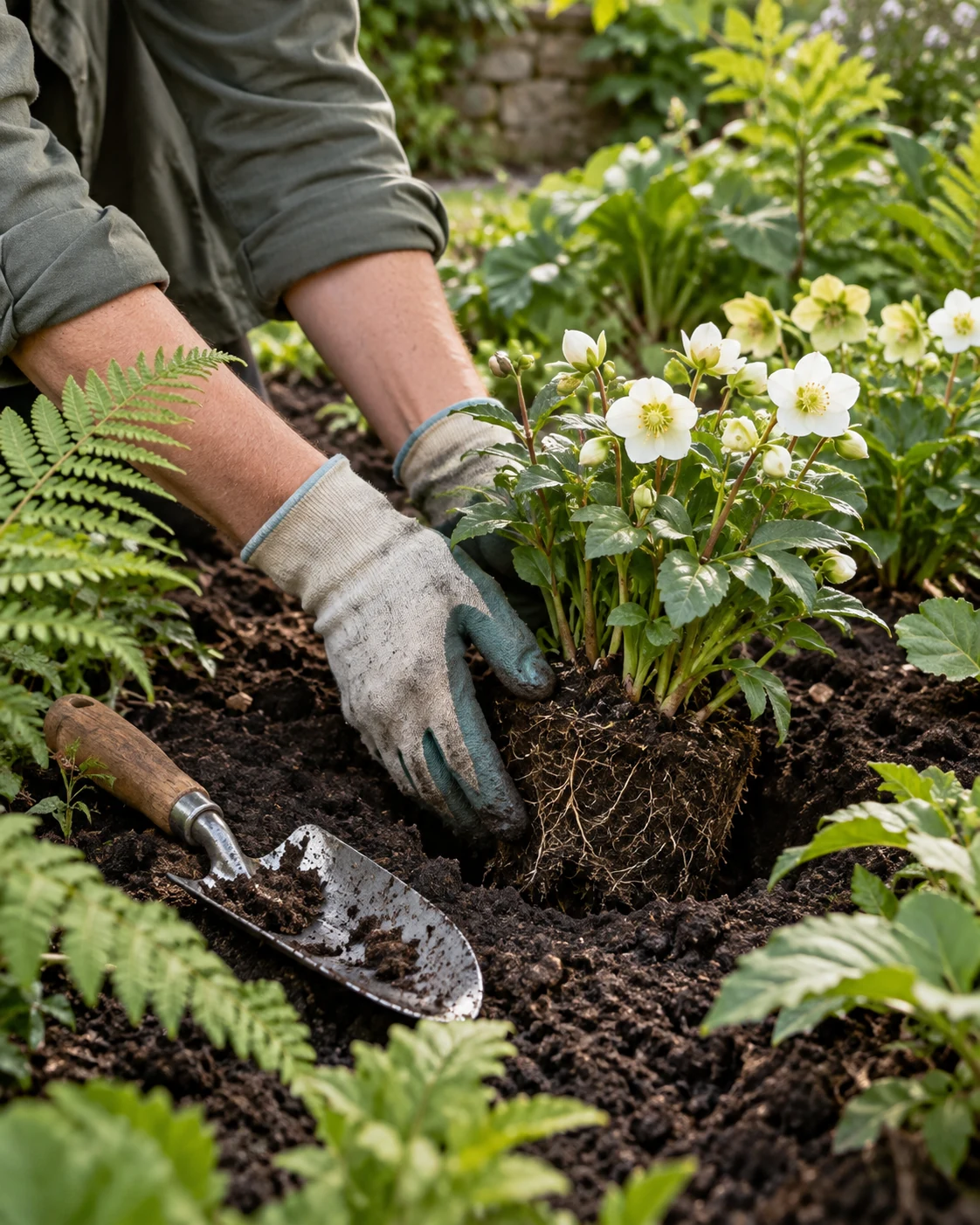
Prioritising a first recovery session
If dense growth hides the surface, garden clean-up may be the appropriate starting service. Identify worthwhile shrubs, boundaries and anything stored beneath vegetation. Tell the booking team about broken glass, wire, unstable sheds or other known hazards. Cutting vegetation does not include structural repairs or disposal of every material revealed underneath it.
Start with circulation. A clear route allows later work to proceed and makes it easier to assess the rest. Next consider growth that is crowding valued plants or spreading into maintained sections. Leave optional cosmetic work until essential access is secure. This is a practical sequence for a restricted budget; it is not a promise that every overgrown garden can be completed in one visit.
Keeping lawn work proportionate
Measure or estimate the grassed area and show its longest growth. Long grass can need a staged reduction, and wet or stressed turf may be unsuitable for ordinary mowing. A request to cut everything extremely short can expose uneven ground and weaken the sward. Explain how the lawn is used, including children’s play, dogs, furniture or a route to the shed.
A lawn-care enquiry should distinguish mowing from improvement work. Bare patches, moss and persistent wet areas need observation of light, compaction and drainage. Avoid booking seed or feed as a guaranteed fix without that assessment. If part of the lawn is deliberately left longer for wildlife or contains naturalised bulbs, mark its boundary before the gardeners begin.
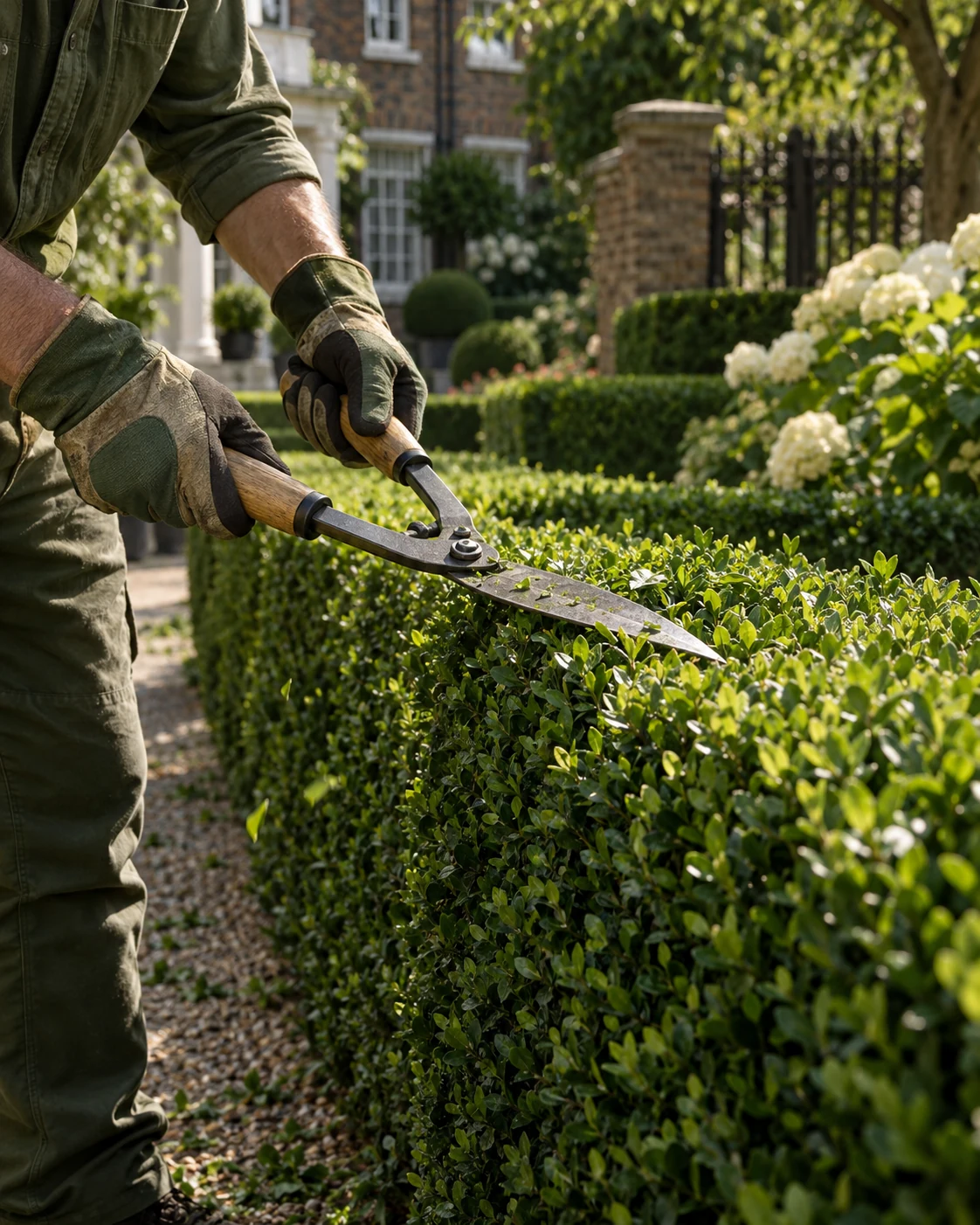
Fruit, flowering shrubs and mixed borders
Edible plants add another reason to avoid indiscriminate pruning. Fruit production may depend on retaining the right age of wood, and different fruiting plants need different treatment. Name the plant if you know it, photograph its framework and describe when it last cropped. An unidentified fruit bush should not be treated as an ordinary hedge.
For flowering shrubs, note when flowers appeared and which stems look congested. Removing old material selectively may be more appropriate than shortening every branch. Borders also benefit from a clear decision about self-seeders: some are welcome, others make later maintenance harder. Mark what stays and agree whether the immediate aim is weeding, rejuvenation or preparation for replacement planting.
Local checks for trees in Orpington
For an address in Bromley borough, the council’s tree protection service provides the relevant starting point for checking protected trees. The position depends on the actual tree and location. A garden tree is not automatically exempt because it is privately owned or because similar work was carried out elsewhere nearby.
Bromley also explains trees in conservation areas, including the need to establish notice requirements before proposed work. Share known orders or restrictions when enquiring. Significant pruning, height work or tree removal should be scoped through tree surgery. Establishing permission and the appropriate operation comes before choosing a convenient date, and garden maintenance is not a substitute for that process.
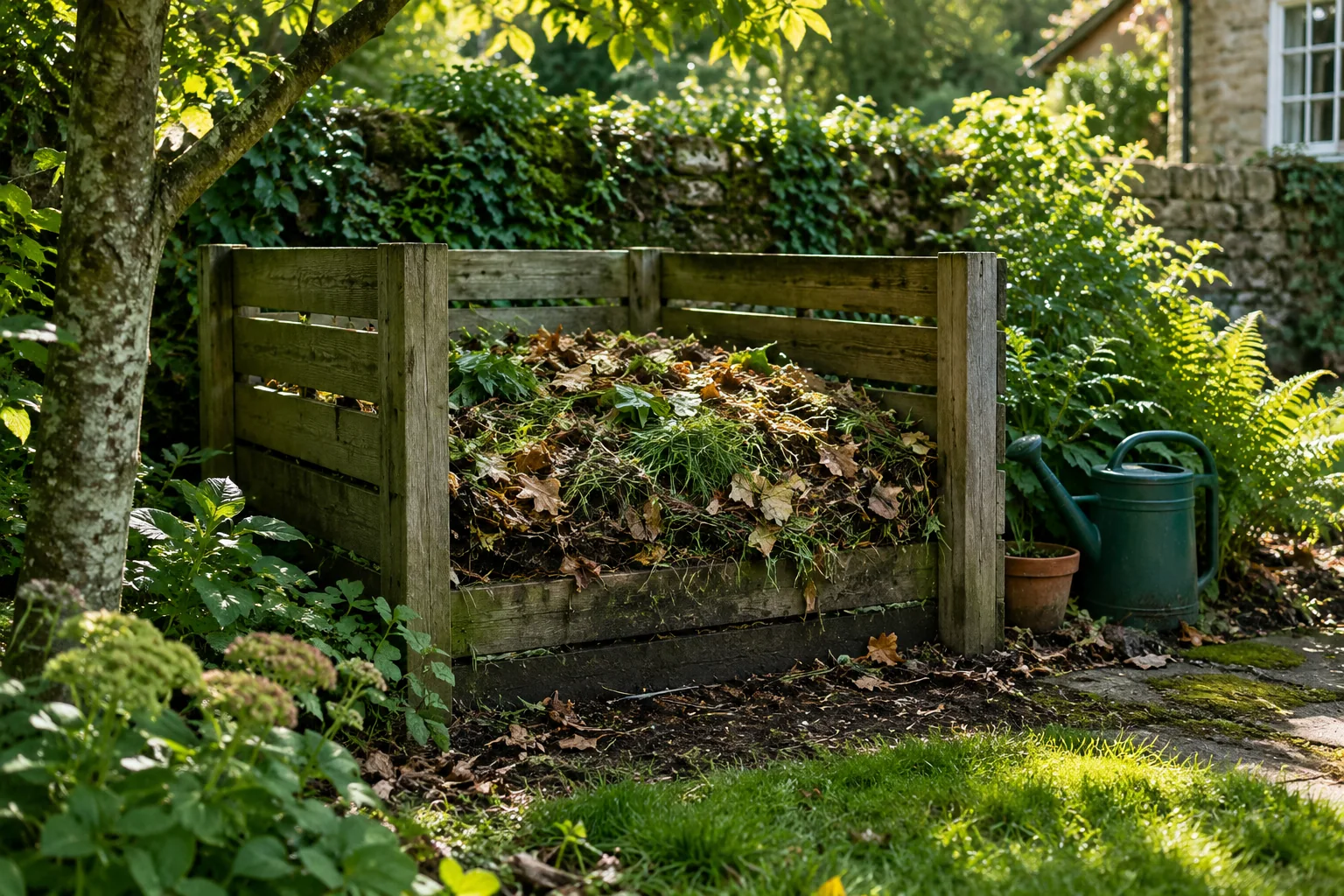
Plan the carrying route, not just the cutting
The far end of a garden may be easy to photograph and slow to reach with equipment or filled bags. Show the entire route from the vehicle, including steps, narrow gates and changes in level. Mention any section that becomes slippery or muddy. The work estimate needs to account for handling as well as the amount of vegetation.
Check that gate keys are available and that a side passage is clear. If parking is restricted, explain the practical arrangement in advance. Keep the route free of toys and movable furniture where safe, and point out cables or irrigation. Agree a safe place for bags that will not block doors, shared access or the section you want to use again.
The yearly rhythm of a manageable garden
Use spring visits to catch weeds early and expose the outlines of beds without disturbing emerging bulbs. Summer work often shifts towards mowing, selective trimming and checking young planting. During dry spells, growth and ground condition should guide the work. A brown lawn does not automatically need replacement; the RHS drought-care advice explains why restraint can be appropriate.
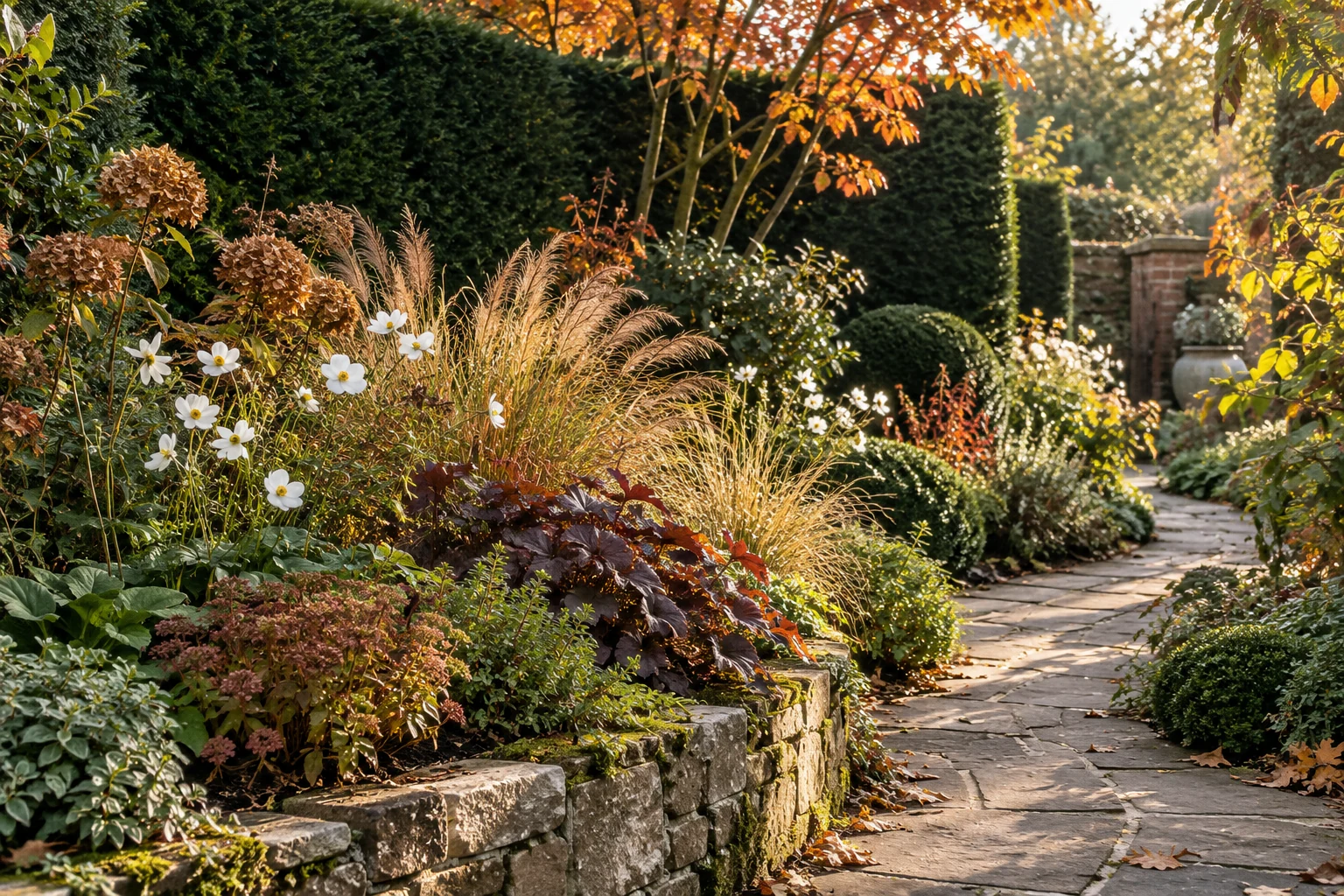
Autumn is useful for leaves, planting decisions and reviewing overcrowded borders. Avoid leaving thick leaf cover on frequently used paths. Winter can reveal the framework of deciduous shrubs, but pruning still depends on the species. Frozen or saturated surfaces can restrict work. Hedges and dense shrubs need checks for nesting birds before cutting; defer affected operations rather than relying on a supposedly safe calendar date.
Visits that fit your own gardening time
If you like growing vegetables but dislike mowing, say so. A maintenance arrangement can concentrate on the tasks you are not taking on. Weekly, fortnightly and monthly options can be discussed, with the interval adjusted to growth and availability. Record the division of work so an unattended bed is not mistaken for something deliberately left to you.
One-off visits suit a list with a clear endpoint, such as recovering the route to a greenhouse and tidying the adjoining bed. Following a reset, review how quickly growth returns before choosing regular care. A garden that looks settled immediately after clearance may still need prompt weeding and watering. If the layout itself demands too much upkeep, a separate garden design conversation may be more useful than simply increasing visit frequency.
What the gardening price covers
Maintenance, clearance and lawn care are published at £79 for the first hour and £65 for each subsequent actual hour on site. The arrangement includes two gardeners, tools, equipment and bags, with up to 120 litres of green waste disposal. Agree extra removal in advance; bulky growth may exceed the allowance before a large area has been cut.
Read the live prices page and confirm the applicable service, postcode availability and possible congestion charges. Tree surgery and landscaping use their own quotation basis. State your budget and priorities early. If more work becomes apparent after opening an area, it can be assessed separately rather than silently treating a first estimate as permission for an unlimited job.
Orpington gardening questions
Need to discuss your own garden or property? Call with photographs and your postcode.
Ask about your visitCan the front and back receive different schedules?
Discuss the practical split and the work each needs. A visible front lawn might need more frequent attention than a slow-growing rear border. Access, minimum charges and availability still matter, so describe both areas rather than assuming one whole-property schedule is compulsory.
Should I clear a neglected vegetable plot completely?
Identify crops, perennial herbs and fruit plants first. Remove obvious unwanted growth selectively, then decide how much ground you can cultivate. Clearing the whole plot without a plan for covering, planting or regular weeding can create another large maintenance obligation.
Can you cut grass that has not been mown for months?
Send current photographs and disclose hidden obstacles. Its length, moisture and surface condition affect the method and time. A staged approach may be preferable, and a single visit should not be expected to make long-neglected turf look like an established regularly maintained lawn.
How should I mark plants to retain?
Use visible labels and send a simple annotated photograph. Explain any areas where bulbs or perennials are dormant. If you are uncertain about identification, leave that section for discussion; a vague instruction to keep the good plants is difficult to apply reliably.
Does a quote include the route to the compost area?
Show that route when requesting the estimate and explain whether material will stay on site. Carrying and processing suitable clippings takes time. A distant compost heap should not be assumed equivalent to a collection point beside the working area.
Can new plants be watered only during gardening visits?
That depends on conditions, but occasional appointments usually cannot replace the checks establishing plants need. Agree who will water between visits and how they will assess moisture. Containers and small rootballs may dry while surrounding soil still appears damp.
Can a hedge be reduced whenever it obstructs a path?
The plant, amount of reduction and wildlife activity need checking. Active nests can require affected work to be deferred. A substantial woody reduction may also be a different task from routine shaping. Describe the obstruction and allow the appropriate approach to be assessed.
Which nearby areas are in the directory?
The approved coverage includes Bromley, Beckenham, Sidcup and Eltham. Use the coverage directory for the relevant pages and provide the exact postcode when requesting an appointment. Directory inclusion does not establish a particular day’s availability or the final access arrangements.
Choose the first section to make useful again
Call 020 3746 2449 with your Orpington postcode and a short list in priority order. Include the entrance, the furthest working area and the planting to retain in your photographs. Agree a realistic first stage, its waste arrangement and the next decision before expanding the job.
Call 020 3746 2449Gardening nearby.
View all 60 coverage areas ↗Orpington on the map.
Approximate area centre for orientation. Call to confirm availability for your exact postcode.