
Winter pruning questions to settle before you cut
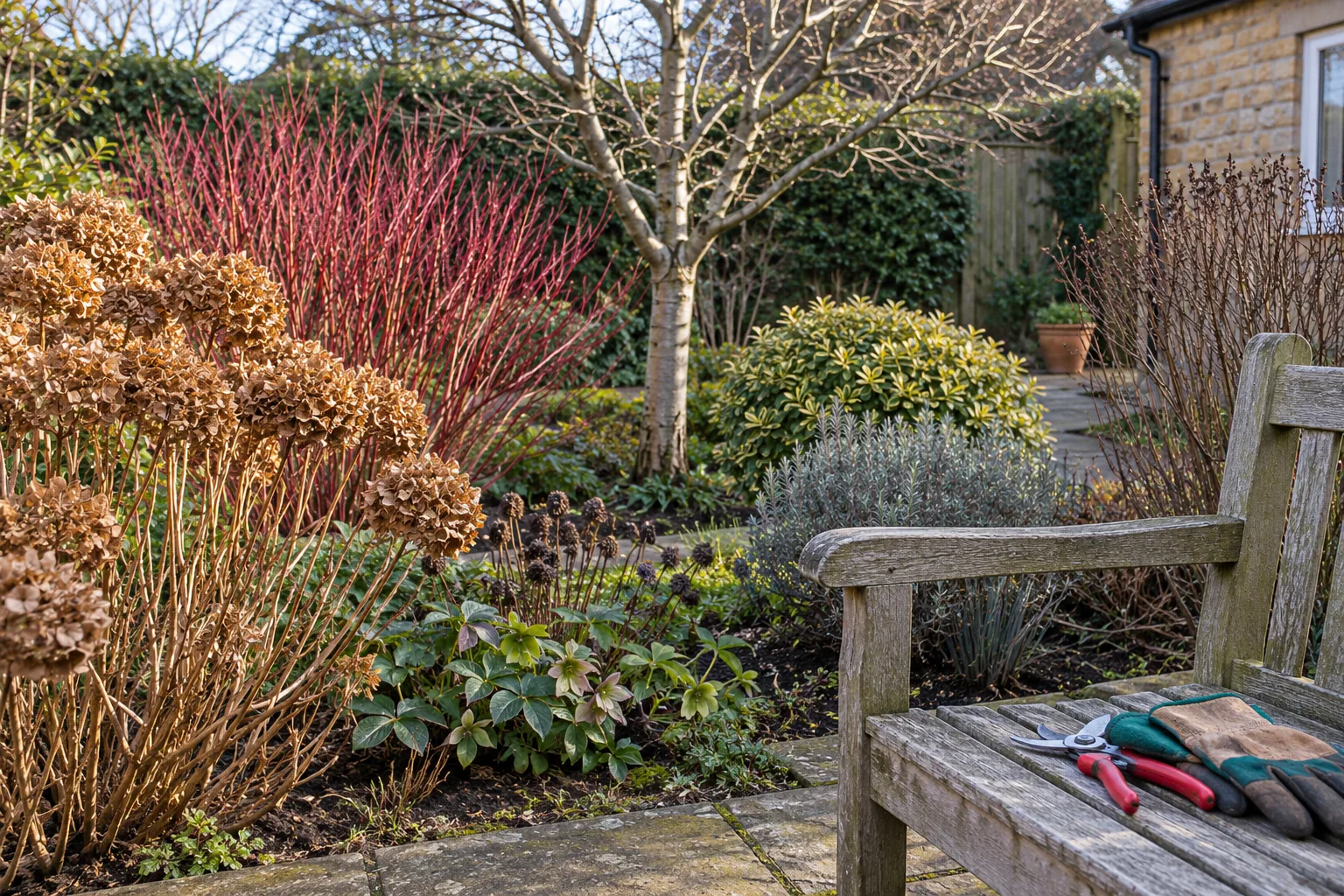
Bare branches can make every shrub look ready for a tidy. Yet some are carrying next spring's flowers, some need old growth for protection, and some trees are subject to legal controls. Winter can be a useful pruning season for certain plants, but it is not a licence to cut everything simply because leaves have fallen.
Before lifting the secateurs, answer a few questions: What plant is this? Why does it need a cut? When does it flower? Is the branch within safe reach? Could wildlife or a protection order affect the work? A short pause protects the plant and may save an unnecessary job.
The RHS advice on early-flowering shrubs recommends pruning those plants after flowering. Cutting them in winter can remove buds already in place. Other shrubs can have very different timing. That is why plant identification comes before any general “winter pruning” timetable.
What problem are you trying to solve?
Start with the outcome, not the tool. A dead branch that could fall across a route is different from a healthy stem that simply looks untidy. A shrub blocking a gate may need a small targeted cut; one that is permanently too wide for its bed may need a renovation plan or replacement. A tree that casts shade is not automatically unhealthy or in need of reduction.
Look at the whole plant. Is it balanced, vigorous and appropriately sized for the space? Are crossing branches rubbing or is growth merely irregular? Is the path still usable? Name the specific branch or section that causes the issue. This makes the cut smaller and easier to evaluate. It also helps a professional give useful advice if the work is beyond routine maintenance.
Do not assume “hard pruning” is a universal reset. Some plants respond with strong regrowth, others do not recover attractively from old wood, and a severe cut can remove years of flowering structure. Check a credible plant-specific source before deciding how much to remove.
Can you identify the plant and its flowering cycle?
Take a photograph of buds, bark, leaves if any remain, and old flowers or fruit. Check a plant label or reliable guide. Spring-flowering shrubs often set buds on older wood before winter. Summer-flowering species may bloom on new growth, but that does not mean every one should be cut in December. The RHS beginner's shrub-pruning guidance explains why timing varies with flowering and growth habit.
If a shrub has been in the garden for years and you do not know its name, note when it flowers this year before undertaking a cosmetic reshape. Waiting through one season is often safer than removing the entire display just before it opens. A small dead or damaged branch may still be dealt with appropriately, but routine shaping should follow identification.
Do not apply shrub rules to herbaceous perennials, evergreen grasses or climbers. Each has its own growth pattern. Our guide to winter garden preparation without stripping it bare explains why useful dry stems can remain even when the paths and containers are being prepared for winter.
Is the plant actually a protected tree?
For tree work in England, check whether a tree preservation order applies or whether the property is in a conservation area. GOV.UK's tree protection guidance explains that consent is generally required before cutting down, topping, lopping or uprooting a tree protected by an order, unless an exception applies. Work on trees in conservation areas can require advance notice. The exact process depends on the tree and the proposed work; consult the local planning authority before proceeding.
A tree in a garden is not automatically exempt because it is on private property. Nor should you assume a branch is exempt simply because it overhangs your side. If a hedge contains trees, they may have their own protection. A neighbour dispute or urgent safety concern does not make the rules disappear; obtain specific advice where needed.
These checks are particularly important before a substantial reduction. A routine gardener can often maintain beds and small shrubs while a protected-tree query is resolved separately. For larger or higher work, tree surgery should be considered with the legal position and safe access established first.
Have you checked for wildlife today?
Winter is a lower-risk period for many nesting birds, but a calendar date does not prove a branch is unused. GOV.UK's wild-bird guidance lists tree, hedge and shrub cutting among activities that may damage an active nest. Watch and inspect before starting. If an active nest is found or suspected, leave the affected work and seek suitable advice. Protected wildlife can also include species other than birds.
Do not cut into dense cover simply because you cannot see a nest from the path. Work around uncertain areas while they are assessed. A hedge along the boundary may need a separate check from a small open shrub. Our hedge-trimming planning guide covers the practical wildlife, access and waste questions for an ordinary trim.
Winter stems can also shelter invertebrates and offer birds food from seedheads. You may decide to retain part of a plant for these reasons even if it is legally possible to cut it. Wildlife value is one more factor in a balanced pruning decision, alongside access and plant health.
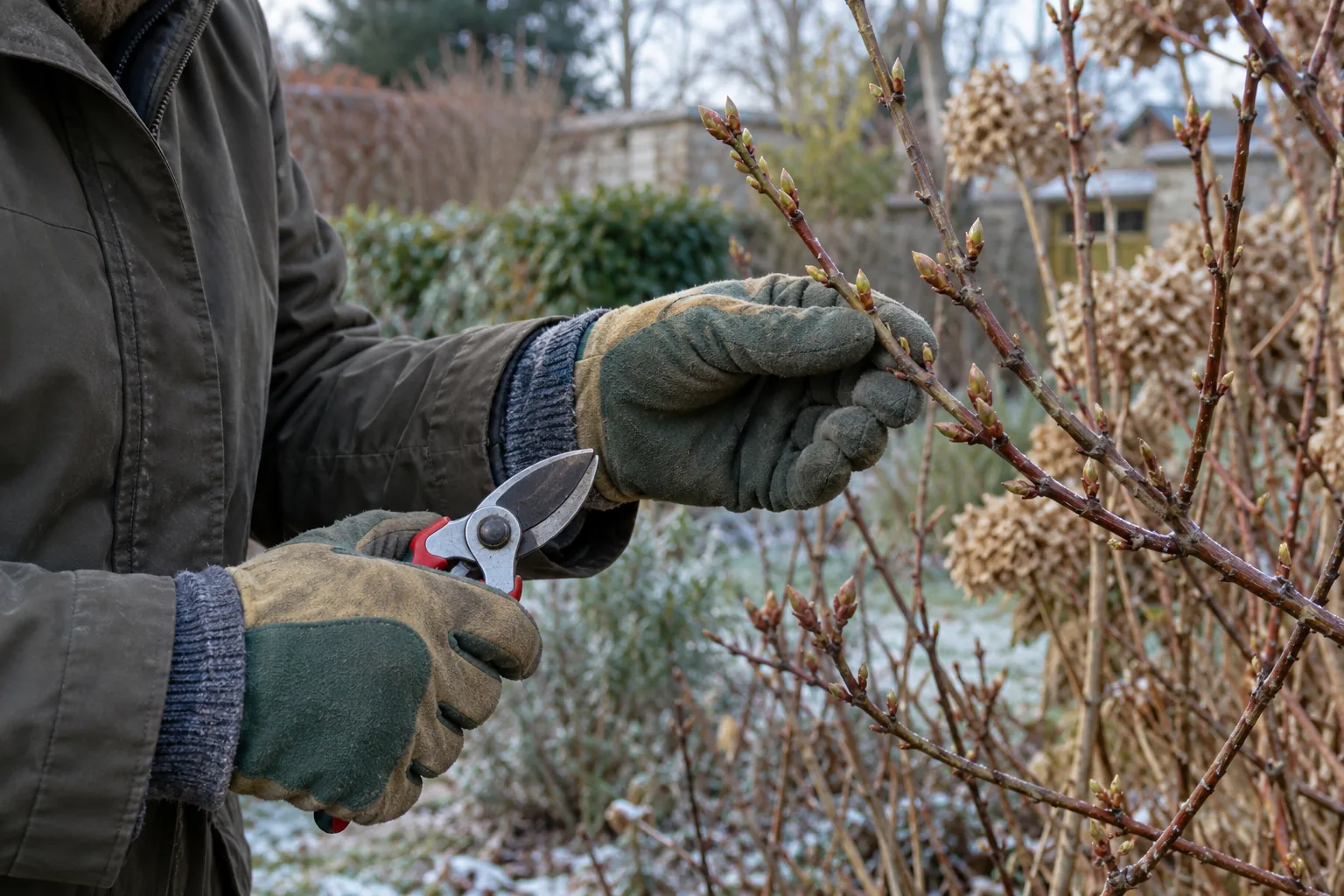
Can the work be done safely from the ground?
Reach and footing matter. A manageable branch at shoulder height is very different from one above a roof, greenhouse or public path. Do not work from a ladder while stretching sideways with a saw or powered tool. Falling branches can swing or catch on nearby growth, and cut material can be heavier than it appears.
Check for overhead wires, fragile paving, a neighbour's property and space for branches to fall. If you cannot control where the material goes, stop. A qualified professional can assess the method and equipment. A low branch that blocks access may still need a controlled cut if it is large or attached to a protected tree.
Use sharp tools suited to stem size and clean them where disease is suspected. Do not force a light pair of secateurs through thick wood. A poor crushing cut can damage tissue, while too much leverage makes injury more likely. When the work is small and appropriate, cut with a clear purpose and reassess after each branch rather than removing more by habit.
Does the weather or soil make this a poor day?
Frozen, saturated or very windy conditions can make both access and plant response less favourable. If the soil is waterlogged, repeated walking around a shrub can compact its root zone. If visibility is poor or the plant is covered in frost, it is harder to see buds and choose a careful cut. A non-urgent job can wait for a mild, dry interval.
Do not prune merely to fill a winter appointment. A useful garden maintenance visit can clear paths, check containers and record plant issues while species-specific pruning is scheduled separately. The right timing is a service outcome, not a failure to complete a list.
If a branch appears dangerous, isolate the area and seek competent assessment rather than waiting casually for ideal weather. Safety concerns require their own judgement; this article cannot diagnose structural failure from a description or photograph.
Where will the cut material go?
Even a moderate shrub prune can produce bulky branches. Plan a collection point that does not block the path, drains or a neighbour's access. Separate diseased material, soft growth and woody pieces as appropriate. Check local green-waste rules before filling bags with heavy branches.
If disposal is included in a professional visit, say so in the brief. A pruning quote that leaves an unmanageable pile behind may not meet your actual need. If the job reveals a wider backlog, a separate garden clearance scope may be sensible. Specify retained plants so a waste-removal task does not turn into indiscriminate cutting.
A decision you can explain to someone else
Write one sentence for each proposed cut: “This branch blocks the gate and can be shortened without affecting the main shape,” or “This shrub flowers in spring, so shaping will wait until afterwards.” Add the plant name, wildlife check, legal check if a tree is involved, and access plan. If you cannot complete that sentence confidently, gather more information first.
Winter pruning should leave the garden safer or the plant better positioned for healthy growth. Sometimes the best decision is a small precise cut. Sometimes it is to leave the buds and stems alone until the appropriate season. Either choice is more deliberate than treating all bare branches as permission to cut.