
Hedge trimming: how to plan a tidy cut safely
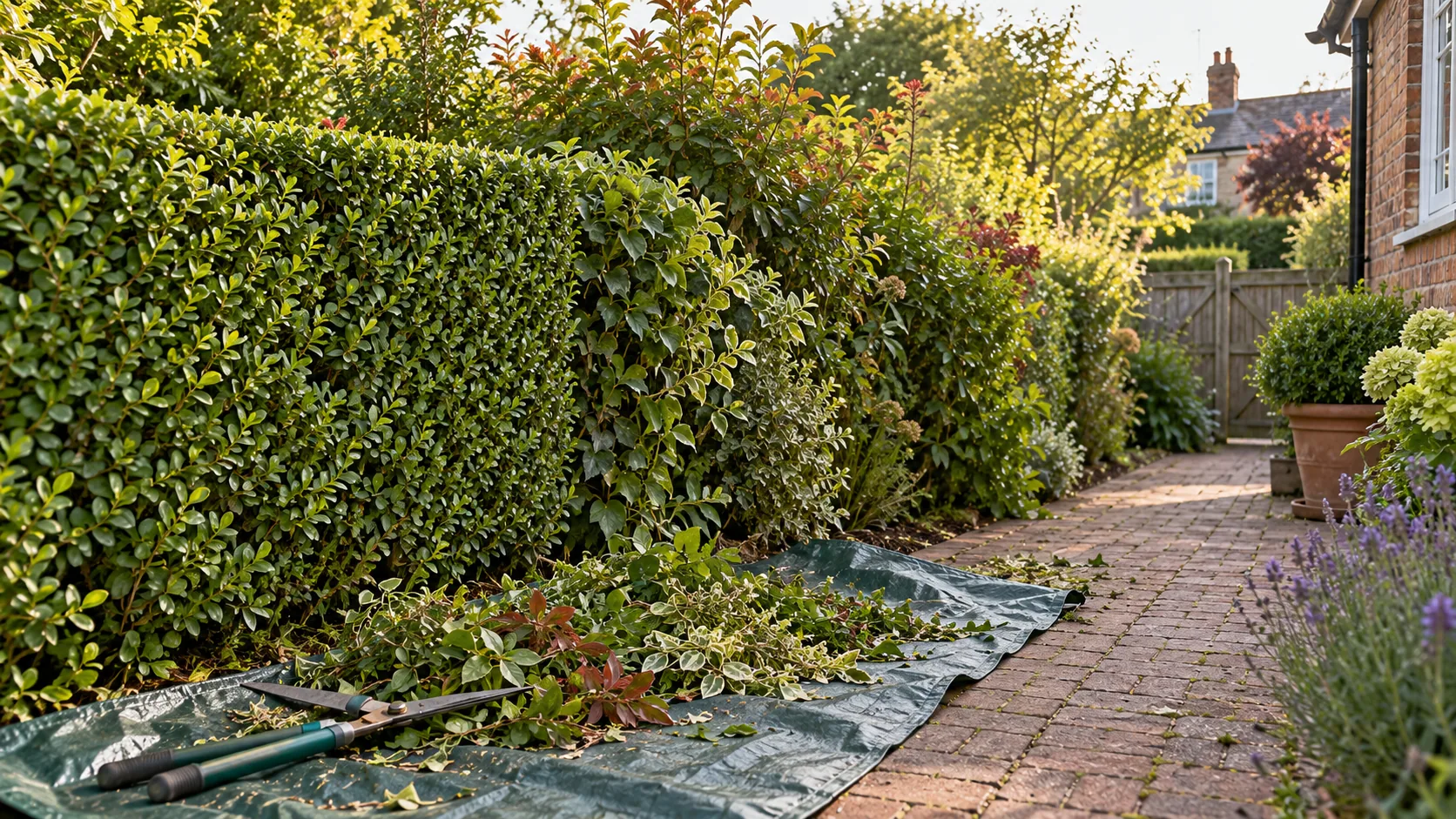
A hedge that brushes your shoulder on the way to the gate may need a modest side trim. A hedge that has doubled in width over several years needs a different conversation. Before taking out the trimmer, decide which problem you are solving: access, an uneven outline, excess height, or an older hedge that needs renovation. One hard cut is not a sensible answer to all four.
Good hedge work starts with the plant and its surroundings. Identify the species if you can, check for birds and other wildlife, look at the boundary, and plan where the cuttings will go. The RHS pruning guide for hedges makes clear that trimming frequency and timing vary between formal and informal hedges and between species. A calendar reminder alone cannot tell you how much growth to remove.
This article is about planning an ordinary, manageable trim. It is not an invitation to work at height, cut near power lines or reduce a protected tree. Those situations need their own assessment, permissions and equipment.
Decide whether you need a trim or a change of plan
Stand back far enough to see the whole hedge. Has the current season's soft growth blurred a shape that otherwise works? A light trim may restore it. Has the hedge grown so wide that the path is permanently narrowed or the base is bare? Cutting deeply into old wood may leave a long-lasting gap, depending on the species. A staged renovation or different planting decision may be better.
Consider its role. A hedge may screen a neighbour's window, shelter a seating area or provide habitat. Lowering it dramatically could solve one issue while creating another. Mark the height and width you actually need, allowing room for future growth and for someone to maintain both faces. A tidy cut usually follows a considered line rather than forcing the top and sides into an arbitrary box.
Look at the base. Light reaching lower growth helps many formal hedges stay clothed to the ground. If the top has become much wider than the lower portion, trimming the top alone will not restore the base overnight. Do not promise yourself a dense result from a single severe cut. Identify the plant first and check species-specific guidance before attempting renovation.
Make a wildlife check before any cutting
Hedges are useful nesting places. In England, the legal protection concerns active nests, not a convenient fixed date on your calendar. GOV.UK's wild-bird guidance states that intentionally taking, damaging or destroying a wild bird's nest while it is in use or being built is an offence. Hedge trimming is among the activities that can cause a problem. Inspect carefully before work and stop or postpone the affected part if there are signs of an active nest.
Avoid assuming that an apparently quiet hedge is empty. Watch it from a distance for repeated bird visits before looking closely. Do not prod into a possible nest with a tool. If you are unsure, leave the area and seek suitable advice. The RHS commonly recommends avoiding hedge trimming through the main nesting period, roughly March to August, but actual nesting activity can vary. A seasonal rule of thumb never replaces the check on the day.
Some hedges also contain berries, flowers or shelter for other wildlife. An informal hedge does not always need the same frequent clipping as a formal one. Think about whether the benefit of cutting now outweighs waiting for a more suitable time. A path obstruction may be dealt with locally while the rest stays untouched.
Check ownership, protected trees and access
If the hedge sits on a boundary, establish which parts you own and where the boundary lies. GOV.UK's neighbour-dispute guidance says you can trim overhanging branches or roots back to your boundary, but cutting beyond it can create a dispute or damage claim. It also notes that council permission may be needed in a conservation area or where trees in the hedge are protected by a tree preservation order. Check the local position before substantial work.
Be careful with general statements about countryside hedgerow rules. GOV.UK says the particular agricultural hedgerow cutting rules do not apply to private garden boundaries. That does not remove protection for active bird nests or any relevant tree restrictions. The safest brief is specific to this garden, this hedge and the proposed extent of work.
Plan physical access too. Can you reach the full side from firm ground? Is the hedge beside steps, a road, fragile planting or a neighbour's structure? A stable working position is more important than a perfectly straight line. Do not lean sideways from a ladder or use a powered trimmer one-handed to reach a final strip. If safe access is missing, reduce the scope or call for appropriate professional help.
Match the timing to the hedge
Evergreen and deciduous hedges do not all respond identically. Some formal hedges need more than one light cut during active growth, while a relaxed mixed hedge may need a single planned trim. Flowering hedges can lose flowers or berries if cut at the wrong time. The RHS species table is a better guide than a universal “trim in autumn” instruction.
Observe the weather as well. Strong wind makes handling cuttings and tools harder. Frozen or drought-stressed plants may not be in a good position for discretionary cutting. A dry, calm working period with good visibility is usually easier for an ordinary trim. If the work is urgent because a branch obstructs a route, isolate that part rather than turning it into an unplanned whole-hedge reduction.
Our autumn garden maintenance checklist explains how to rank access work against jobs that can wait. The same principle applies here: keeping a gate usable may be timely, whereas a cosmetic reshape can be scheduled around plant and wildlife needs.
Set the line and make a modest first pass
Before cutting, identify the intended finished width and height from both ends of the hedge. String lines can help on a long formal hedge, but a short domestic hedge can often be judged with a careful visual check. Clear moveable pots and furniture from the work area. Protect delicate plants beneath it from falling cuttings and set a sheet or tarpaulin where collection will be awkward.
Begin conservatively. You can take a little more off after checking from a distance; you cannot put cut foliage back. Work steadily along the side rather than making deep isolated bites that leave hollows. For a formal hedge, maintain a shape that does not shade the base excessively. For an informal hedge, preserve its character and remove only growth that crosses the agreed limits.
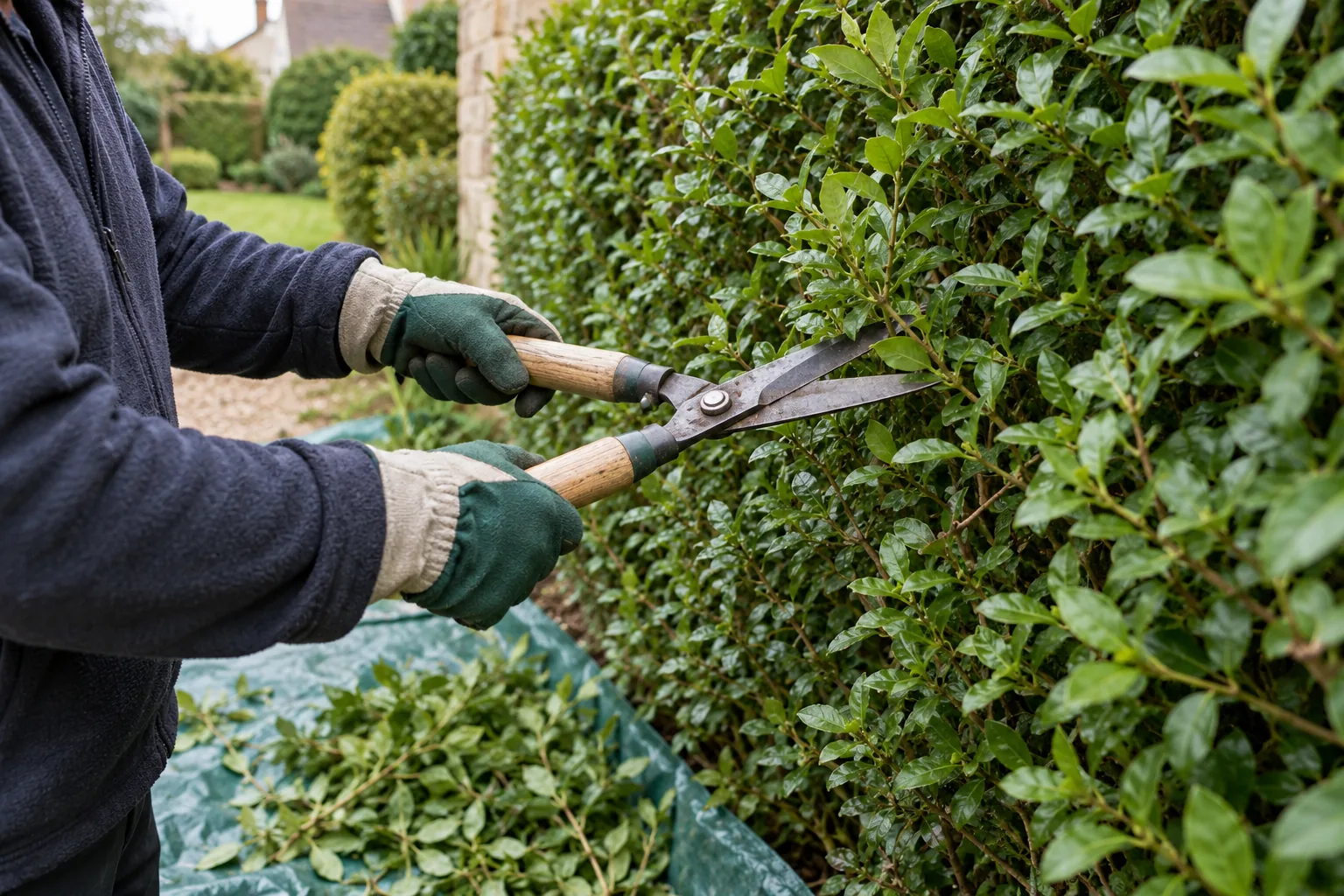
Use tools suited to the stems. Hand shears give good control on a small hedge; a powered trimmer can speed up soft, even growth on a larger one but needs a safe working area and careful cable or battery management. Thick woody branches call for suitable pruning tools, not forcing them through a light trimmer. Follow the equipment instructions and keep people and pets clear of the work zone.
Plan the cuttings before they cover the garden
Hedge debris is often bulkier than expected. A short trim can create a surprising volume of fine, springy material, especially when growth has been allowed to spread into a path. Decide in advance whether you have room to compost suitable soft cuttings, a council green-waste route, or a collection arrangement. Keep thorny or woody pieces separate where they are harder to handle.
Do not pile cuttings over small plants, drains or the only exit while the work continues. Collect in stages so the route stays clear. Look again for wildlife if a large pile sits undisturbed before disposal. If the volume is beyond what you can move or legally dispose of, garden clearance can be discussed as part of the job. Say whether the quote should include loading and removal; a trim and a waste collection are different amounts of work.
Where the hedge is one element of a broader seasonal tidy, garden maintenance may be the more useful service. Agree which faces and height are accessible, what should be left for wildlife, and how cuttings will be handled. A clear brief prevents a request for “a tidy hedge” being interpreted as a severe reduction.
Review the result before scheduling the next cut
After clearing the debris, stand back from the street or seating area and from both ends. Check access, the hedge's lower growth and any gaps that need time rather than further cutting. Record the species if you identified it and the date of the trim. That note makes next year's decision easier: was one light cut enough, or did the hedge need repeated maintenance?
If the garden is being prepared for winter, resist using the trimmer on every nearby shrub simply because the equipment is out. Our guide to winter preparation without stripping the garden bare explains why dry stems and seedheads can be worth leaving. A hedge trim can be precise while the surrounding planting remains seasonal.
The best finished hedge is one you can maintain safely and that still suits its plant and setting. If that is no longer possible from the available access or with modest cuts, pause and plan a separate renovation. That decision is more useful than attempting to solve years of growth in one afternoon.