
Winter lawn care: what is worth doing and what can wait?
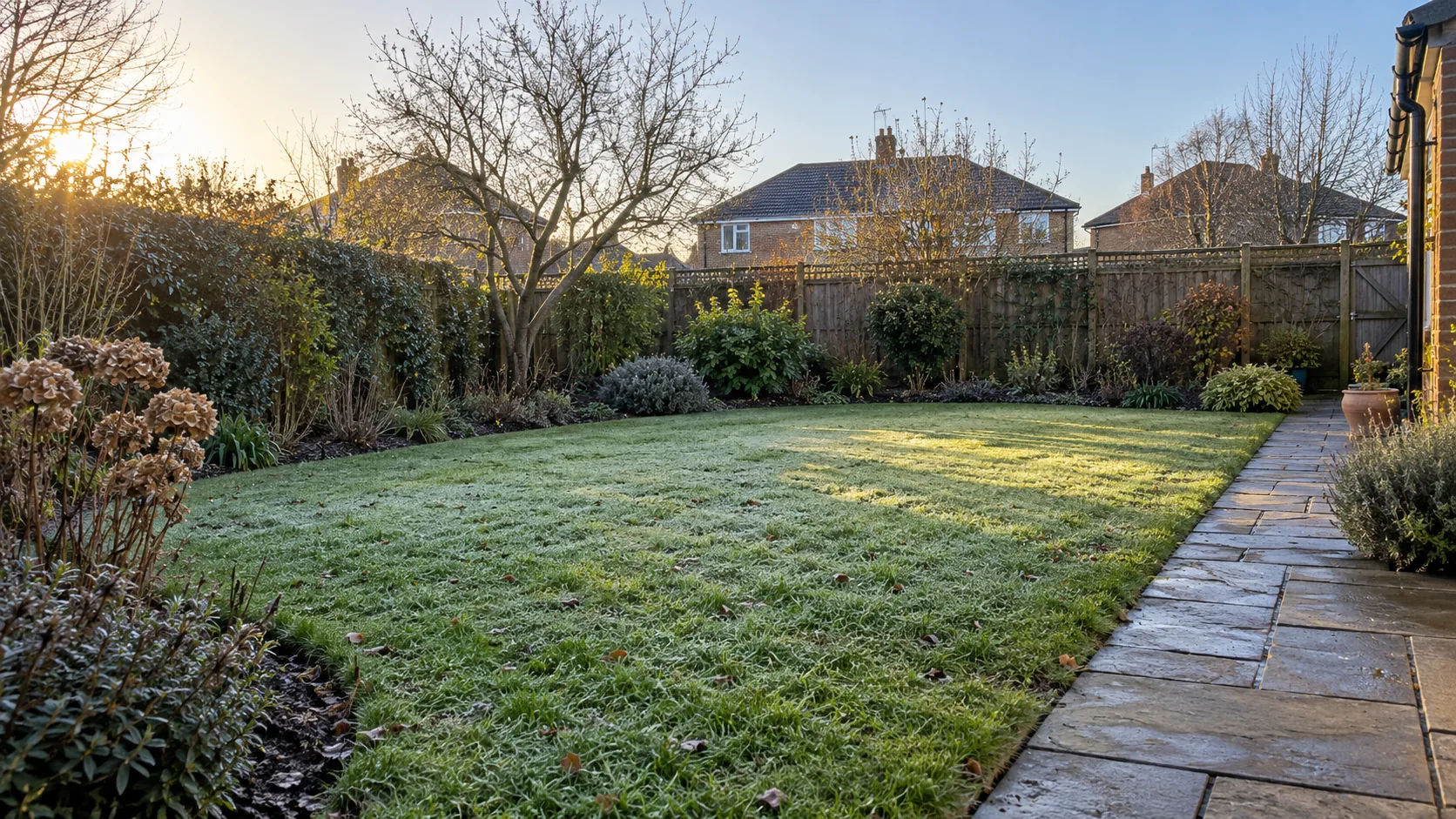
Winter is a poor season for forcing a lawn to look like it does in June. Grass growth slows, soil may stay wet for long periods, and frost makes the surface easy to damage. The most useful care often consists of removing a few obstacles, choosing where to walk and leaving the mower in the shed until conditions genuinely suit it.
That does not mean ignoring the lawn for months. A blanket of wet leaves can smother grass, a worn shortcut can become a muddy track, and repeated standing water is worth recording. Winter is also a good time to notice what needs a spring repair. The trick is to respond to the lawn's condition rather than applying every treatment on a seasonal checklist.
The RHS winter mowing guidance says mowing is usually unnecessary unless mild weather keeps grass growing. It warns against mowing very soft, wet or frozen ground. This provides a helpful default: do the light tasks that prevent harm now, and postpone disruptive work until the surface and season make it worthwhile.
Keep dense leaf cover off the grass
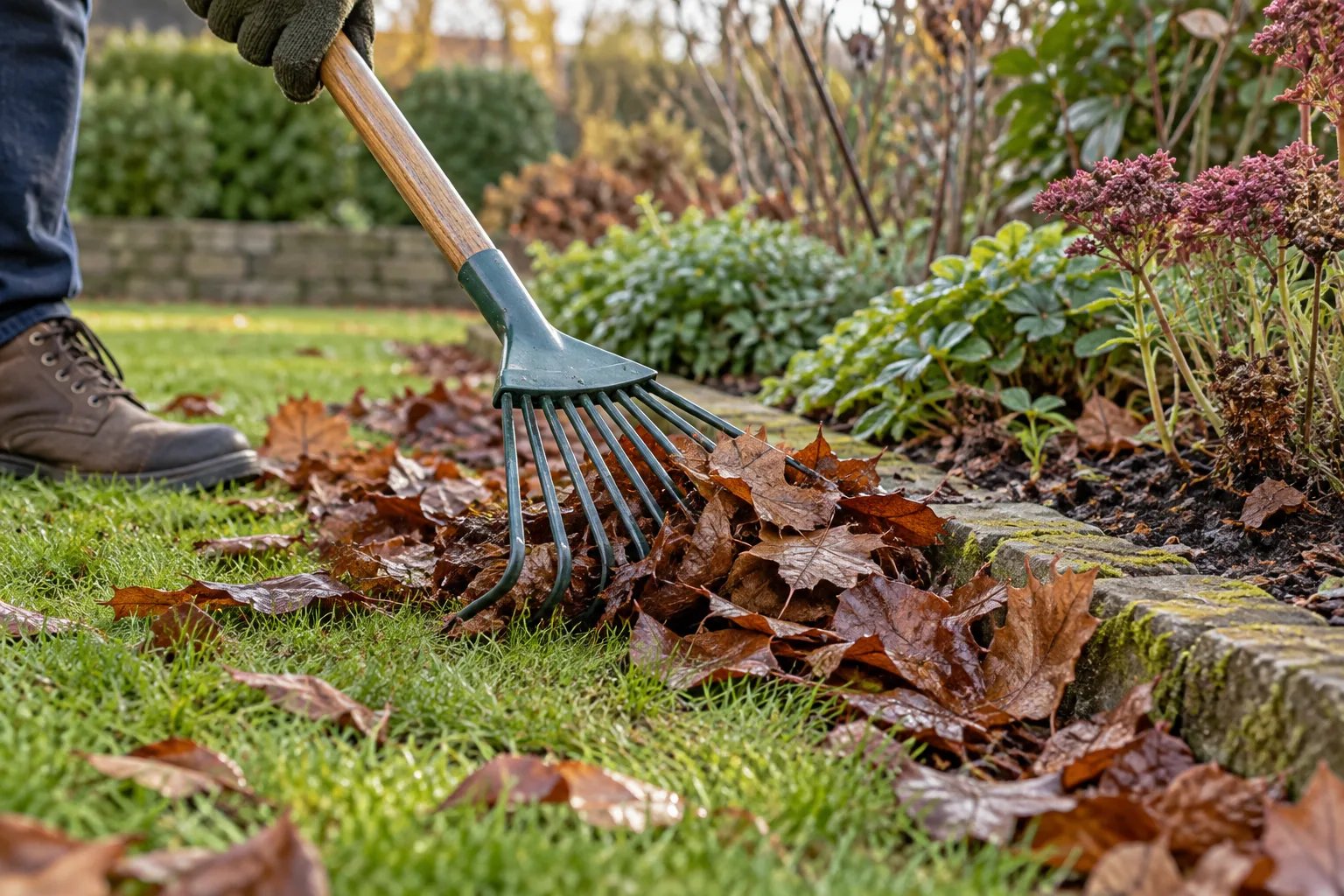
Fallen leaves are useful in a border or leafmould store, but a thick mat on turf blocks light. The RHS November lawn advice recommends raking leaves from lawns so they do not smother grass. A gentle rake on a reasonably firm day is often enough. Do not scrape hard into sodden soil or repeatedly walk across a waterlogged lawn just to remove a few scattered leaves.
If a tree sheds over several weeks, make short passes rather than waiting for one heavy clear. Move healthy leaves to suitable beds or a leafmould bag if you have room. Keep disease-affected leaves separate according to plant-specific advice. The aim is to expose the grass, not strip every border bare.
Wind may return leaves the next day. That is normal. Focus on the heaviest patches and the areas where grass is already weak. A small lawn can often be checked from the path in minutes, so a brief repeat visit is less effort than dealing with a dense wet layer in spring.
Keep feet and wheels off the softest ground
Wet soil compresses and can develop muddy tracks under repeated use. Frost makes grass blades brittle. The RHS January lawn advice advises avoiding foot traffic on frosty turf and suggests stepping stones where wet-weather use regularly damages a route. If the lawn is the only path to a shed or bins, consider how people actually cross it instead of blaming the grass for failing under traffic.
Use an existing path when the turf is saturated. Move regular play or heavy garden work to a firmer area where possible. If an unavoidable route is turning muddy, note its exact line and width. A properly planned access route may be more useful than repeatedly reseeding the same strip. Our guide to why a lawn gets muddy after rain helps separate traffic from compaction and drainage problems.
Do not set heavy pots or stored materials on the lawn for the whole winter. They shade and compress the grass beneath. Likewise, a wheelbarrow full of wet waste can leave ruts across soft turf. A small decision about where to store things can save a larger repair later.
Mow only when growth and conditions justify it
Mild spells can keep a lawn growing. If the grass is noticeably long and both blades and ground are dry enough, an occasional high cut may be reasonable. Use clean, sharp mower blades and avoid removing a large proportion of the height at once. Do not chase a summer-short finish. Cold-season grass benefits more from a gentle, tidy cut than from being scalped.
Check the ground before taking the mower onto it. A lasting footprint, squelch or visible wheel rut risk is a reason to wait. Frost is another reason. The more detailed decision process is in can you mow wet grass?. It applies just as much to a mild December afternoon as to a rainy day in spring.
The diary may say the lawn is due, but turf has no appointment book. A missed cut can be dealt with later by raising the cutting height and, if necessary, taking more than one gentle pass on different days. Repairing churned ground is slower. A flexible lawn care schedule should allow the visit to shift or focus on other tasks when the lawn is unsuitable.
Notice drainage and surface changes without rushing to dig
Look for standing water after ordinary rain. Does it appear in the same hollow, beside paving, or across the entire lawn? How long does it remain? Photographs taken just after rain and the following day help. A wet winter may reveal a pattern that is hard to see in summer, but it is not automatically the best moment to excavate or add new turf.
The RHS explains that compacted or heavy soil commonly contributes to waterlogging. Aeration can help in the right conditions, but its waterlogged lawn guidance advises waiting until standing water has drained before spiking. Driving tools into a saturated surface and then repeatedly walking over it can cause damage. A drainage system also requires somewhere appropriate for water to go; it is not a universal quick fix.
If water repeatedly sits near a building or enters a structure, seek suitable site-specific advice promptly. Ordinary lawn guidance cannot establish the cause or safety of a drainage alteration. For a persistent wet corner away from buildings, keep observing and discuss options when the ground can be assessed properly. A garden design conversation may be more useful than another round of seed on an unresolved puddle.
Make a repair list for spring
Winter shows where the grass is weakest. Note bare patches, shade, routes, hollows and places where leaf cover accumulates. Ask why each patch appeared. A small bare edge after a one-off event differs from a permanent path across the lawn. Seed or turf will only last if the underlying use and conditions make sense for grass.
Do not assume every bare patch needs immediate winter seeding. The RHS January advice says cold weather is generally too cold for sowing seed and recommends waiting until spring. Turf can sometimes be laid in suitable mild conditions, but waterlogged or frozen ground is unsuitable. A clear spring plan is often better than a rushed winter repair.
Before buying materials, decide whether the area can be protected while new grass establishes. If children, pets or bins must cross it daily, plan an alternative route. If a tree casts dense shade, choose a grass strategy suited to that condition or consider a different surface or planting. Repair is a design decision as well as a gardening task.
Resist automatic feed and treatment
A winter visit does not require a bottle or bag of product. Fertiliser choice and timing depend on the condition of the lawn and the season; a lush push of soft growth in the wrong period may be unhelpful. Moss and algae can signal underlying shade, wetness or compaction, so treating only their appearance may leave the cause in place.
If the lawn was cared for in autumn, it may need little beyond leaf removal and sensible use through winter. If it was neglected, plan remedial work for a suitable window rather than trying to compress every operation into a cold, wet weekend. The RHS autumn lawn care guide sets out the main seasonal renovation tasks and stresses appropriate conditions.
Even edging is optional if the ground is soft. A neat line around the lawn can wait until an edge can be cut without damaging wet soil. Spend the available time observing where borders are encroaching and planning the line, rather than forcing the tool into mud.
A short winter check that is actually useful
From the path, look for a dense leaf layer, standing water, frost and any new route worn through the grass. On a suitable firm day, remove the worst leaves and litter. If the lawn is soft, leave it alone. During a mild, dry period, consider a gentle high cut only if growth warrants it. Record the patches that need investigation or repair later.
For a garden with several seasonal jobs, garden maintenance can combine this light lawn check with clearing paths and tending containers. Be clear that lawn work should be conditional on the weather. A good winter visit protects the ground you have and leaves you with a better plan for spring, rather than a long list of treatments completed simply because it was December.