
Can you mow wet grass? A practical decision for a UK lawn
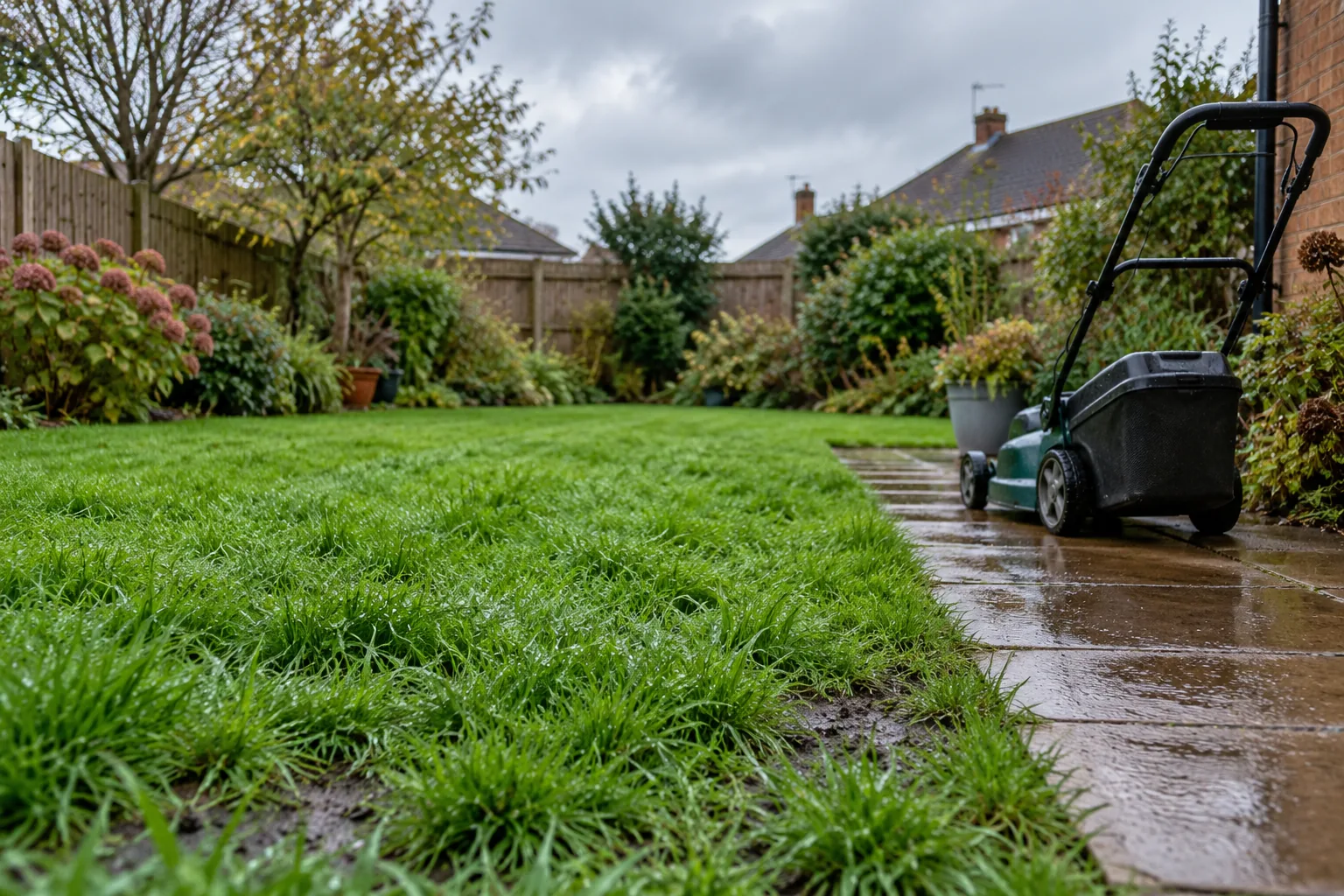
The grass is long, rain has disrupted the plan, and the next dry day is uncertain. It is tempting to make a quick pass while the mower is already out. The better question is not simply whether the blades of grass are damp. It is whether the lawn and the ground beneath it can tolerate the mower and your footsteps.
As a general rule, wait for the grass to dry and the soil to become firm. The RHS mowing guide says wet blades can cut poorly and clog the mower, while very wet soil can compact and develop muddy wheel ruts. It also advises leaving frosty grass alone. A delayed cut is usually easier to recover from than a churned lawn.
There is still a useful distinction between dew on a firm lawn and soil that squelches underfoot. The decision depends on both surfaces, the weather ahead, the mower and how much grass has grown. Here is how to make that call without turning a routine cut into repair work.
Check the soil before checking the mower
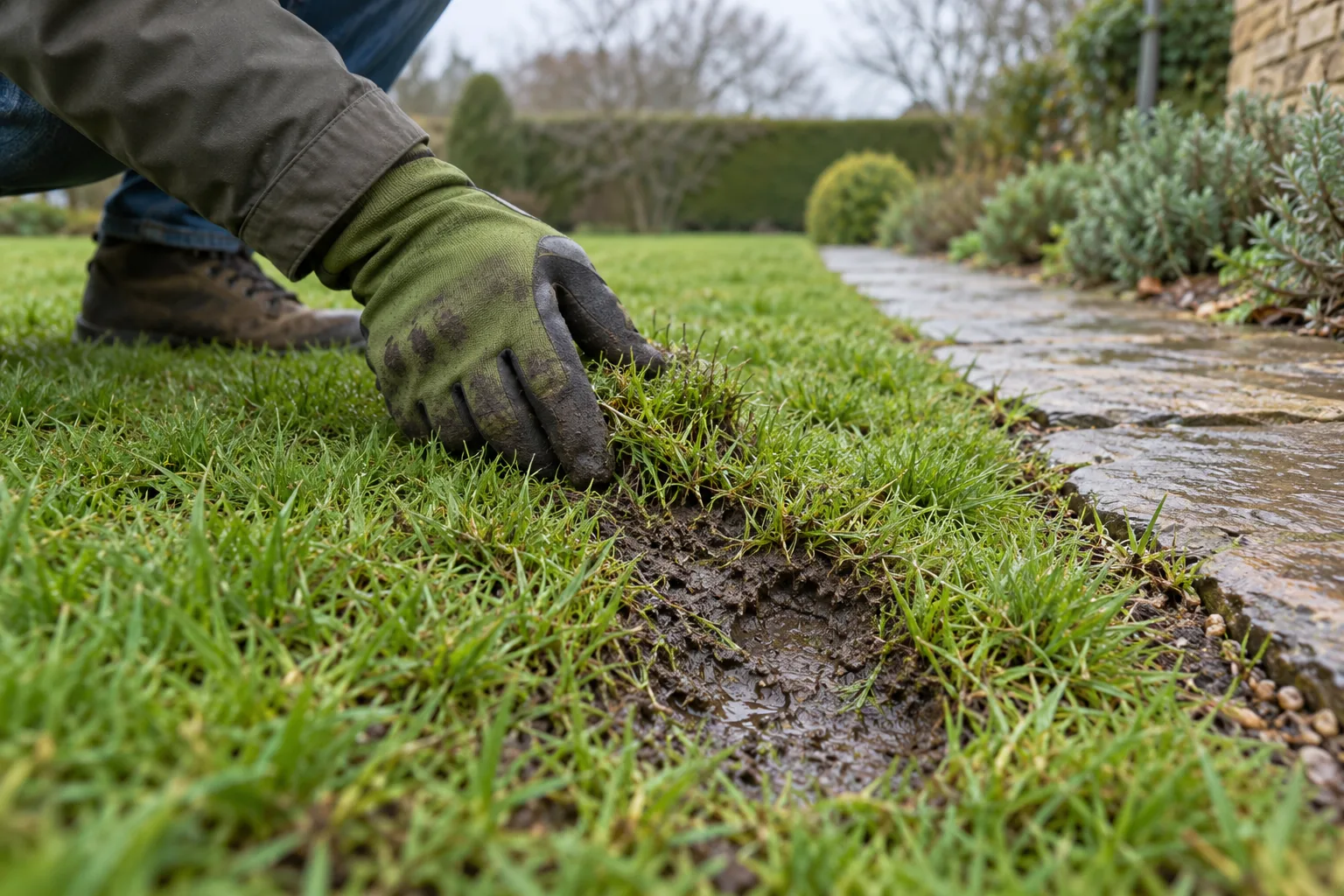
Stand at the lawn edge and put one foot on the turf. If water rises around the sole, the ground squelches or a clear footprint remains, postpone mowing. Do not walk an inspection grid across the lawn to prove the same point. Soft soil is more vulnerable to compression and wheel marks, especially where the mower turns or the operator crosses the same strip repeatedly.
Look at low points and routes near gates. A garden can have a firm sunny half and a shaded corner that remains soft. Mowing the firm area while avoiding the wet one is possible if the boundary is clear and turning will not damage the soft patch. Yet a narrow garden may give you no safe turning room. In that case, leave the whole cut until conditions improve.
If the soil feels firm but grass blades are damp from dew, waiting a few hours may be enough. Check whether the blades dry after light reaches them. The presence of a little morning moisture does not justify mowing at dawn when an afternoon cut would give a cleaner result. If more rain is due soon, do not let the forecast pressure you into working on a saturated surface.
Why wet grass gives a rougher finish
Wet blades can bend under the mower rather than standing up for an even cut. Clippings stick together and collect under the deck or in the box. A mower with dull blades can tear rather than cut cleanly even in good conditions; wetness adds another difficulty. Clumps left on the grass may also cover and shade patches beneath them.
The RHS advises clean, sharp blades and collecting clippings that would otherwise be dropped in lumps. None of that means reaching underneath a running or powered machine. Stop the mower, disconnect it according to its instructions and wait for moving parts to stop before clearing any blockage. For a corded electric mower, keep the cable and connection away from wet ground and follow the manufacturer's safety guidance.
A poor finish is not merely cosmetic if you respond by repeatedly driving over the same ground. Each pass adds traffic to soft soil. In a small lawn, it is better to accept a few extra days of height than to make several messy attempts that leave ruts.
Frost and standing water make the answer clearer
Do not mow frosty grass, even if the air has begun to warm. The RHS warns that mowing or walking on frosty turf can damage it. Wait until the frost has fully cleared and the lawn is dry enough. Winter growth is usually slower, so there is rarely an urgent need to cut first thing on a cold morning.
Standing water is a stronger stop sign. Keep the mower away and minimise foot traffic until the water drains. If the same part of the lawn repeatedly floods after ordinary rain, think about the cause before the next cut. Our guide to why a lawn gets muddy after rain looks at traffic, compaction, shade and drainage. Mowing frequency cannot solve a persistent site problem.
If the lawn has recently been seeded or turfed, take additional care. New grass and unsettled soil need an appropriate establishment period and a suitable first-cut height. Do not treat a new lawn as a normal, resilient traffic surface merely because the grass looks long.
What if the grass is already too long?
Waiting for a dry period may leave the lawn taller than intended. That is inconvenient, but it does not mean the next cut should be very low. Raise the mower setting and take a modest amount off once the ground is suitable. The RHS advises avoiding removal of more than about one third of the grass height in a cut. If necessary, return for another cut after the grass has recovered rather than trying to restore a short finish immediately.
Long, wet grass is particularly likely to clog a mower. Do not force the machine through dense clumps. First let it dry, clear any stones or objects, and choose a height the mower can handle safely. On a neglected patch with hidden debris, inspect and clear the area before any powered cutting. If the mower struggles, stop and reassess instead of pressing harder.
Our article on how often to mow a UK lawn covers the broader seasonal pattern. This decision is narrower: today's cut should be governed by the ground under your feet, not by the number of days since the last visit.
Use the wet day for another useful task
You can still make progress without taking a mower onto the turf. Clear fallen leaves from paving and from heavy patches on the lawn, working from the edge if the ground is soft. Inspect the mower when it is switched off and dry, check blade condition under its manual's safety procedure, and clean the collection box. Make a note of any wet areas so you can compare them after the next rainfall.
Walk the planted beds by the path rather than across saturated soil. Containers under eaves may need a moisture check even when the lawn is wet. A tidy route, secure pots and a planned return visit are valid outcomes for a maintenance day. The lawn is not failing simply because it missed a cut.
If someone else is booked to mow, tell them about soft patches and agree that the cut can be postponed or replaced by other garden work. A flexible garden maintenance visit is more useful than an appointment that treats mowing as compulsory whatever the weather.
A simple go-or-wait test
First, check for frost or standing water: either means wait. Second, test the firmness of soil at the edge and at a known low point without repeatedly crossing the lawn. A lasting footprint or wheel rut risk means wait. Third, look at the grass blades. If they are wet enough to mat or clog, allow more drying time. Fourth, consider whether the mower can cut the current height conservatively. If not, plan a staged cut or suitable help.
Once conditions are right, mow with sharp blades, a sensible height and as few unnecessary turns as the garden allows. If the lawn has a recurring soft area, address that separately through lawn care or a site-specific assessment. A dry cut on firm ground protects the grass you already have and leaves less repair work for later.