
What should you do with lawn clippings after mowing?
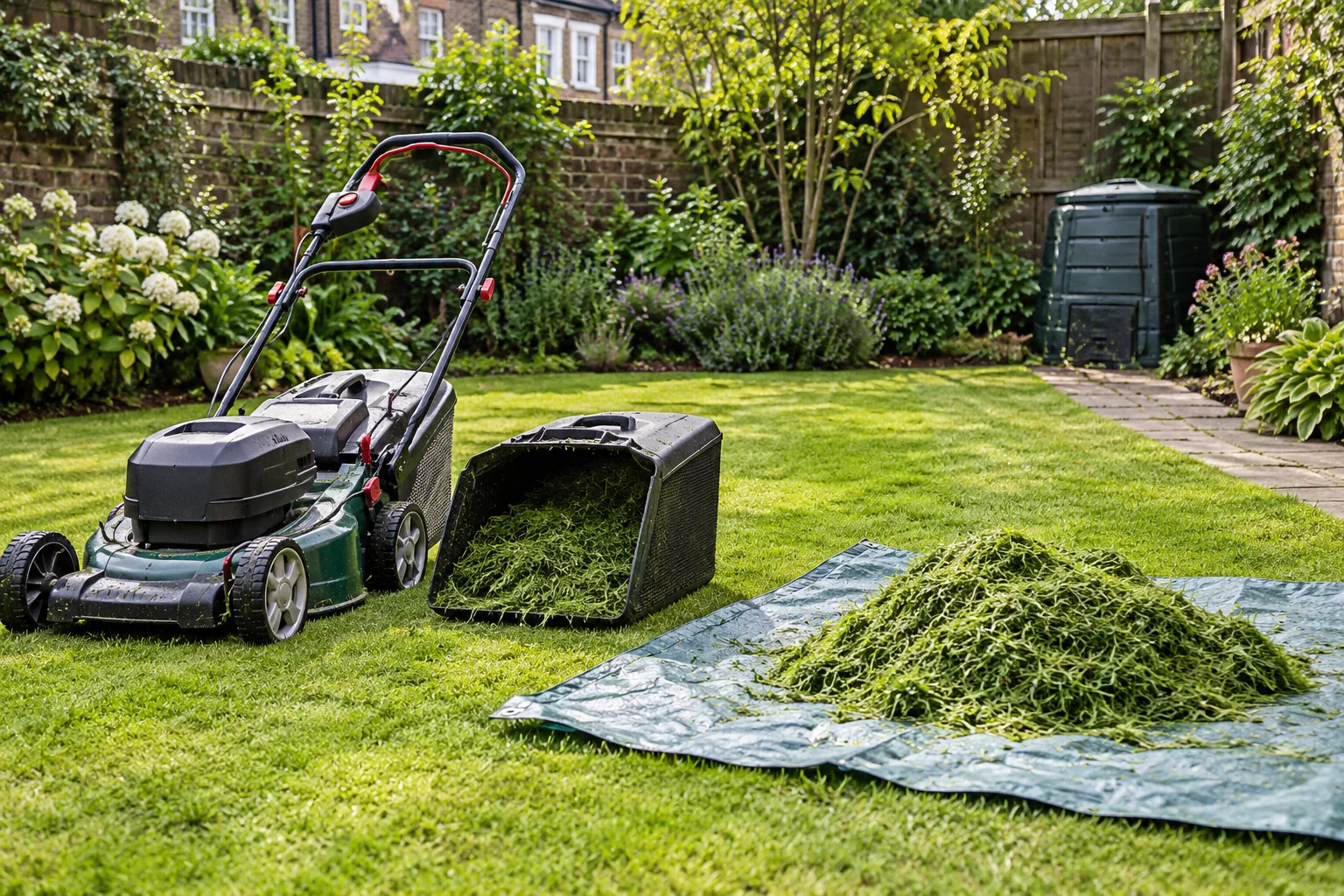
Grass clippings are not automatically waste. In the right conditions, very short pieces can settle between the blades and return some nutrients to the lawn. A heavy layer from a long or damp cut is different: it can sit in wet clumps, block light and leave a poor finish. The decision to leave, compost or remove clippings should follow the amount and condition produced by that particular mow.
Look at the surface before emptying the collection box or switching to a mulching setting. Is the grass dry? Was the cut modest? Can you still see living blades through the clippings? Will people use the lawn immediately? These observations are more useful than a fixed rule that clippings must always be collected or always left behind.
When leaving clippings makes sense
A mulching mower cuts grass into fine pieces and distributes them through the turf. The RHS lawn-mowing guide explains that this can return some nutrients and help hold moisture. It also notes that longer grass can produce too much material, even with a mulching mower, and the excess may need collecting. A normal mower without a mulching function may leave visible lines or piles when the grass is lush.
Short, dry clippings from a light cut are the best candidates. Check the lawn after a pass rather than assuming the machine has spread them evenly. If blades remain visible and the cut pieces disappear into the sward, leaving them may be reasonable. In dry weather, the RHS step-by-step mowing advice says very short clippings can help retain moisture. In deep shade, where turf is less vigorous, the RHS advises removing clippings instead.
Regular mowing helps keep the pieces short. The mowing-frequency guide explains how to set the next cut by growth and weather. If the lawn has missed several suitable cuts, do not use a mulching setting as a way to make a large volume vanish. Cut more gently, collect what accumulates and reset the routine.
When collection is the kinder option
Collect clippings if they fall in mats, obscure the grass, stick together after a damp cut or contain long stems. Rake up dropped piles rather than leaving them to settle into the turf. If the grass was allowed to grow very tall, a single severe cut is not good lawn care; reduce height in suitable stages and plan for the volume of material each stage produces.
Collection also makes sense where you want to avoid carrying grass into the house or onto a patio, or where the lawn is shaded and vulnerable. Check that the collection box is fitted properly and empty it before it overloads or drops clumps. Do not tip a full box onto the lawn while finding a bag. Have a clear container or tarp ready away from the main route.
If you notice disease symptoms or have recently applied a lawn treatment, follow the product label and relevant care advice before deciding where clippings go. The RHS specifically says that disposal instructions on selective weedkiller labels must be followed. Do not put treated clippings into compost or use them as mulch simply because they look like ordinary grass.
Compost them with enough brown material
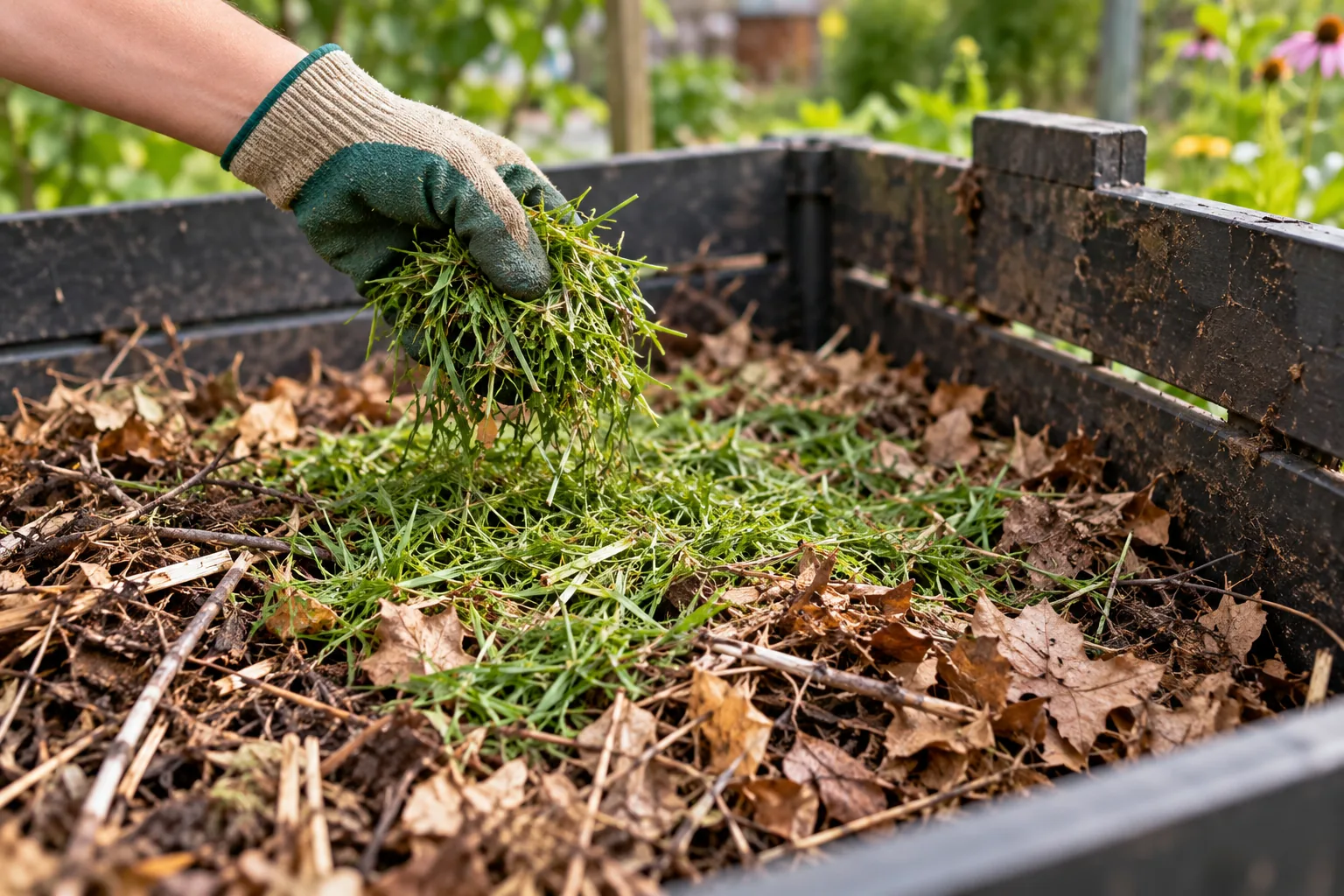
Grass clippings are nitrogen-rich, soft material. A thick mass in a compost bin can become wet, airless and smelly. The RHS composting guide recommends mixing clippings with drier, browner material such as chopped woody prunings, shredded paper or dry leaves. Add thin layers rather than tipping in a whole heavy bag at once.
If you have clean dry leaves available, some can help balance the mix. Leaves need their own sorting and storage in a small garden; a fallen-leaf management plan can help avoid simply shifting one pile beside another. Keep plastic, stones and pet waste out of the compost. If the clippings are already hot, slimy or mixed with unknown chemicals, do not assume they are suitable for a home heap without checking.
Turn or aerate the compost according to the system you use, and monitor moisture. A covered bin may still become too wet if it receives only fresh grass. If there is not enough brown material, store clippings temporarily in a manageable way or choose another disposal route rather than forcing every cut into the same bin. A small compost bin has a capacity; a large lawn can exceed it quickly during rapid growth.
Could clippings mulch a border?
Grass clippings can be used in some garden mulching systems, but they should not be dumped in a thick, wet layer against plant stems. They mat down, can smell and may make it hard to inspect the soil. The RHS garden-waste guide mentions grass-clipping mulch, but the condition and source of the material matter. Use clean, suitable clippings sparingly and keep them clear of crowns and woody stems.
If a border needs a substantial soil-covering layer, mature compost, leaf mould or another appropriate material may be easier to manage than a large quantity of fresh grass. Never spread clippings from a treated lawn without checking the treatment label. Avoid covering bulbs, seedlings and low-growing plants simply to avoid disposal costs.
For a small domestic lawn, the most useful destination may vary from week to week. A dry, light cut can be left; a heavier cut can feed a balanced compost heap; an unusually bulky mow may need collection. You do not have to commit permanently to one method.
Plan a collection route for excess material
Check your council's current garden-waste rules for your address before filling a bin. Councils differ on subscriptions, container types, collection dates and which materials they accept. Grass clippings are commonly accepted as garden waste, but soil, pet waste and mixed rubbish often are not. Keep bags out of shared paths and follow local presentation requirements.
If a contractor removes the material, include the volume and disposal in the agreed scope. A regular lawn care visit with clipping collection differs from a simple cut, particularly after a long break. A substantial first cut or mixed debris may call for garden clearance arrangements. Where clippings can be handled on site, ongoing garden maintenance can include checking the compost and keeping the lawn edges clear.
Do a quick volume check before a long mowing session. A collection box that fills after the first few metres tells you the cut will generate more than a small compost bin can comfortably take. Pause to choose a destination while the material is still manageable. Keep the lawn, paths and drain covers clear as you transfer it; spilled clippings become slippery when wet and can be washed into places they do not belong.
Do not leave full sacks in a sunny corner for weeks. Grass heats and compresses quickly, and wet bags become unpleasant to lift. Agree an end point for the material before the mower starts. If this week's lawn is too long for fine mulching, collect it; then adjust the next mowing interval so the choice is easier next time.