
What to do with fallen leaves in a small garden
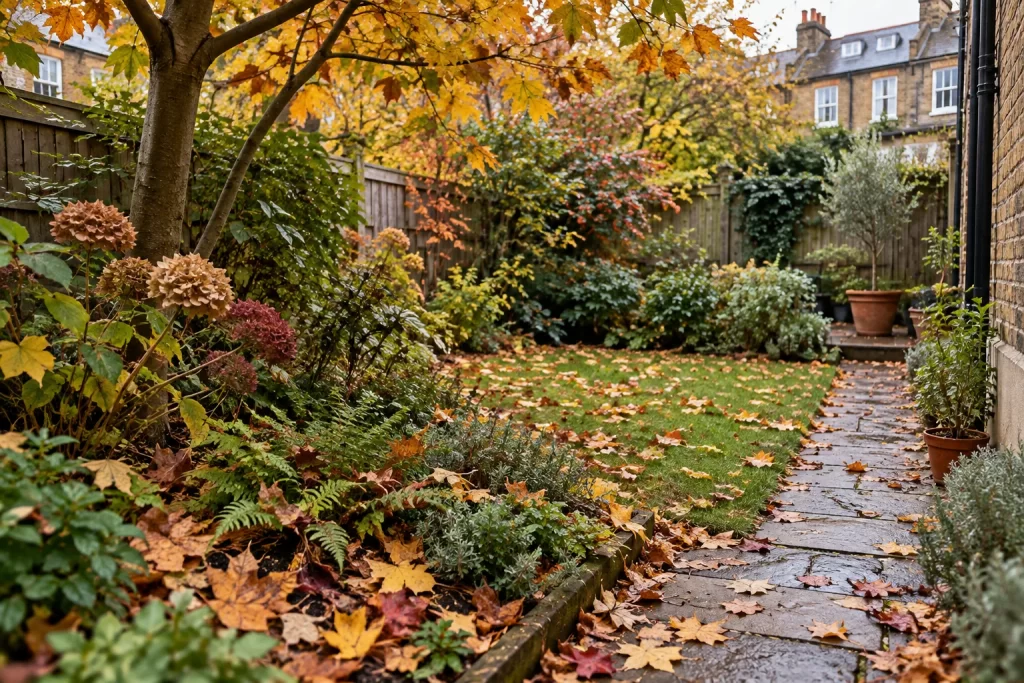
A handful of leaves on a border can be useful. The same leaves pressed into a wet mat on the only route to the back door are a nuisance. In a small garden, the answer is rarely to clear every square metre. It is to decide where leaves cause a problem, where they can stay, and how much material you can actually store.
Start with the way the garden is used. Is there a narrow path that everyone crosses? A short lawn that becomes slippery under a blanket of leaves? A planting bed where fallen material is already settling between shrubs? These areas need different treatment. Making that distinction saves work and gives the leaves a purpose instead of turning every autumn visit into a complete clear-out.
The RHS advises collecting leaves from lawns because a covering can smother grass and reduce light. Its autumn advice also suggests using healthy leaves in borders or for leafmould. That is a useful starting point, but the exact balance depends on your space and the condition of the leaves.
Clear the routes you use first
Sweep the route from the door to the gate, shed, bins or seating area before tackling the rest. Wet leaves can conceal uneven paving and make the surface awkward underfoot. Pay attention to steps, drain covers and the edge where a path meets soil. A small pile against a threshold can also be carried indoors on shoes.
Use a broom on firm paving or a soft rake where the surface is loose. Work from the far end towards a collection point so that you do not repeatedly walk through the pile. If the leaves are stuck to paving after rain, let the surface drain or lift them gently rather than scraping hard at soft joints. Clearing the path does not require pressure washing it every week; the immediate job is to remove the organic layer and see the surface underneath.
Inspect gullies and surface drains without pushing leaves into them. Put the collected material in a tub or sack while you decide what to keep. A garden with one narrow access route feels significantly more manageable once that route is open, even if the planted corners still look autumnal. For a wider sequence of seasonal jobs, the autumn garden maintenance checklist helps separate urgent access work from tasks that can wait for a dry day.
Rescue the grass without stripping the borders
A lawn under a thick, persistent leaf cover gets less light and air. Rake the grass gently, especially if the ground is damp. A spring-tine or plastic leaf rake gives more control than a stiff soil rake. Avoid grinding the tines into soft ground, and do not repeatedly wheel a heavy barrow across a waterlogged patch simply to remove the final few leaves.
One pass may be enough after a small fall. If a tree sheds over several weeks, short repeat visits are easier than waiting until the leaves form a heavy, wet layer. The aim is to keep the grass visible, not to polish the lawn. A few scattered leaves between visits are not an emergency. If mowing conditions are suitable, some gardeners collect and chop dry leaves with a mower, but that is no reason to run a mower over saturated grass or soil.
Beds are different. Leaves already lying loosely beneath established shrubs can be left in many cases, where they break down gradually and shelter small garden wildlife. Do not heap a dense mass over low evergreen foliage, the crowns of small perennials or plants that need light and airflow. Move excess material around rather than burying a plant you intend to keep. Where a strong wind blows leaves straight back onto the path, shift the pile further into the bed or use a low barrier of twigs while it settles.
Make a simple leafmould store, even without a compost heap
Leafmould is decomposed fallen leaves. It is slower and simpler than an ordinary mixed compost heap. The RHS leafmould guidance explains that leaves can become a soil conditioner or mulch, and that tougher leaves break down more readily when shredded. You do not need a large garden or a wooden enclosure to try it.
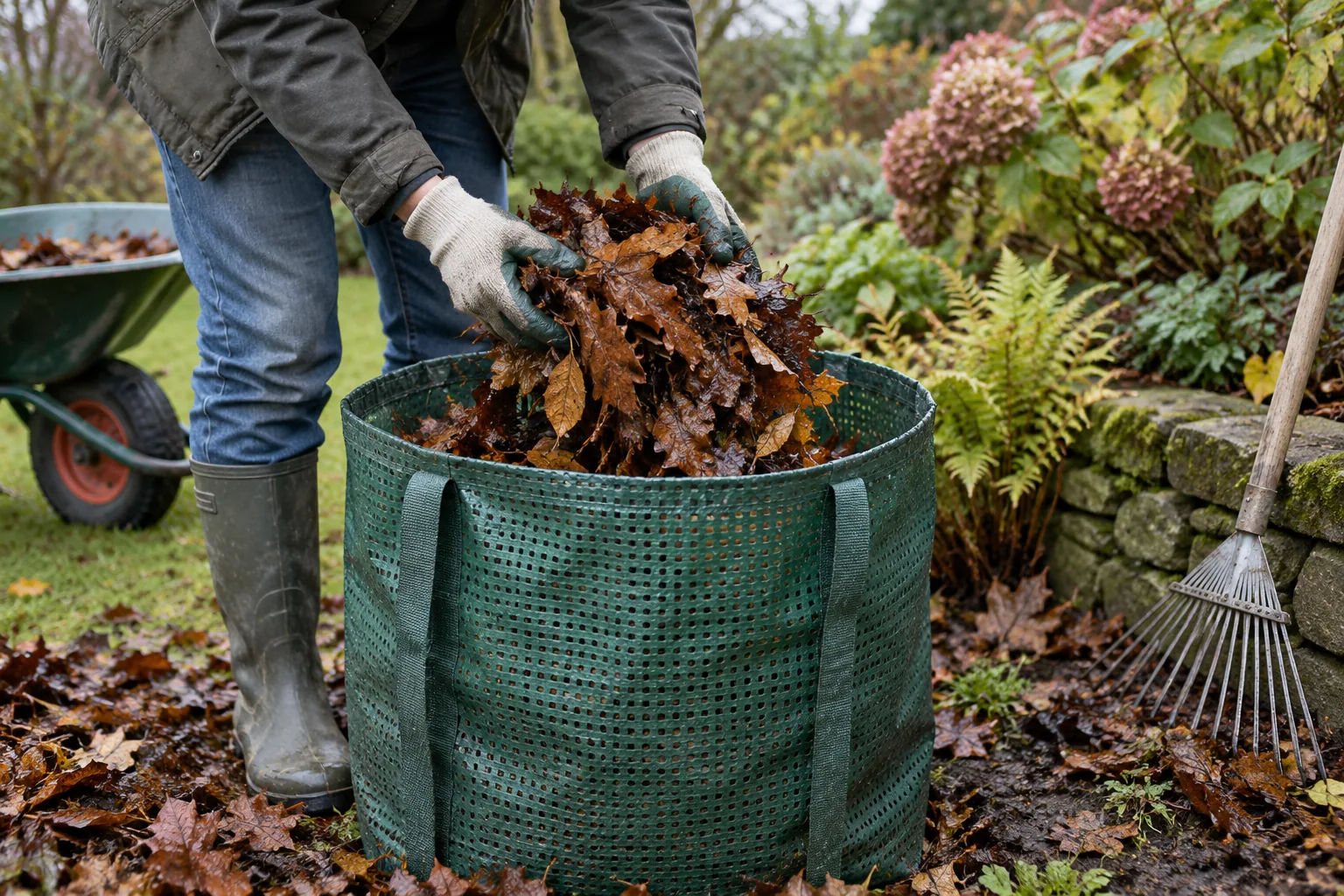
A reusable sack or sturdy bag with small holes can hold a modest collection. Gather leaves when damp, or moisten very dry ones before bagging. Let surplus water drain; the contents should not be a sealed, dripping mass. Tie the top loosely, put the bag somewhere out of the main route, and check it occasionally. If the contents have dried completely, add a little water. If the bag is crushed against a wall or blocking a vent, move it to a more suitable spot.
Another option is a small wire cage in an out-of-the-way corner. A cage uses floor space but is easy to fill as leaves fall. A bag is more flexible where every square metre matters. The RHS describes both approaches in its small-space leafmould account . Label the bag with the collection month if you have several: the oldest can be used first once the leaves have changed into a loose, dark material.
Do not expect a perfect, fine product by spring simply because the leaves were collected in autumn. Breakdown speed depends on the species, whether leaves were shredded, moisture and how they were stored. Coarse partly decomposed material can still be useful as mulch around suitable established plants; very fine mature leafmould has different uses. Keep the process modest enough that storage does not become another garden problem.
Decide what should not go into the leafmould bag
It is tempting to tip everything gathered from a corner into one sack. First separate litter, plastic plant labels, stones and other debris. Leaves blown in from the street may contain contaminants or rubbish, so inspect them rather than assuming they are clean. Avoid putting diseased material into a small home leafmould store when you cannot manage it confidently.
The RHS specifically advises removing leaves affected by conditions such as rose black spot, quince leaf blight and apple or pear scab and sending them to council green-waste collection to reduce recurrence. Its October tree and shrub guidance distinguishes these from some other leaf diseases that can be composted. If you cannot identify the issue, keep obviously affected leaves separate and check reliable plant-specific advice before reusing them near susceptible plants.
Also keep woody twigs, large branches and general garden rubbish out of a bag intended only for leafmould. Mixed green material belongs in a managed composting system if suitable, while bulky prunings may need a different disposal route. A small, clean leaf collection breaks down more predictably and is easier to use later.
Use borders thoughtfully rather than dumping a pile
Where there is room, redistribute healthy leaves across a border in a loose layer. The RHS notes that leaves on borders can remain and may improve the soil and provide habitat. That does not mean covering every plant with a thick blanket. Look at the shape of the planting: low foliage, emerging bulbs and crowns near the soil surface may need a clear space, while open soil under shrubs can take more material.
Keep leaves away from the stem bases of vulnerable plants and from air bricks, drains and the path edge. A light layer is easier to manage in a small garden because you can see what is underneath. If the layer starts to mat, lift and redistribute it. Wind exposure matters too. A sheltered bed can hold a useful covering; a narrow bed beside a busy path may send the leaves back where you just removed them.
This approach is a choice, not an obligation. If your garden is paved and container-heavy, you may have nowhere suitable for a large volume. It is better to keep a manageable amount for leafmould and remove the surplus than to create bags that sit unused for years.
Deal with the surplus without making a bigger mess
Check the rules for your local council’s garden-waste service before filling its bin or ordering a collection. Accepted materials, subscriptions and collection schedules vary by borough. Do not assume a neighbour’s arrangement applies to your address. If using a collection service, keep access clear and explain whether the load is mostly leaves or includes branches, soil, rubble or general rubbish. Those materials require different handling.
For a brief autumn fall, a small amount of material can often be managed through the garden’s own borders, leafmould bags or authorised green-waste route. A large tree over a tiny plot may overwhelm that capacity. In that case, garden clearance may be more appropriate than repeatedly filling an inadequate bag. For ongoing visits that combine leaves with paths, beds and seasonal checks, consider garden maintenance. Describe the volume and access honestly so the work can be scoped sensibly.
Avoid burning leaves as a shortcut. Aside from smoke and nuisance, a bonfire is a poor fit for a compact garden surrounded by homes. A planned reuse or authorised collection route is cleaner and easier to control. If a pile has been sitting undisturbed, lift it carefully: small animals may be sheltering in it. Work through the pile rather than driving a fork straight into the centre.
A ten-minute leaf routine for the next windy week
After the first proper fall, take one bucket or sack around the garden. Clear the door, main path and drain cover. Lift the heaviest patches from the lawn. Check whether beds need material or already have enough. Put clean surplus leaves into the leafmould store; separate anything diseased or contaminated. Then stop. You can repeat the circuit after the next windy spell.
This routine scales to the actual garden. One small tree may call for three quick visits, while a shared boundary tree might need more. You do not need to clear each fallen leaf as soon as it lands, and you do not need to leave all of them in the name of wildlife. Keep the surfaces you use safe and the plants you value visible. Let the rest of the garden keep some of autumn’s useful material.
If the leaf fall is part of a larger seasonal tidy, describe the paths, lawn and planting when requesting help. That gives a maintenance team a clearer brief than asking for the garden to be “completely cleared” when you would actually like the healthy borders to stay intact.