
How to stop weeds returning to garden paths
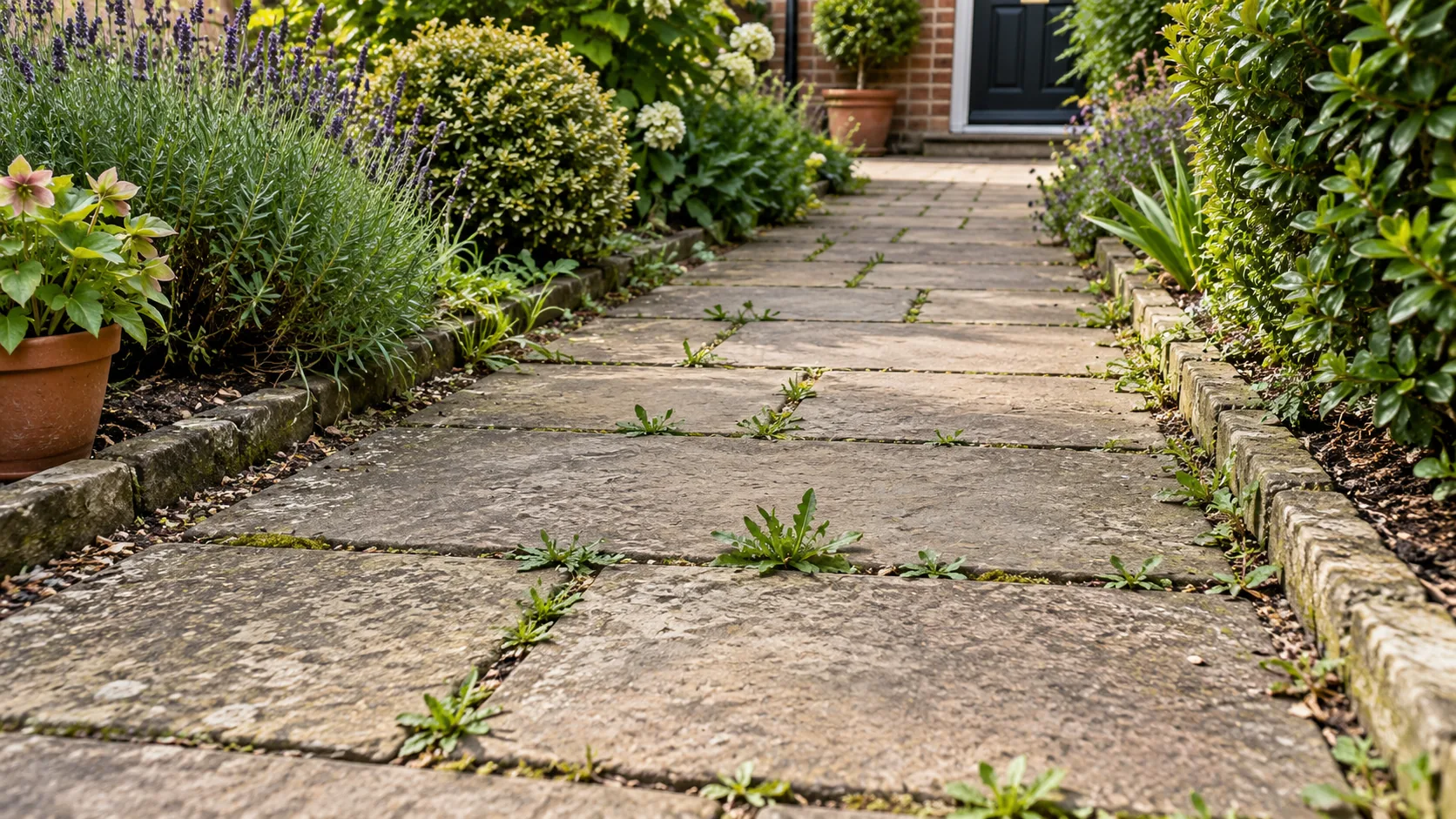
You clear the joints, the path looks tidy, and small green shoots return a few weeks later. That does not always mean the first job was done badly. Seeds can blow in, roots may survive in a crack, or loose jointing material can provide just enough space for plants to establish. A lasting answer begins with noticing which of those is happening.
Not every plant in a path is a problem. A little low growth in a quiet corner may soften hard surfaces, while vegetation on steps or a busy route can hide an uneven edge and become slippery. The RHS guide to weeds on hard surfaces recognises both sides: some gardeners welcome the plants, but paths need to remain safe and usable. Decide where you want a clear route before treating every crack alike.
This guide focuses on prevention through careful removal, regular checks and repair of the surface where needed. A path with broken joints will keep offering new openings if only the leaves above ground are removed.
Identify the pattern before choosing a tool
Look at where plants return. Are they scattered as tiny seedlings across the whole path? That suggests windblown seed and organic debris collecting in joints. Do the same thick stems rise from one crack? A deeper root or creeping plant may still be there. Is growth strongest along the edge next to a border or lawn? Plants may be moving in from the side, or soil may be spilling onto the paving.
Check the surface itself. Loose mortar, missing jointing compound, rocking slabs or a widening crack indicate a repair issue. A short-term weed removal can restore access, but it cannot hold a moving slab in place. Mark any uneven or slippery area that needs attention for safety. Do not fill a structural gap with an arbitrary product before understanding why it opened.
Photograph a typical section before and after clearing. If weeds return in exactly the same spots, the pattern may show a persistent root or failed joint. If new seedlings appear in different joints, regular sweeping and timely removal may be enough. This distinction saves work and avoids an unnecessary whole-path replacement.
Remove young weeds while the roots are manageable
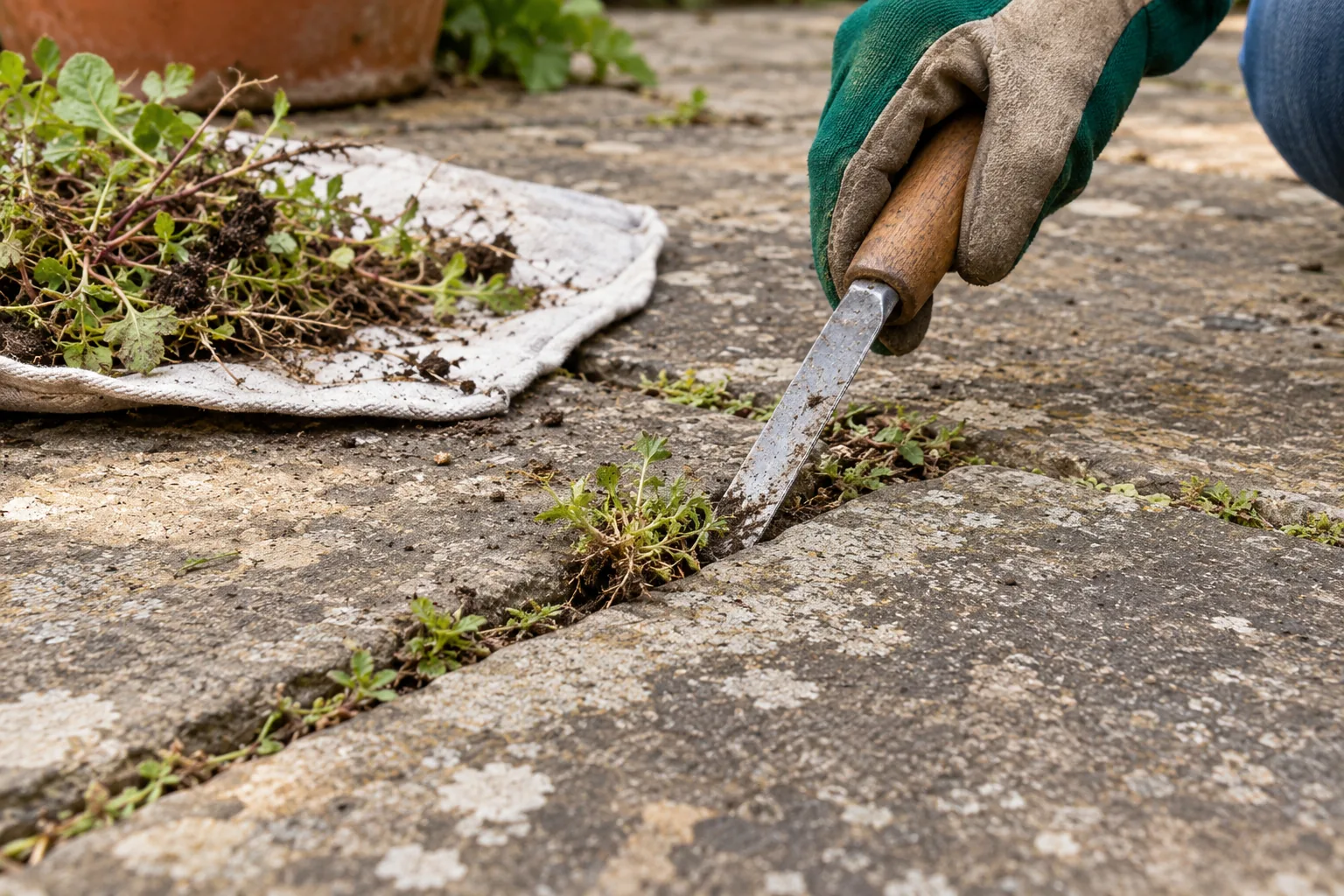
Small growth is easier to lift than a mature plant with a thick root. On dry paving, use a narrow hand weeder or paving knife to get into the joint and lift the root where possible. Work slowly around fragile stones or old pointing. Sweep the loosened material away so it cannot become a new layer of compost in the same crack.
The RHS suggests weeding knives, angled paving brushes and, for some deeper-rooted plants, specialist pullers. Choose the tool that fits the joint. A broad scraper can damage sound material or leave only the top of a persistent root. A stiff brush can clear seedlings and moss from suitable surfaces, but be gentle on soft stone or deteriorating pointing.
On loose gravel, a hoe can disturb young weeds near the surface on a warm, dry day, provided the gravel depth and underlying material allow it. Avoid dragging soil up through the stones. For persistent perennial roots, repeated shallow disturbance may be needed. The aim is to remove growth before it flowers and sets seed, while recognising that a seed bank and new arrivals make “never again” an unrealistic promise.
Keep the edges from becoming a seedbed
Organic debris is a quiet contributor to recurrence. Leaves, soil and fine compost collect at the path edge and in low joints. Sweep regularly, particularly after autumn leaf fall or a potting session. Keep border mulch from spilling over the edge and trim plants that trap debris against paving. You do not need to pressure wash the whole route simply to remove a thin layer of material.
Where lawn grass creeps across an edge, redefine the line carefully. A clear edge makes sweeping and mowing easier and reduces the amount of rooted material extending into joints. But do not cut repeatedly into an unstable paving edge or expose a gap that needs repair. If the boundary between bed and path is failing, consider a suitable edging detail rather than endless scraping.
A monthly garden maintenance routine can include a short path check: sweep the route, lift young weeds and note any change in the surface. Ten minutes at the right time is often more effective than one exhausting session after growth has rooted deeply.
Repair joints that keep opening
If sound removal is followed by repeat growth in the same wide gaps, inspect the jointing. The RHS suggests repointing paving where gaps persist, using an appropriate mortar or jointing product after loose material is removed. The correct material depends on the paving, joint width, drainage and how the slabs are laid. Old or permeable paving may need a different approach from modern rigid slabs.
Do not seal every opening without thinking about water. Some paths are designed to drain through joints; others rely on falls to a suitable outlet. A repair that traps water against a wall or sends it towards a door could be worse than the weeds. If slabs move, sink or hold water, a garden design assessment may be needed before cosmetic repointing.
In a gravel path, consider whether the layer is deep enough and whether soil from adjacent beds is mixing into it. Topping up without correcting edge spill can merely hide the same problem for a season. If a full relay is being considered, plan the base and the drainage rather than assuming a thin sheet beneath loose stones will solve every weed.
Be careful with quick-fix treatments
Home recipes are appealing because the ingredients are familiar, but boiling water can scald people and damage nearby plants or surfaces; salt can harm soil and planting; and flame weeders bring fire risk. The RHS does not recommend weed burners as an ideal solution, citing fire risk, fuel use and limited effect on deep-rooted perennials. A path near dry leaves, fencing or stored materials is a particularly poor place for casual flame use.
The RHS favours non-chemical weed control for hard surfaces. If considering a regulated product, read current label restrictions and take care around drains and plants. Do not pour leftover chemicals into a gully or assume a product is suitable for every paving material. For most small domestic paths, timely hand removal and repair of failed joints provide a clearer, lower-impact starting point.
Pressure washing may remove surface growth, but a strong jet can dislodge weak jointing and send soil and debris into drains or borders. If the paving needs cleaning for slip resistance, first assess its material and condition. Discuss jet washing as a surface-care job with runoff and joints in mind, not as a guarantee that weeds will never return.
Choose what can grow and where it cannot
In a quiet patio corner, low plants in a suitable joint may be intentional. On steps, a main path or an access route used by someone with limited mobility, a clear, even surface matters more. Decide where you can tolerate softening growth and where the route must be kept open. That distinction makes maintenance less adversarial and avoids unnecessary work in unused corners.
If planting in joints is deliberate, select plants suited to the light, foot traffic and available root space. Do not simply allow any vigorous seedling to take over; a woody volunteer can expand a crack or become difficult to remove. Keep the surface visible enough to inspect for loose slabs and drainage problems.
Our courtyard maintenance plan explains how a short sweeping and drain check fits into care for a paved space. The same principle applies to a path through a planted garden: the route is part of the garden's function, not merely the gap between beds.
A realistic prevention routine
Sweep the route after heavy leaf fall or whenever soil collects. Lift young weeds before they set seed. Check the edges and joints for repeated growth in the same places. Repair loose or failed material with a method suited to the paving and its drainage. Revisit after rain to see whether water is lingering where it should not.
If the path is long or the planting beside it grows quickly, garden maintenance can combine weeding with edge care and seasonal checks. Explain which sections must stay clear and where you are happy to keep low planting. The goal is a path that remains safe and manageable, not a claim that one treatment can prevent every windblown seed.