
A small courtyard garden maintenance plan that fits the space
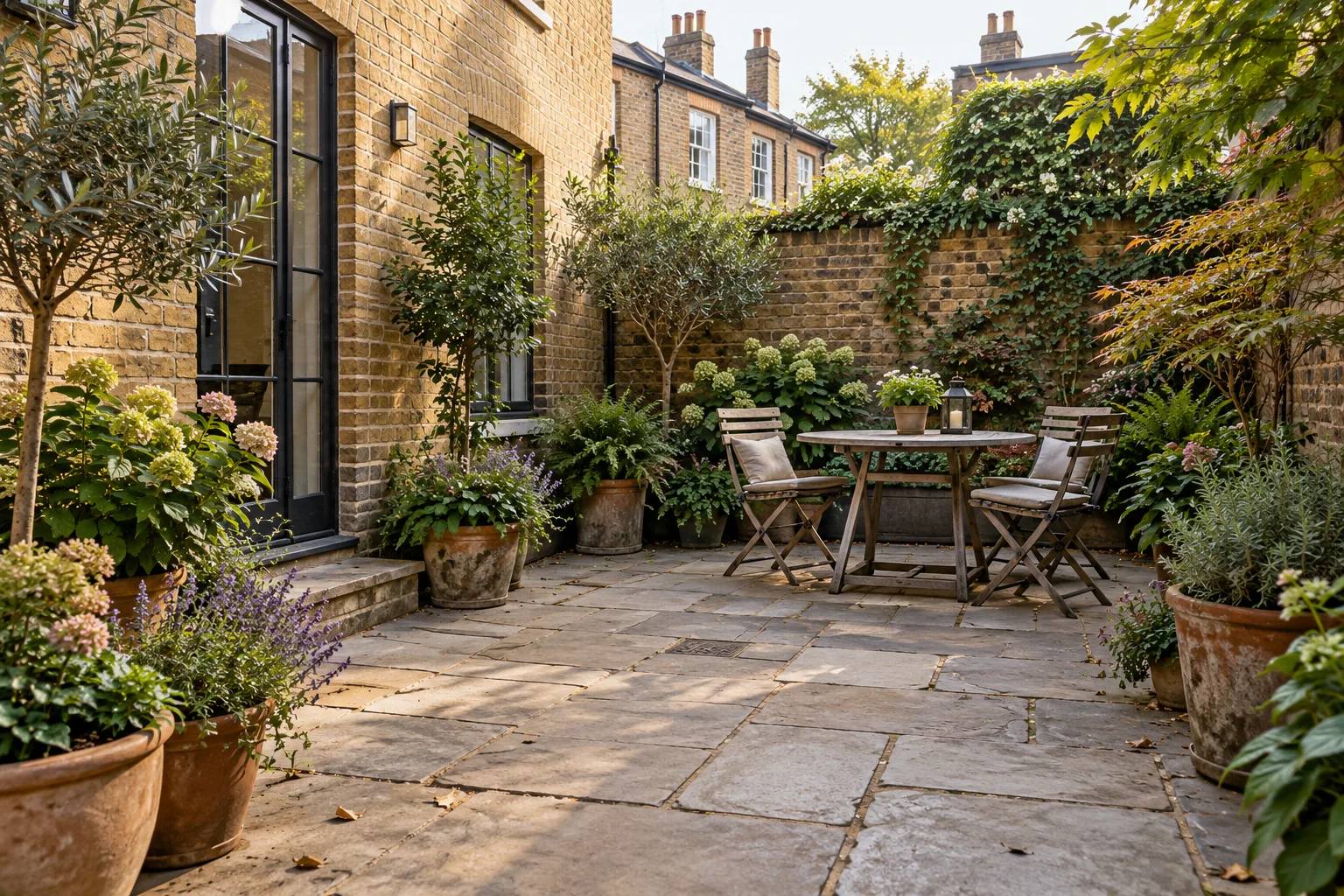
A courtyard can look easy to care for because there is no lawn to mow. In practice, its plants may rely almost entirely on containers, while a narrow route and a large amount of paving make small problems immediately visible. A blocked drain, a drying pot or a shrub arching over the only chair can matter more than a whole bed of weeds in a larger garden.
The best maintenance plan treats the courtyard as a working space. Keep access comfortable, check how water moves across the paving, care for containers according to their individual needs, and leave enough room to enjoy the garden. A short frequent inspection is usually more useful than a dramatic seasonal clear.
The RHS container-growing guide notes that pots are especially useful where soil is limited, but drainage holes and regular care matter. This is the central difference from an in-ground garden: each container has a small, separate root environment. Rain on the paving does not tell you whether the compost beneath a leafy plant or under an eave is moist.
Draw the route before moving a pot
Walk from the door to the seating area, bins, gate and any tap. Can a person carry a watering can or waste bag through without brushing against plants? Does a chair still pull out fully? Is there enough room to reach every pot for inspection? In a small courtyard, one large container in the wrong position can turn routine care into an obstacle course.
Move or prune only what is necessary to restore access. A plant might be attractive from the house but awkward beside the door. Consider a different position, a smaller pot or a species better matched to the space before repeatedly cutting it back hard. Heavy containers should be moved safely, with help where needed, and set on stable surfaces rather than wedged against a drain cover.
Keep a clear working spot for potting or sorting cuttings. If every square metre is full, maintenance produces temporary piles that block the route. A foldable table or one open section of paving can make the space easier to use than another decorative pot. Good courtyard design gives plants room to be tended, not just room to be photographed.
Check each container, not only the weather
Pots dry at different rates. Size, material, exposure, plant growth and shelter from rain all change the amount of water required. The RHS advice on watering containers recommends checking moisture below the compost surface before watering. Feel at a suitable depth rather than judging by the top centimetre alone.
Group pots by their needs where practical, but do not assume all plants in one corner need the same amount. A large leafy plant in a sunny pot can use water quickly; a shaded evergreen may remain moist. In warm or windy weather, check more often. In winter, check less frequently but do not assume a pot under a roof receives rain. If compost is saturated and water is not draining, inspect the hole and saucer instead of adding more water.
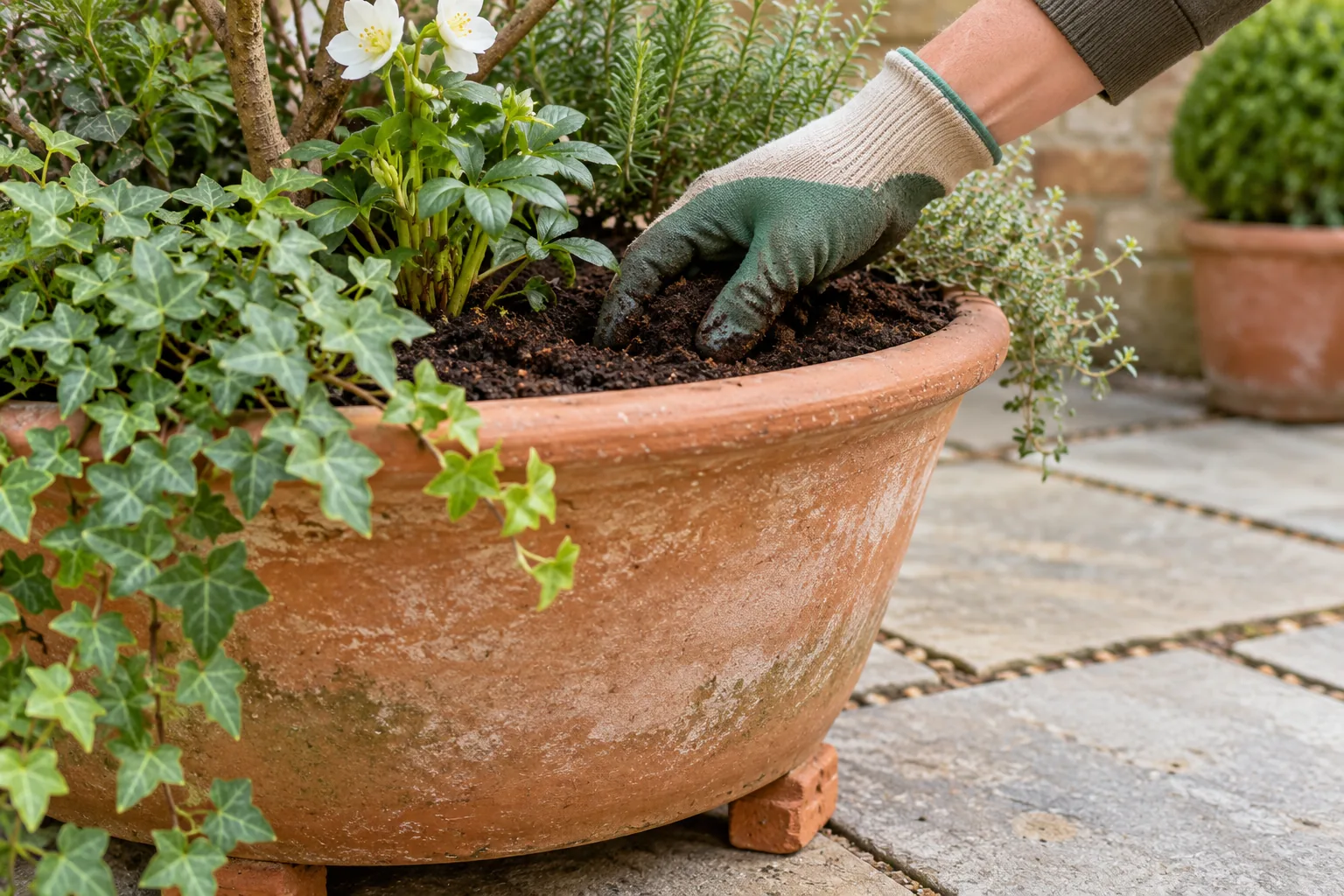
Use containers with drainage holes. The RHS advises keeping those openings clear, for example by raising pots on suitable feet or supports. Make sure the support is stable and suited to the weight. Saucers can help hold water during dry periods, but should not leave vulnerable roots sitting in stagnant water during a wet spell. The right arrangement may change with the season.
Give plants room to grow and a reason to stay
Container planting can become crowded in two ways: roots fill the pot, and shoots fill the courtyard. Check for water running straight through without wetting the rootball, slow growth, or roots pressing against the container. The RHS container maintenance guidance notes that established plants may eventually need a larger pot or refreshed compost. Repotting is a considered job, not an automatic response to every yellow leaf.
Above ground, watch the mature size of shrubs and climbers. A small plant bought for a narrow courtyard can become an annual cutting problem. Train growth on sound supports, remove stems that block access at an appropriate time, and retain useful cover where it does not crowd the space. Check a plant's pruning needs before treating every container as a clipped topiary.
Inspect supports, ties and wall fixings. Wind can move a tall pot or pull at a trellis. A container must not block ventilation or trap moisture against the building. If roots, paving or walls are being affected, record the issue and consider whether a change of planting or layout is needed. Routine trimming may not solve a plant placed in the wrong spot.
Keep paving usable without overcleaning it
Sweep leaves, soil and dropped flowers from the main route. Clear gullies and drain covers. Look for loose slabs, rocking pots and slippery patches in shade. A broom and careful inspection often address the immediate problem. A pressure washer is not a default monthly tool: the surface material, joints, drainage and nearby planting all need consideration first.
If algae or dirt builds up repeatedly, ask why. Is water collecting in a low corner, or is dense planting keeping the area shaded and wet? Cleaning may improve appearance temporarily without changing the conditions. Before arranging jet washing, identify delicate surfaces, failing joints, electrical points, open doors and where runoff will travel. A small courtyard can send water and grit straight towards the house or neighbouring space if the work is poorly planned.
Weeds in paving joints are easiest to manage while small. Remove them with a suitable hand tool without damaging the joint. If the same gap repeatedly fills with growth, assess whether the material has failed and needs repair. Do not rely on repeated aggressive cleaning to compensate for broken pointing or a movement problem.
Adjust the routine through the year
In spring, inspect pots after winter, refresh only where needed and plan planting that suits the light. Summer usually increases moisture checks and growth management. In autumn, clear falling material from the route and drains, but keep suitable organic matter for the plants where possible. Winter often shifts attention to stability, drainage and frost-sensitive containers rather than vigorous pruning.
These are patterns, not fixed monthly jobs. A sheltered London courtyard may remain mild while a windy exposed one dries pots quickly even in cool weather. A north-facing space may need different plants and less watering than a hot brick courtyard. Observe your own microclimate before copying a generic schedule. Our monthly maintenance routine explains the broader principle of inspecting and prioritising each visit.
Some jobs need a separate session. Repotting a heavy specimen, repairing paving, reworking drainage or replacing an overgrown climber should not be squeezed into an ordinary tidy. Put them on a project list and decide what must happen first. That keeps routine visits manageable and avoids half-finished work in the only usable area.
Make a brief that reflects a courtyard
If you book garden maintenance, describe the number and size of containers, the access route, water availability, drainage points and any plants to retain. Explain whether you want watering during absences, pruning, weeding, surface sweeping or waste removal. A “small garden” can still involve many individually demanding pots.
If the layout itself is the issue, discuss garden design rather than paying indefinitely to move the same pots and cut back plants that do not fit. Better circulation, suitable container sizes and a planting scheme matched to light can reduce the work required. Choose change because it solves a specific problem, not because the courtyard needs to resemble a show garden.
A simple repeating check is enough to begin: open the route, test moisture in each pot, inspect drains and supports, remove the growth that obstructs use, and note any bigger job for a separate day. In a courtyard, those small decisions keep the whole space comfortable.