
Jet washing a patio: what to check before you start
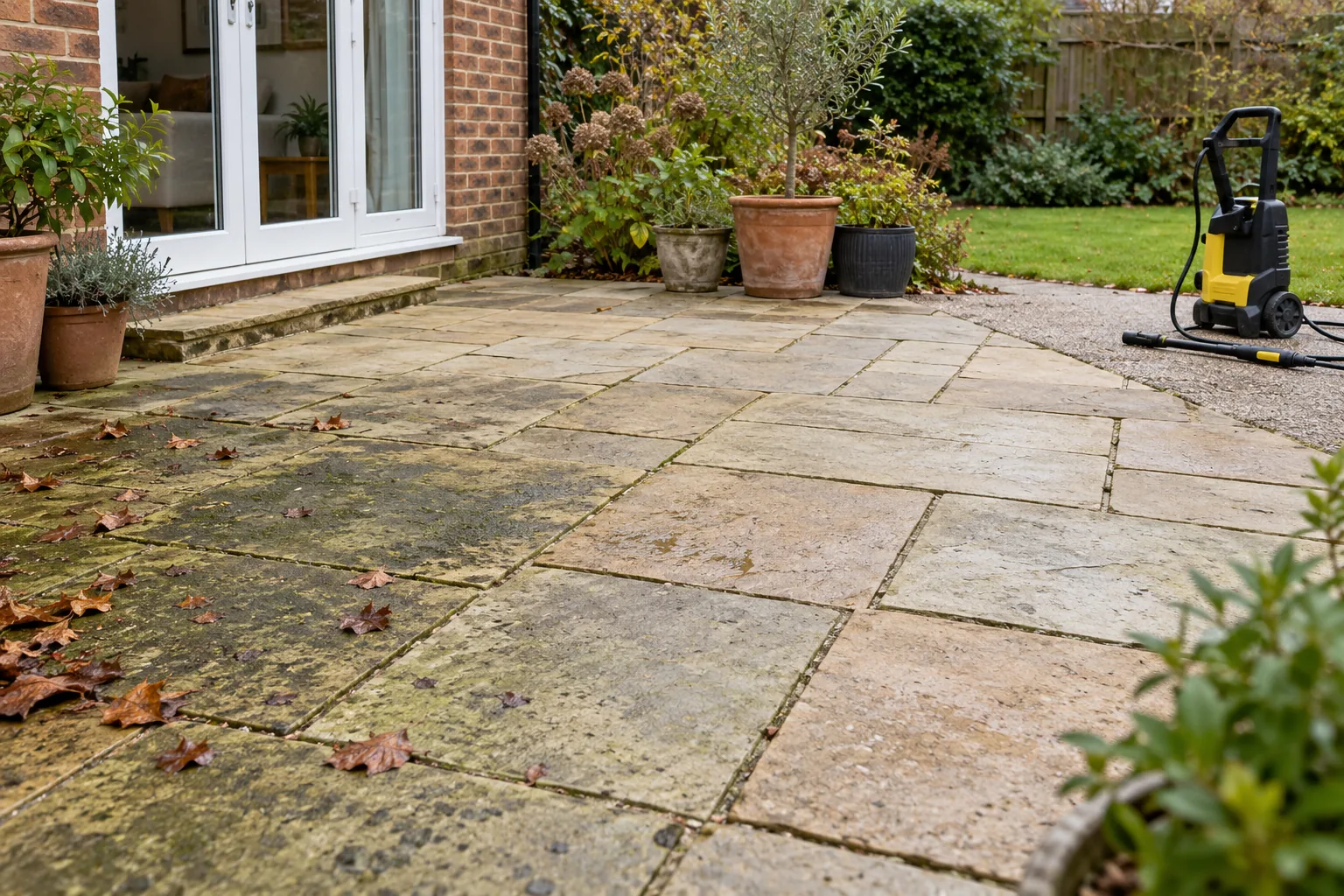
A dark, slippery patio can look like a job for the strongest washer available. That is often the wrong starting point. Paving materials, jointing and drainage differ, and a powerful jet can remove more than dirt. Before cleaning, find out what the surface is made of, whether it is sound, where dirty water will go and whether a simpler method will address the problem.
The aim is a safe, usable surface that remains intact afterwards. A patio with algae caused by persistent shade may become green again even after a thorough wash. A loose slab will still be loose when it is clean. Cleaning should form part of sensible surface care, not conceal a repair that needs doing first.
Identify the surface and its condition
Look at a clean corner or an original installation record if you have one. Is the paving natural stone, concrete, porcelain, block paving or another material? Does it have a sealant or special finish? If the product is known, follow its manufacturer's cleaning instructions. A method suitable for one stone or jointing compound may mark another. Avoid guessing from colour alone; printed porcelain can imitate natural stone closely.
Walk the patio carefully and mark loose, cracked or rocking slabs. Inspect the joints for missing mortar, sand or resin. Test whether the edge is stable and note places where paving meets timber, rendering, door thresholds or planting. Do not direct a powerful jet at a crumbling joint and expect it to survive. The paving manufacturer's aftercare guidance recommends checking and replacing loose or missing jointing material and using low pressure where a washer is suitable.
Photograph existing staining and damage before work. That makes it easier to judge whether cleaning helped and to distinguish a new mark from an old one. A small hidden test area is particularly useful on an unfamiliar surface. Stop if the test roughens the paving, changes the colour or loosens material.
Ask whether brushing is enough
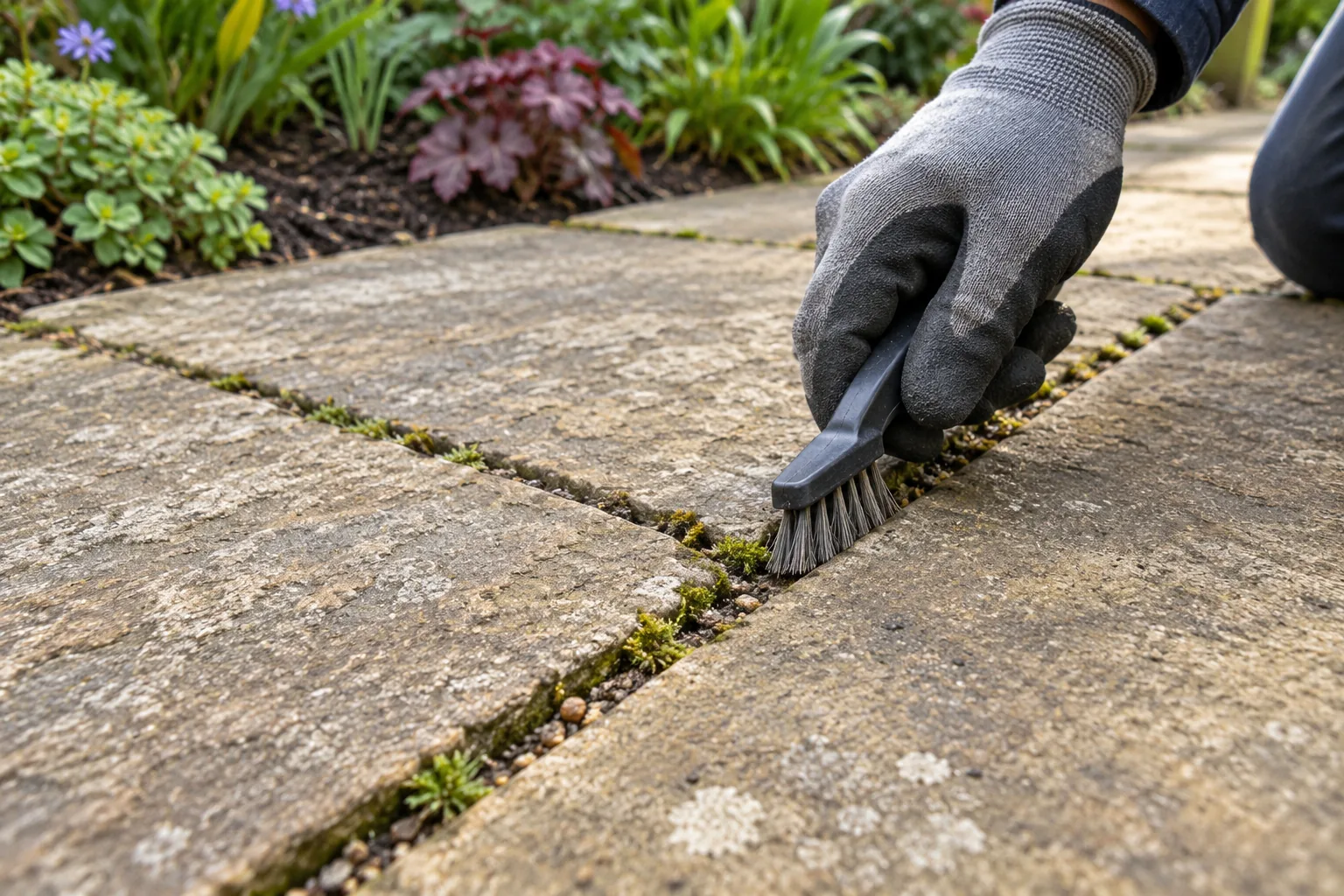
Leaves, loose soil and some surface growth may be removed with a stiff brush and water. Moss in joints may need careful manual removal and later joint repair. The RHS advice on algae and moss on hard surfaces recommends regular brushing as a way to prevent growth becoming established. It notes that pressure washing can remove growth quickly but uses water and energy and may offer only a temporary result if the underlying damp conditions remain.
Work from a firm, non-slip route and avoid pushing debris into planting beds or drains. If the surface is already slippery, treat access as a safety issue before doing a detailed cosmetic clean. A narrow path used daily may deserve attention before a decorative patio corner. Be realistic about the benefit: a brush can be the best tool for a small area where aggressive washing would disturb jointing.
Check where the water will go
Runoff should be planned before a hose is connected. Look for gullies, low spots, doors and neighbouring land. A washer adds substantial water to the rainwater already held in a shaded patio. The RHS warns that pressure washing where drainage is poor can worsen damp problems. If a patio already ponds after rain, understand that issue first rather than washing until dirty water stands against a wall.
Protect nearby soil, plants and ponds from grit and wash water. Avoid treating a drain as a convenient disposal route for sediment or chemicals. If a cleaning product is being considered, read both its label and the paving instructions and account for where it will travel. Never assume a product is safe for planting or watercourses because it is sold for outdoor use.
Move pots, furniture and loose objects away from the work zone. Make sure there is a place to stand and retreat without directing spray towards glass, electrical fittings or an open door. In a small courtyard, splash can reach almost every surface; protection may take longer than the washing itself.
Choose equipment and settings conservatively
If pressure washing is appropriate, begin with the least aggressive suitable setting and test it on a discreet area. Keep the nozzle moving and maintain the distance and angle recommended for the material and jointing. Do not aim directly down into joints or at an unstable slab edge. Marshalls' paving maintenance guidance recommends low pressure, a shallow angle and inspection of joints after cleaning; it warns that some high-pressure equipment can mark or damage paving.
Follow the washer manufacturer's instructions for connections, electrical protection, personal protective equipment and safe operation. The RHS specifically advises goggles when using a pressure washer. Keep children, pets and bystanders out of the spray area. Never aim the lance at a person or use the jet to clean footwear or hands. Stop and isolate equipment before checking a blocked nozzle or hose.
Do not raise pressure simply because a stain remains. Oil, rust, efflorescence, algae and ordinary grime have different causes, and some stains may require a material-specific approach or may not be fully removable. More force can damage the finish while leaving the cause in place. If you cannot identify the paving or coating, ask for advice before washing it.
Protect joints and edges during the clean
Work across the paving rather than driving spray along a joint. Keep away from loose pointing and lifted edges until those defects are assessed. Block paving with sand-filled joints may need replenishment if cleaning dislodges sand. Mortared joints can also fail where already weak. A tidy surface with washed-out joints is an incomplete job.
After cleaning, let the patio dry enough to inspect properly. Check the joints, thresholds and drainage route. Remove loosened debris from the surface rather than leaving it to settle elsewhere. Record areas that need re-jointing or repair and arrange suitable materials and weather before finishing them. Follow the jointing manufacturer's cure and aftercare instructions; do not assume it can be replaced immediately in any condition.
Weeds in cracks can signal gaps that need repair. Pulling growth out without addressing an open joint may leave a place for new seedlings. A garden access plan is also useful if furniture, pots and waste have to move through a narrow route before the patio can be cleaned.
Decide when a professional visit is useful
A small, sound patio with familiar material may be manageable with a brush or careful domestic equipment. A large area, unknown finish, weak joints, steep slope or drainage concern deserves a more detailed assessment. Give a jet washing provider photographs of the surface, close-ups of joints, approximate area and details of access and water supply. Ask what is included: preparation, test patch, cleaning, debris removal and any separate joint repair.
Where paving has failed or its levels send water towards the house, cleaning is not the principal remedy. Discuss the construction and drainage through garden design before paying for repeated washes. The best outcome may be a repaired surface with a modest regular sweeping routine, rather than a harder annual blast.
Inspect again after the next rain. If algae returns quickly, identify the shade, moisture and debris that keep the area damp. Cleaning can improve grip and appearance, but lasting care also depends on drainage, sound jointing and keeping the surface free of accumulated leaves.