
Plan garden access before a major tidy
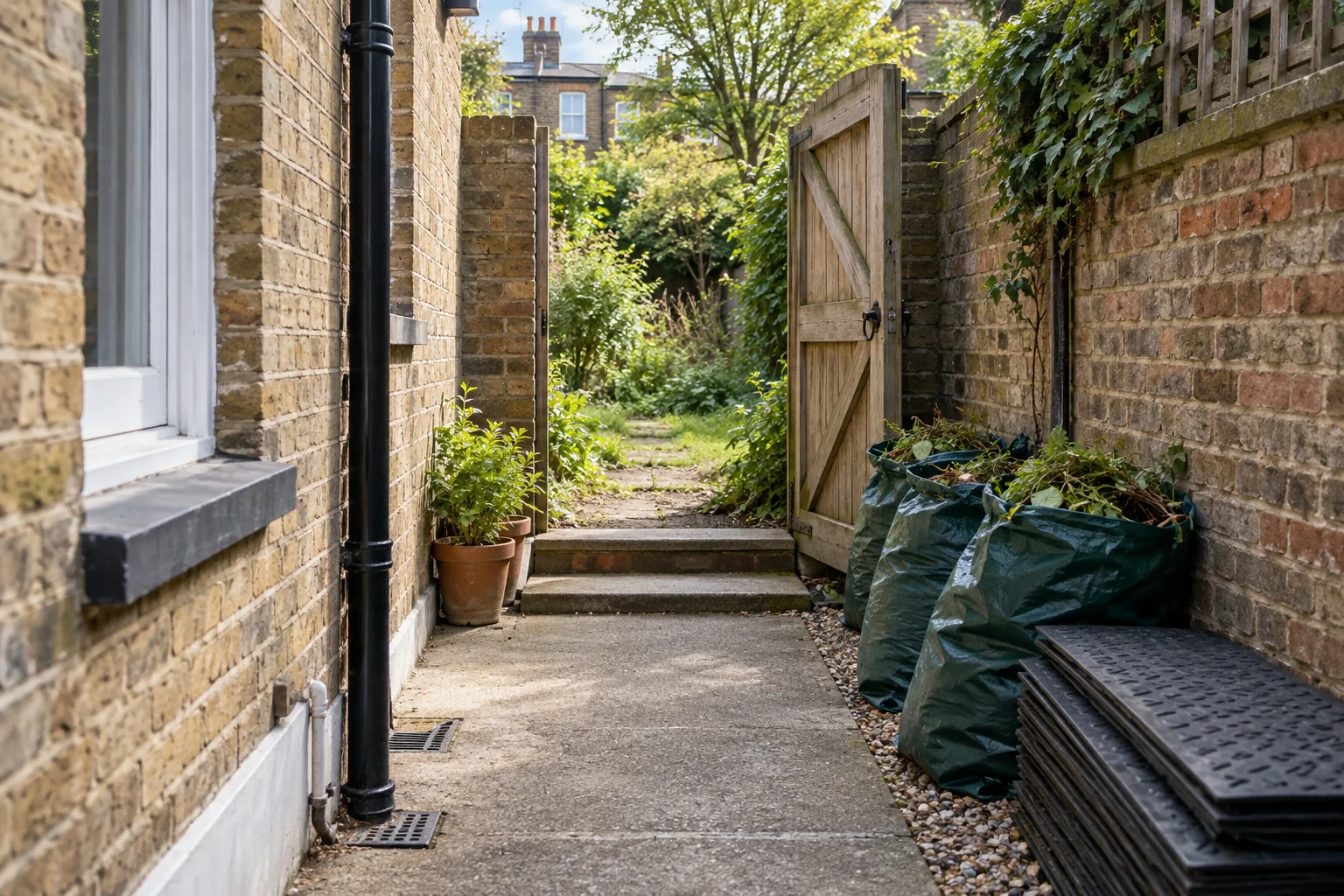
The work inside an overgrown garden may be straightforward once someone can reach it. The difficult part can be a narrow side gate, a flight of steps, a fragile paving run or a waste pile with no practical route out. Access affects the tools that can be used, how much material can be removed in one visit and what needs protecting along the way. A little planning before the first cut saves both time and damage.
Walk the route that people and materials will actually take, starting at the street or parking place and ending at the furthest work area. Do not assume that a photograph of the garden tells the whole story. A contractor needs to understand the gate, the house or passageway, level changes and where the waste will go.
Trace the route from arrival to the work area
Begin outside. Is there a lawful place to stop while unloading? Can equipment be carried without blocking a pavement or entrance? In a street with parking restrictions, make a note of the signs and the time limits. Do not promise a space you cannot reserve. A long carry from the vehicle changes the practical scope of a visit even where the garden itself is small.
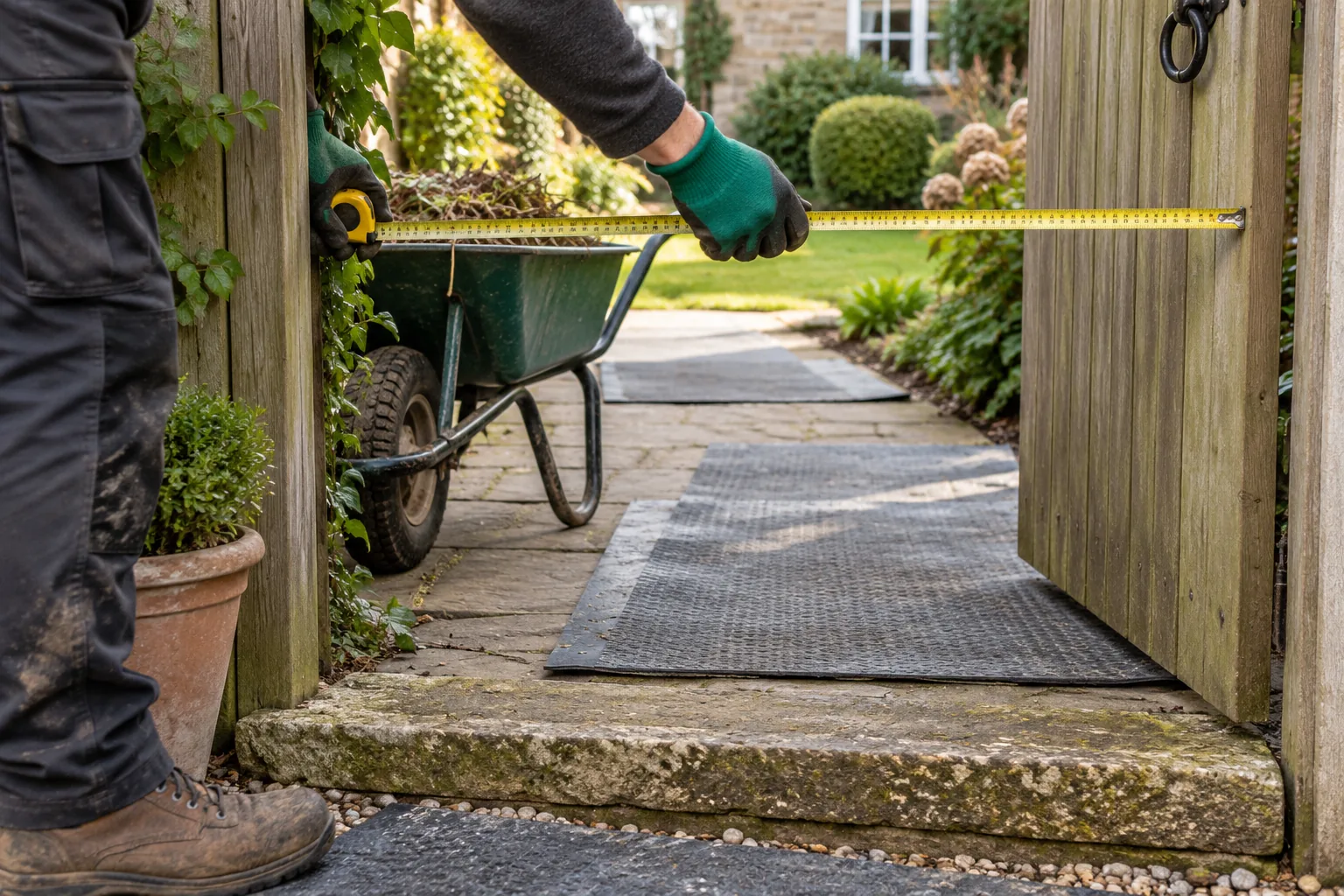
Follow the route through every gate and door. Measure the narrowest opening with the gate fully open, not just the gap between posts. Check whether the gate swings freely, whether its latch projects into the opening and whether a wheelbarrow can turn beyond it. A passage can be wide enough on paper but obstructed by bins, bicycles, a hose reel or an awkward corner. Record steps, low lintels, loose thresholds and any areas where a load would need to be carried rather than wheeled.
If the only access is through the home, say so before booking. Mention the floor type, corners, thresholds and rooms involved. A plan to move wet cuttings through a furnished room without protection is unlikely to suit anyone. Protecting a route may be possible, but the scope and method should be agreed rather than discovered on the day.
Identify surfaces that need protection
Look at paving, timber decking, lawn, drains and planted edges along the route. Loose slabs can shift under a loaded barrow; a soft lawn can rut; a narrow border can be crushed by repeated shortcuts. Photograph existing cracks or stains before work so there is a clear record. Move pots and ornaments to a safe place where possible, but do not stack them in the route workers need.
Ground protection may be useful on vulnerable surfaces, yet it should be appropriate for the surface and loads involved. A sheet laid over a trip hazard does not make the hazard safe. If a route crosses a lawn after heavy rain, postponing removal or changing how materials are carried may be better than driving repeated loads across saturated turf.
Consider overhead clearance as well. A low branch, washing line or cable can catch a carried load. Do not handle any service cable or work close to electrical hazards without the right professional advice. The aim is to identify constraints early enough to choose a safe method, not to clear every obstacle yourself on the morning of the job.
Mark the plants and features that should stay
A substantial tidy can make retained plants difficult to see, especially when weeds and long grass hide them. Walk the garden and photograph shrubs, climbers, bulbs, containers and any self-seeded plants you want to keep. Tie a visible marker to a support or place a label beside a plant, without damaging stems. Note irrigation pipes, lighting cables, wildlife features, boundary structures and buried services you know about.
Give clear instructions for what should be cut, lifted, stored and left untouched. “Clear everything” may sound efficient but is risky in a garden with established planting. If the site has become too dense to see the ground, clear it in stages and reassess before removing roots or changing levels. The order of work matters: open a safe path, expose and mark retained features, then tackle the bulk of growth.
Keep a small area available for sorting material. Green cuttings, branches, soil, rubble, treated timber and general litter should not be bundled into one unidentified heap. Different materials may require different handling and disposal routes. Separating them as they arise is easier than pulling them apart at the end of a long day.
Decide where waste will stand and how it will leave
Estimate the volume honestly. A hedge looks compact while standing; its cuttings spread out. A small, neglected garden can yield more bags than expected, especially if long grass, woody growth and old stored items are involved. Decide whether material will be chipped, bagged, held temporarily or taken away during the visit. Specify who supplies bags or containers and where they may stand without blocking access, drains or neighbours.
Ask what the agreed price includes. A tidy, a green-waste removal and a mixed-waste clearance are different scopes. The government household waste guidance says that if a householder uses a private business to collect household waste, they should check the business is registered as a waste carrier. The detailed duty-of-care guidance also distinguishes waste produced by a tradesperson during their work from household waste the occupier hands over. A clear agreement about whose waste is removed, by whom and by what route avoids a pile left by the gate.
Do not put bags on a public pavement or someone else's property without appropriate permission. If a skip is proposed, check siting and local requirements rather than assuming it can occupy the street. The practical question for an ordinary garden tidy is where material goes at the end of each session, including what happens if the expected volume grows.
Plan around people who still need the garden
People may need to reach bins, a rear door, a shed or a neighbouring right of way during the work. Keep at least one agreed route available when possible. Tell the team about pets, children and gates that must remain secured. Arrange a place for tools and cuttings that does not interfere with daily use or emergency access.
Noise and repeated journeys through a shared passage can affect neighbours. A short advance conversation is often useful where access is shared or a boundary hedge is involved. It should not be treated as permission to enter their land. If a gate or fence must be opened from the other side, obtain consent before scheduling work that depends on it.
Weather may change the access plan. Rain can turn a firm route into a slippery one; dry weather can raise dust during clearance. Put a decision point into the plan: which tasks can proceed, which should wait and how the team will protect surfaces if conditions deteriorate. A realistic plan includes the possibility of stopping before damage occurs.
Send a brief that lets the work be priced properly
A useful brief contains photographs of the garden and the full access route, the narrowest gate width, steps, parking constraints, surface concerns, retained plants and the waste you expect to remove. Explain the result you want in plain terms: clear path, cut hedge, accessible beds, agreed material removed. If you want later routine care, say so, but distinguish that from the initial recovery visit.
The garden clearance service is the relevant starting point for a substantial overgrowth or large waste volume. Garden maintenance may suit the continuing visits after the space is usable. Asking for a scope that names access, protection and disposal makes it easier to compare proposals and reduces surprises when the team arrives.
Before work begins, take one final walk from street to garden. Open the gate, move the obvious obstacles, mark the plants to keep and confirm where material will leave. A successful tidy ends with usable routes and an agreed waste outcome, not merely with growth cut down inside the garden.