
How to care for a shaded lawn and know when grass is the wrong choice
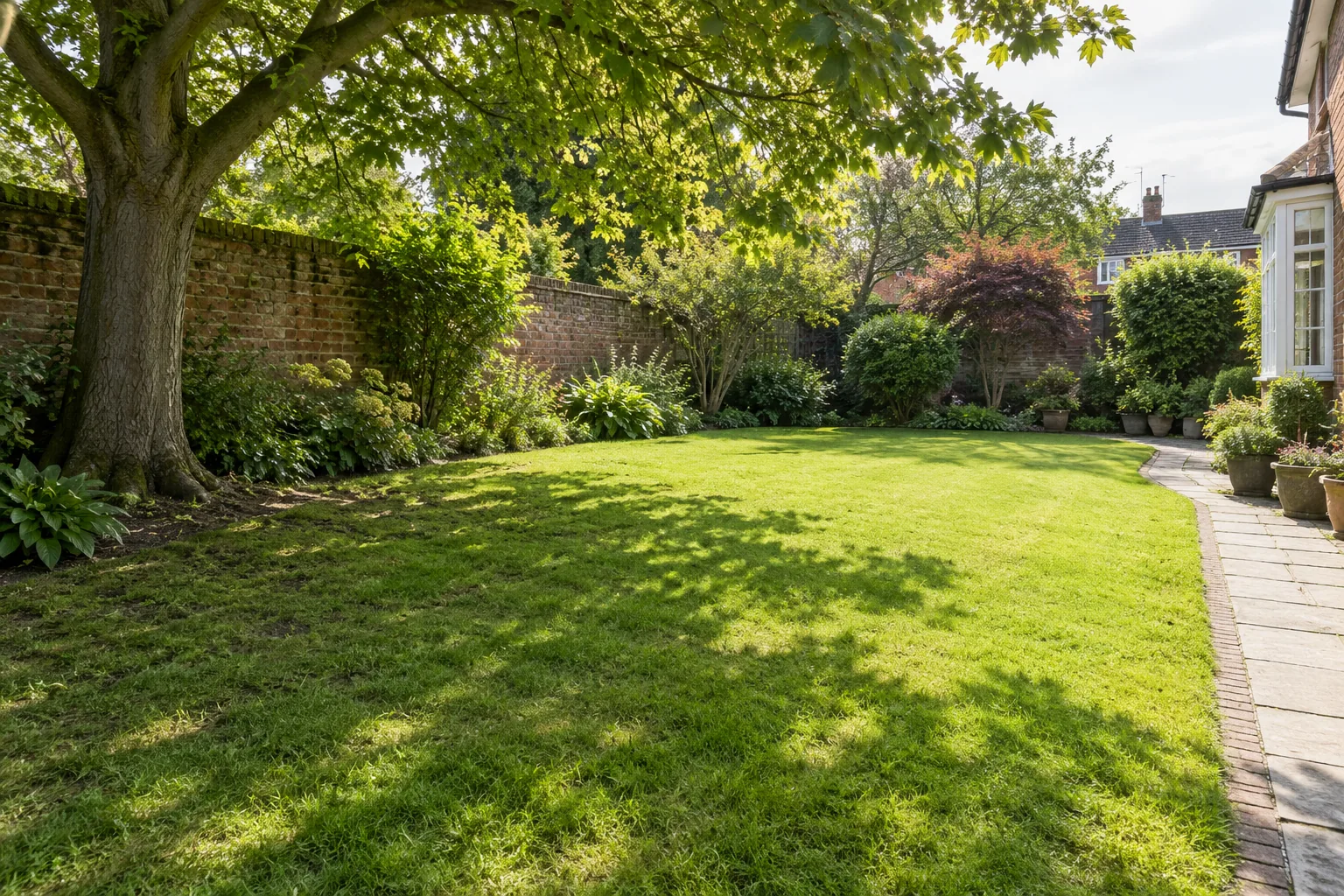
The grass near the house looks reasonable, but the strip beneath the tree is thin and muddy. It is easy to blame the mower or buy another bag of seed. Yet shade changes the conditions in which grass grows. Tree roots may also compete for water and nutrients, while a narrow dark strip may receive the most foot traffic in the garden.
A shaded lawn can be improved when it still receives enough light and the other pressures are manageable. Deep shade, especially under a dense evergreen canopy or between tall structures, may never support the neat lawn you picture. The RHS guide to lawns in shade makes this distinction: shade-tolerant grass mixes can help in moderate shade, but even those grasses need light. The first step is to describe your actual site, not to assume a new seed mix will solve every bare patch.
This guide focuses on observation, gentler care and realistic alternatives. A lawn under a tree has different needs from a sunny patch, and it need not look identical to be useful.
Map the shade over the growing season
Watch the lawn in morning, midday and late afternoon. Is the affected area shaded by a building all day, or does it receive a useful spell of sun in summer? A deciduous tree changes the light as it comes into leaf; a wall does not. Photograph the same patch in different months if you can. The word “shady” covers a wide range of conditions.
Look at the shape of the thin grass. A broad area under a dense canopy suggests light and root competition. A narrow line to a gate suggests wear as well. A small hollow that remains wet after rain may have a drainage issue independent of shade. Do not treat these as mutually exclusive causes. They often reinforce one another.
The RHS notes that grass beneath dense trees can receive very little summer light, and tree roots also take moisture and nutrients. Cutting tree roots or severely pruning a tree to rescue turf is not a casual lawn-care step. Trees may be protected and their health matters. Consider how much grass the site can reasonably support before planning changes to a mature tree.
Mow less often and leave the grass longer
Shaded grass often grows more slowly. Follow its growth rather than mowing the whole lawn to a single weekly timetable. The RHS recommends a higher cutting height in shade, at least around 6 cm and sometimes higher, with less frequent mowing and collection of clippings. Longer leaf blades provide more area to capture limited light. A very short cut can further weaken already sparse grass.
You may need a different mower setting for the shaded area than for a vigorous sunny section. If the machine cannot make that easy, choose a sensible compromise that protects the weakest grass. Do not repeatedly turn the mower on the thin patch or drive across it while the soil is soft. If there is little active growth, a cut may be unnecessary even when the sunny side looks ready.
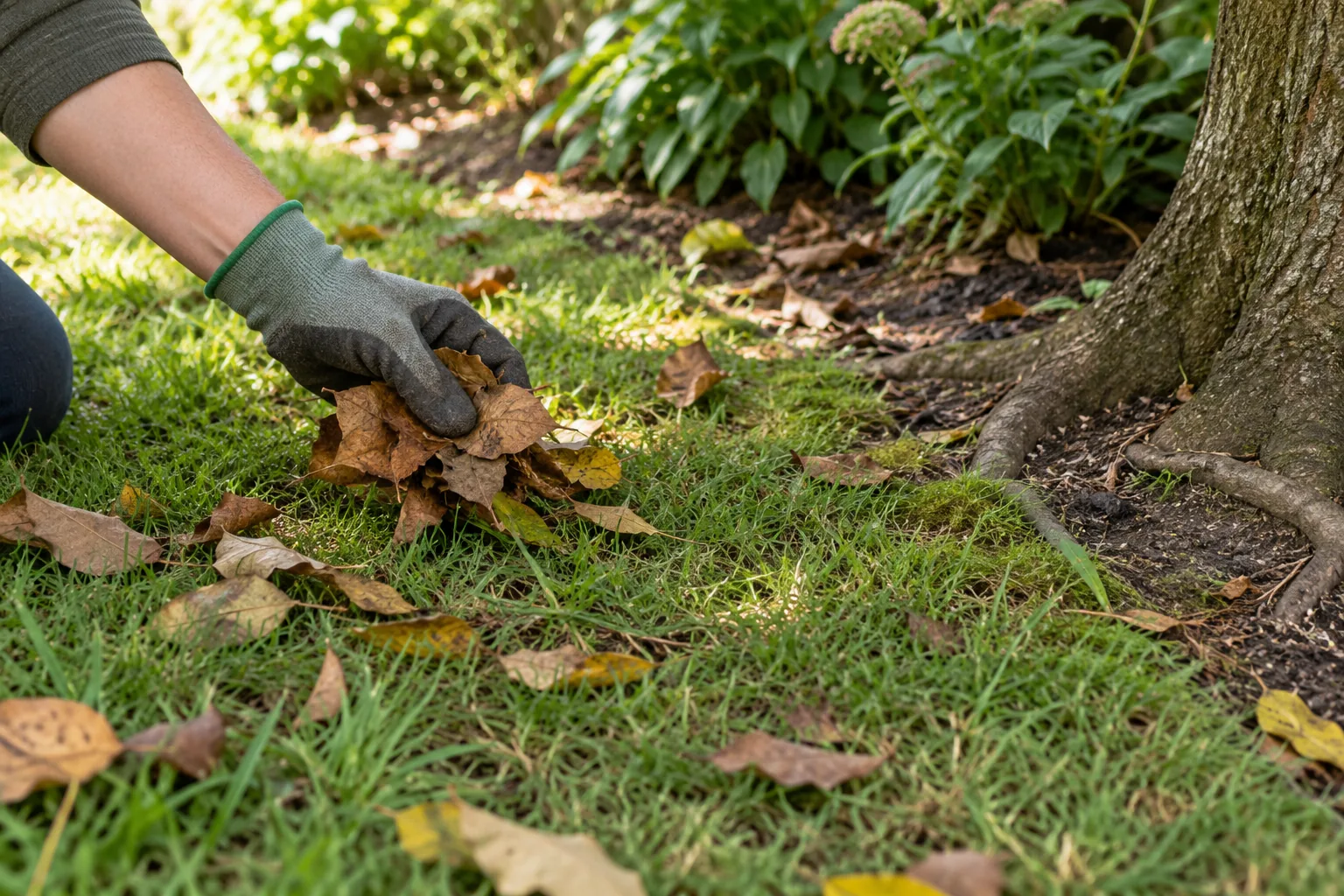
Clear heavy leaf cover so the remaining grass receives as much light as possible. Work gently on a firm day rather than scraping into wet soil. The winter lawn care guide explains why keeping dense leaves off grass and limiting wet-weather traffic matter through colder months. In a shaded corner, those small protections can be particularly important.
Reduce traffic before buying seed
Light-starved grass has less capacity to recover from repeated footsteps. If the same shaded strip is the route to bins, a shed or a gate, new seed may germinate and then be worn away. Observe the path people actually take. Could traffic be moved onto an existing route, or would a planned path or stepping stones better serve the garden?
Avoid laying a token row of stones without checking levels, width and how the route will be used. A wheelbarrow or bin needs more than a series of tiny stepping points. If the route is permanent, a proper garden design decision may save years of repeated patch repair. Preserve appropriate space around tree roots and consider where runoff will go.
Our guide to why a lawn becomes muddy after rain helps separate compaction, use, shade and drainage. If the soil remains wet long after the rest of the garden dries, diagnose that issue before reseeding. Do not assume shade is the only reason grass fails.
Repair only after improving the conditions
In light to moderate shade, a shade-tolerant seed or turf mix can be appropriate. The RHS explains that these mixes commonly contain more fescue grasses and should be chosen for the actual degree and type of shade. Prepare the soil, address compaction when conditions are suitable, and protect the area while new grass establishes. Ordinary sunny-lawn seed placed under a dense canopy is unlikely to overcome the basic lack of light.
Do not aerate or cultivate waterlogged ground simply because it is autumn. Wait until standing water drains and soil can be worked without making deep marks. Check for shallow tree roots before using tools. Do not sever them to make a seedbed. A modest repair that respects the tree is better than a neat patch at the cost of root damage.
Establishment requires follow-up. New grass needs moisture but not saturation, and it should not be mown too soon or too short. Agree how people will avoid the patch. If that cannot be done, consider a different use for the area. A repair plan that relies on everyone avoiding the only route through a small garden may not be realistic.
When an alternative is kinder to the garden
Deep shade beneath a large tree or close to a north-facing wall can defeat even a shade-tolerant mix. The RHS suggests considering shade-loving plants where grass continually struggles. A mulched planting area, suitable ground cover or a well-designed path can be more stable and appealing than a patch that must be re-seeded every year.
Choose replacements for the exact conditions. Dry shade under tree roots is different from damp shade beside a wall. A plant advertised simply as “shade tolerant” may still need moisture, suitable soil and establishment care. Avoid building up soil deeply around a tree trunk or burying surface roots just to make a new bed. Seek plant-specific and tree-sensitive advice where the site is complicated.
You can also keep the better grass and change only the weakest area. A curved bed beneath a tree can make the remaining lawn simpler to mow and give the garden a deliberate shape. A path through the habitual traffic line can protect turf on either side. Changing a small section is not admitting defeat; it is using the ground for something it can support.
Watch moss without assuming it is the cause
Moss often grows where grass is already weak from shade, dampness or low mowing. Removing moss alone does not increase light or change foot traffic. The RHS moss-in-lawns guidance encourages looking at the growing conditions first and notes that some gardeners accept moss as part of a green surface. Decide whether it affects how you use the garden before planning a treatment.
If you want a conventional grass lawn, address shade where safely and appropriately possible, reduce traffic and improve soil conditions before repair. If you prefer a soft, informal green area, a mixed surface may be acceptable. The right target is a usable garden, not a single-species photograph.
A practical care brief
Describe the light pattern, tree or building shade, wetness after rain and route people use. Show photographs from more than one season if you have them. Ask for a plan that distinguishes the lawn worth keeping from the area better changed. A lawn care visit can address mowing height, leaf clearance and repair options; a layout change may call for design work.
Keep expectations honest. A shaded lawn usually needs less frequent mowing, a higher cut and protection from heavy traffic. It may need targeted repair in suitable conditions. In the deepest shade, the most successful care decision may be to stop asking grass to do a job that another surface or planting could do better.