
How to plan a low-maintenance planting border that still feels alive
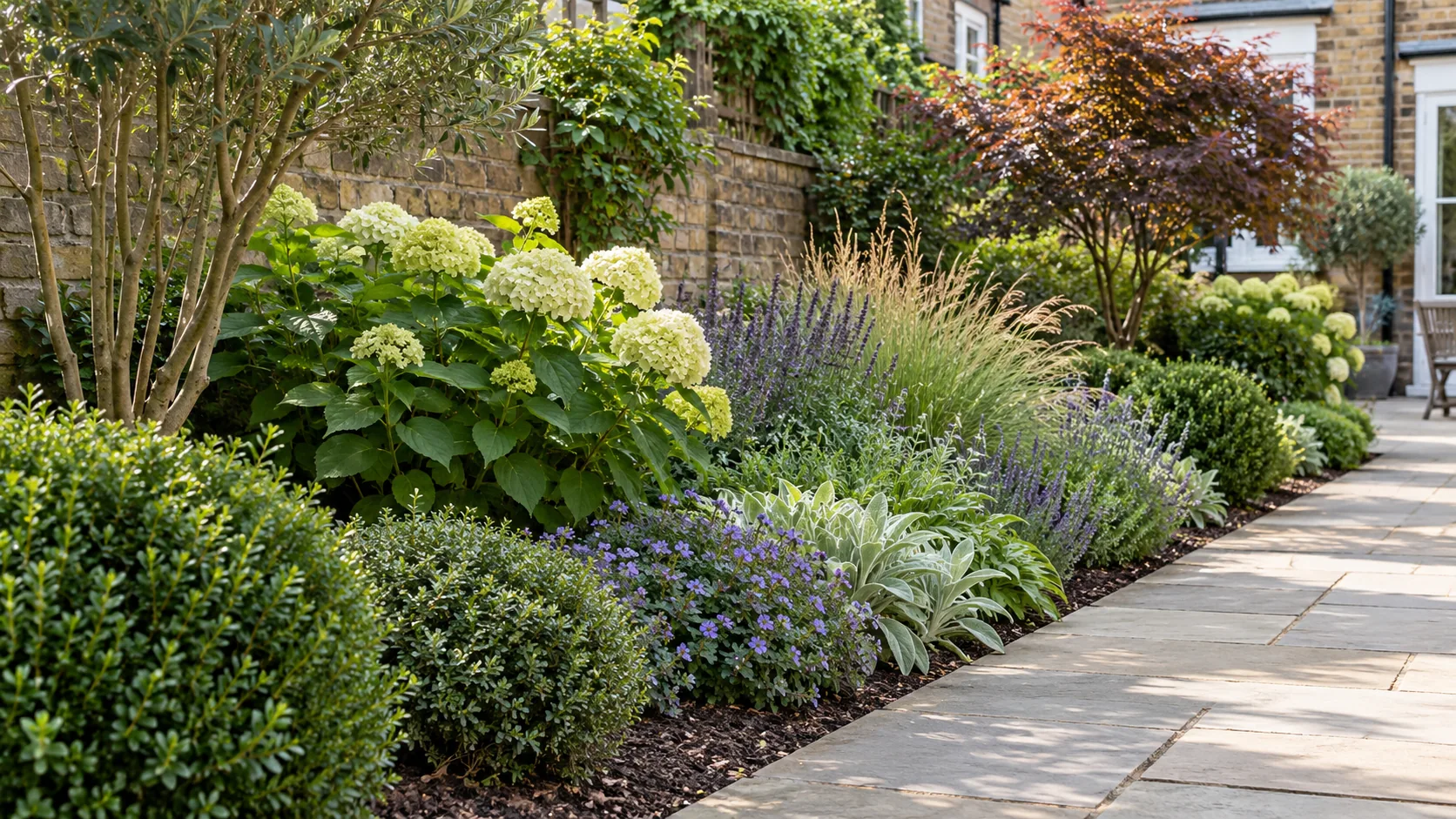
Low maintenance does not mean a row of plants that never grow. It means choosing a border you can reach, plants that suit the site, and a routine that fits the time you actually have. A full bed of fast-growing shrubs can create more pruning than an open mix of well-spaced plants. A mass of small pots may look simple in a photograph but demand constant watering.
Begin with the conditions rather than a shopping list. How much sun does the bed receive through the year? Does water stand after rain? Is it beside a narrow path or under a tree? How deep is the available soil? The RHS guidance on planning a border stresses matching plants to place, measuring the area and allowing for eventual size. Those decisions reduce work more reliably than a label that simply says “easy care”.
Make one honest choice about effort. Would you rather deadhead flowers every few weeks, prune one shrub annually, or accept a looser appearance for part of the year? There is no plant combination with no work at all. The goal is to spend effort where it brings enjoyment, not on repeatedly correcting avoidable design mistakes.
Measure the border and its working space
Mark the border's length and depth. A narrow strip beside a path has different possibilities from a bed deep enough for layered planting. Leave space for mature foliage without forcing people to brush through it. If the border is against a fence, think about how you will reach the back for weeding, pruning or repairs. A design that looks full on planting day but cannot be entered or reached is difficult to keep healthy.
Notice the viewing points. A border seen from a kitchen window may benefit from winter structure. One beside a dining table may need plants that do not block chairs or drop messy fruit onto paving. A front path needs a clear, durable edge. These practical details help determine height, spread and spacing before colour choices.
Sketch the bed with rough mature sizes, not the size of nursery pots. A compact plant today may eventually fill a metre of space; another may remain low but spread widely. Check credible plant descriptions for dimensions under conditions similar to yours. Allow room for air and access rather than squeezing in extras to make the bed look finished immediately.
Learn the light and soil before buying plants
Watch the bed at different times of day. A wall can cast permanent shade while a deciduous tree allows more light before it leafs out. The north end may be damp as the south end dries quickly. Treat the bed as a series of small conditions if necessary, not one uniform planting zone.
Check the soil after rain and during a dry spell. Is it heavy and sticky, quick-draining and light, or made of mixed material from previous building work? Remove obvious debris and identify drainage issues before planting. The RHS border creation guide advises preparing the ground and removing persistent weeds, while avoiding work when soil is frozen or waterlogged. Planting into badly prepared ground tends to shift the work into endless watering and replacement later.
Do not assume a London garden is uniformly warm or sheltered. Brick walls, shade, wind tunnels and reflected heat can create different microclimates even in one small plot. Choose plants for the exact bed and check their needs, rather than relying on a general city label.
Use fewer kinds of plant, but give each a job
A simple structure can be easier to care for than a bed of many one-off specimens. Choose a modest backbone of shrubs or robust perennials suited to the site, then repeat a smaller set of companions. Repetition makes the border coherent and helps you learn what each plant needs. Include some ground-covering growth where appropriate, but leave space around newly planted specimens until they establish.
Give each plant a reason to be there. It may screen, provide winter foliage, flower at a useful time, cover soil or soften an edge. Avoid selecting five plants that all need support, frequent deadheading and lifting if you know you can only visit monthly. The RHS notes that maintenance demand varies, including staking, pruning, deadheading and dividing. Consider these jobs before buying, not after the bed fills.
The lowest effort choice is often a plant well matched to available light, moisture and soil. A plant forced to survive in the wrong place will demand more watering, feeding, pruning or replacement. “Drought tolerant” still does not mean that a newly planted specimen can be left unwatered while its roots establish.
Leave room for growth and maintenance access
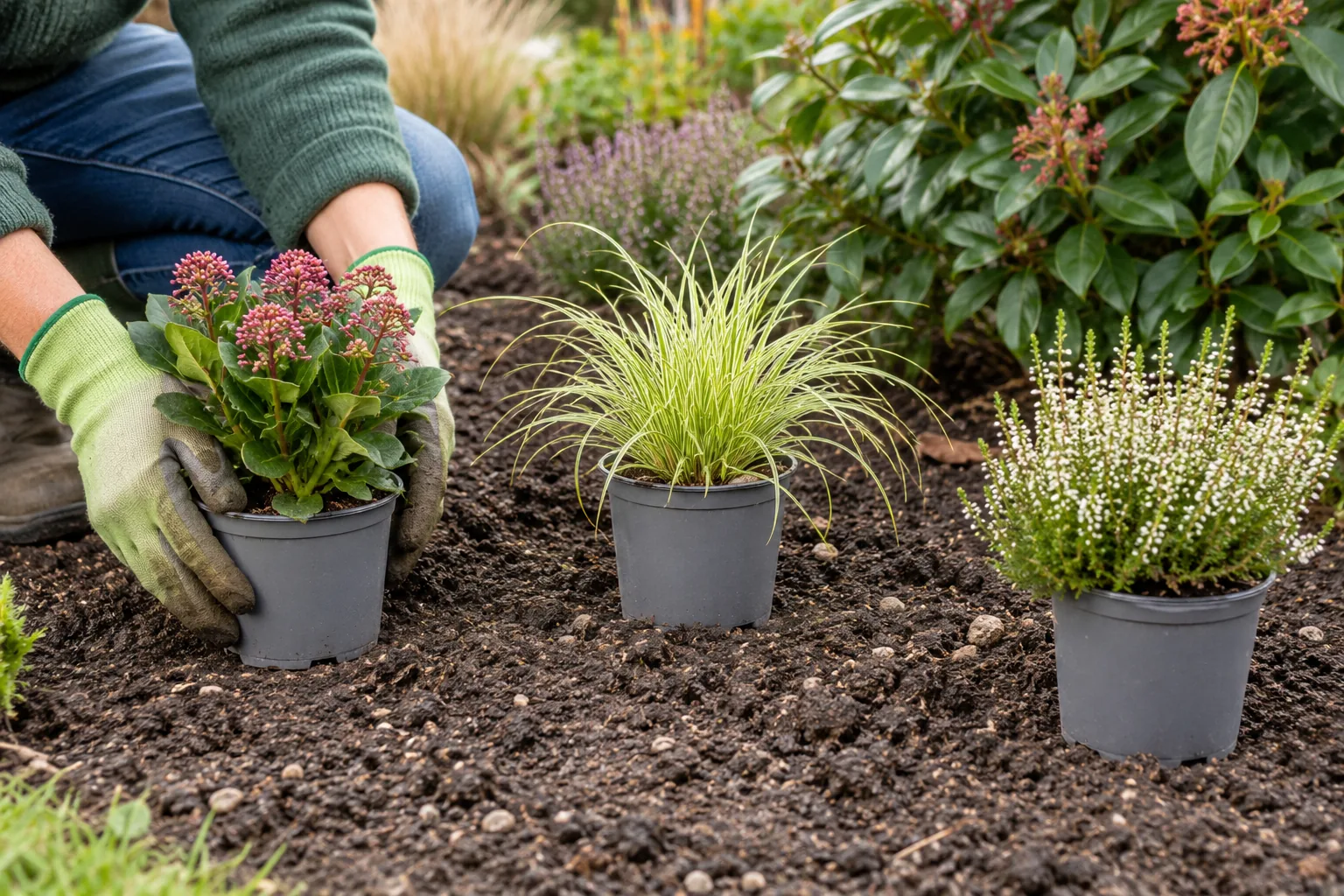
Set pots on the prepared soil before planting, as the RHS advises. Step back and imagine each at mature size. Are two shrubs going to collide over a path? Will a tall plant shade a small one? Can you reach the wall or fence for repair? Adjusting a pot now is easier than digging out a mature plant later.
Do not pack the border densely merely to suppress weeds in its first season. Close planting can create competition for light and water and may trap dampness around vulnerable foliage. Cover open soil with a suitable mulch while plants establish, keeping material away from stems and crowns. Weeds will still need checking, but they will be easier to see and remove while young.
Think about cutting back before planting. Can you reach the perennial clumps in spring without stepping on bulbs or emerging shoots? Is there space to remove dry stems without catching a neighbouring rose? A border that can be maintained from the path, or through a discreet stepping place, is more likely to receive gentle, timely care.
Make the first year part of the plan
New planting is not instantly low maintenance. Roots need to establish, and water requirements are higher until they do. Check the soil rather than watering on a fixed timetable. Watch for weeds competing close to small plants, and replace mulch where it has washed away. A young shrub may need support or a tie checked after wind.
The first year reveals mistakes. One corner may be far drier than expected; a supposedly compact plant may spread into access. Make small adjustments early. Moving a young plant at a suitable time is often easier than years of hard pruning. Keep receipts or labels so you can identify varieties and check their mature dimensions when a change is needed.
After establishment, aim for a short seasonal routine: inspect, weed selectively, prune plants at their correct time, mulch where useful and divide overgrown perennials when warranted. Our monthly garden maintenance routine offers a framework that can be adapted to the bed. A border will still change; the plan gives those changes room to happen without taking over the whole garden.
When a design change saves future work
If an existing border demands constant rescue, identify why. Is a shrub too large for its strip? Is the planting in deep shade while its species need sun? Is the bed too narrow to contain its mature growth? More frequent trimming may keep it looking neat temporarily but does not make the planting suitable. A considered garden design change can address the layout, soil and access together.
A courtyard border or bed next to extensive paving may need special attention to drainage and reflected heat. Our small courtyard maintenance plan explains why containers and hard surfaces have their own care demands. Replacing a difficult bed with many pots may increase rather than reduce the watering burden.
For an established border that broadly works, garden maintenance can handle the recurring weeding, selective pruning and seasonal checks. Explain which plants have intentional seedheads or winter structure and which should be controlled. A low-maintenance brief is more useful when it says what the garden should do and how often you can care for it, rather than asking for a permanently perfect appearance.
The best border is not the one with the fewest plants. It is the one whose plants have enough room, suit the conditions and can be cared for from an accessible route. Start with those facts, and the colour and seasonal character have a much better chance of lasting.