
When should you cut back perennials in a UK garden?
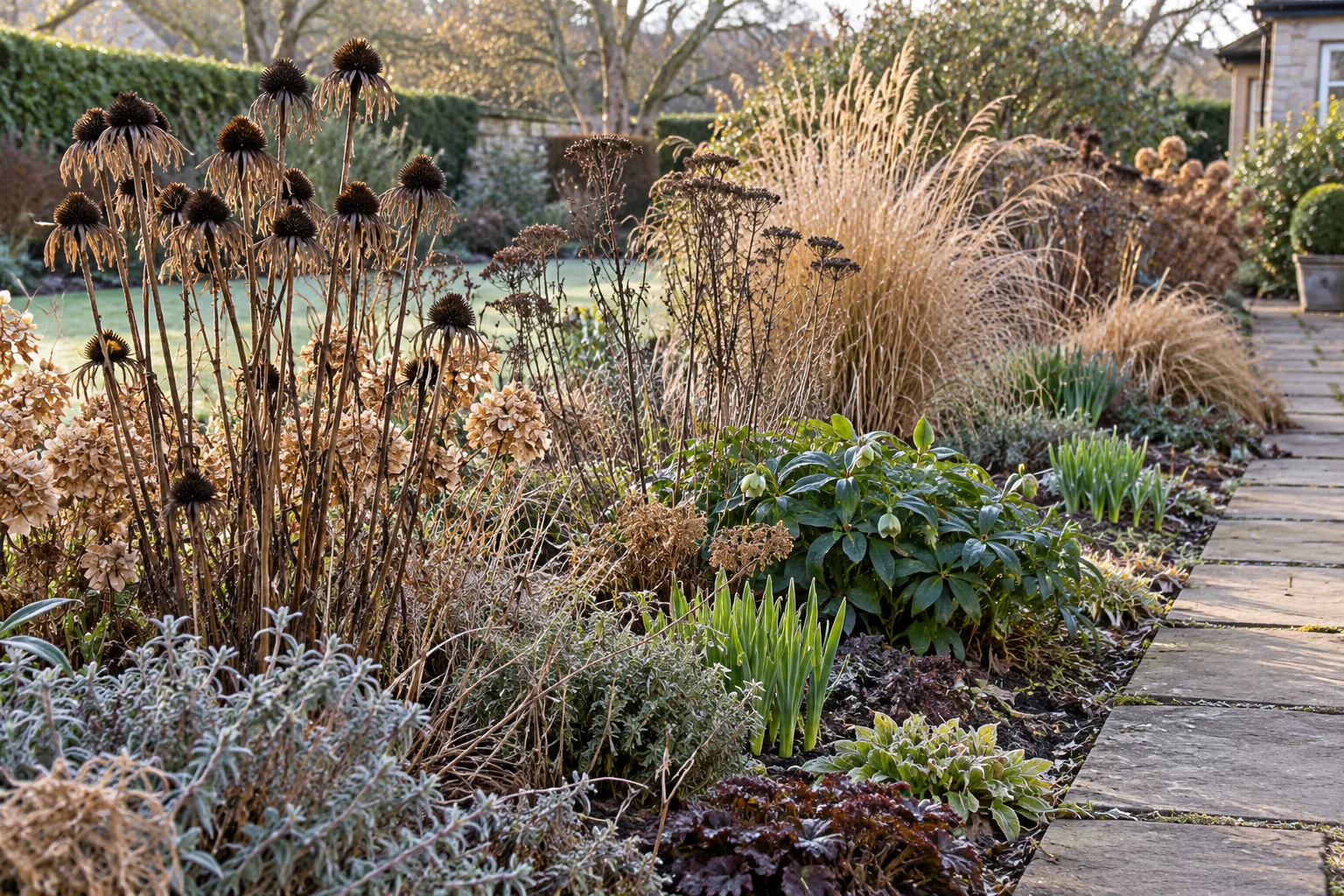
The border looks tired in autumn, yet some of its dry stems will hold their shape all winter. Others collapse into a wet heap over new growth. Cutting everything at once is quick, but it ignores the different jobs those stems are doing and the different ways plants respond to cold.
For many herbaceous perennials, autumn through spring is a possible cutting-back window. The best moment depends on the plant, the weather, whether you value the seedheads and whether the growth is healthy or decaying. The RHS guide to cutting back perennials explains that leaving some stems can provide winter structure and habitat, while certain tender plants benefit from retaining old growth for protection. This is a decision at the level of a plant or clump, not a blanket date for the whole garden.
First identify what is in the border. A shrub, evergreen perennial, herbaceous plant and ornamental grass should not all receive the same treatment. If you are unsure, mark the plant and wait for identification rather than cutting it down because its neighbour has finished flowering.
Separate sound standing stems from collapsed material
Start with a short inspection. Upright seedheads and firm stems can remain attractive and useful. A mass of soft, rotting foliage pressed across the crown of another plant may need removal. Growth that leans into a path can be shortened for access while the back of the clump stays in place. A selective edit often solves the practical problem without emptying the border.
Look for disease as well as decay. Spotted or mildewed material may need separating and disposing of according to plant-specific guidance rather than dropping it around the same bed. The RHS advises putting diseased perennial material through council green-waste routes or a recycling centre, rather than into a small home compost bin where conditions may not destroy pathogens. Clean tools as appropriate after handling affected plants.
Some gardeners prefer a neat winter bed, while others enjoy silhouettes and birds visiting seedheads. Both preferences can fit plant health if the choice is informed. A clear front edge with standing plants behind it is one compromise for a small London garden where the border must look cared for from a path.
Why leave some stems until spring?
Stems and seedheads can give the winter garden shape. They may also support birds and overwintering invertebrates. The RHS wildlife guidance notes that delaying the annual perennial cut can leave hollow stems and foliage as shelter. You do not have to leave every plant standing to gain that benefit. Select robust groups that will not collapse across access or smother neighbours.
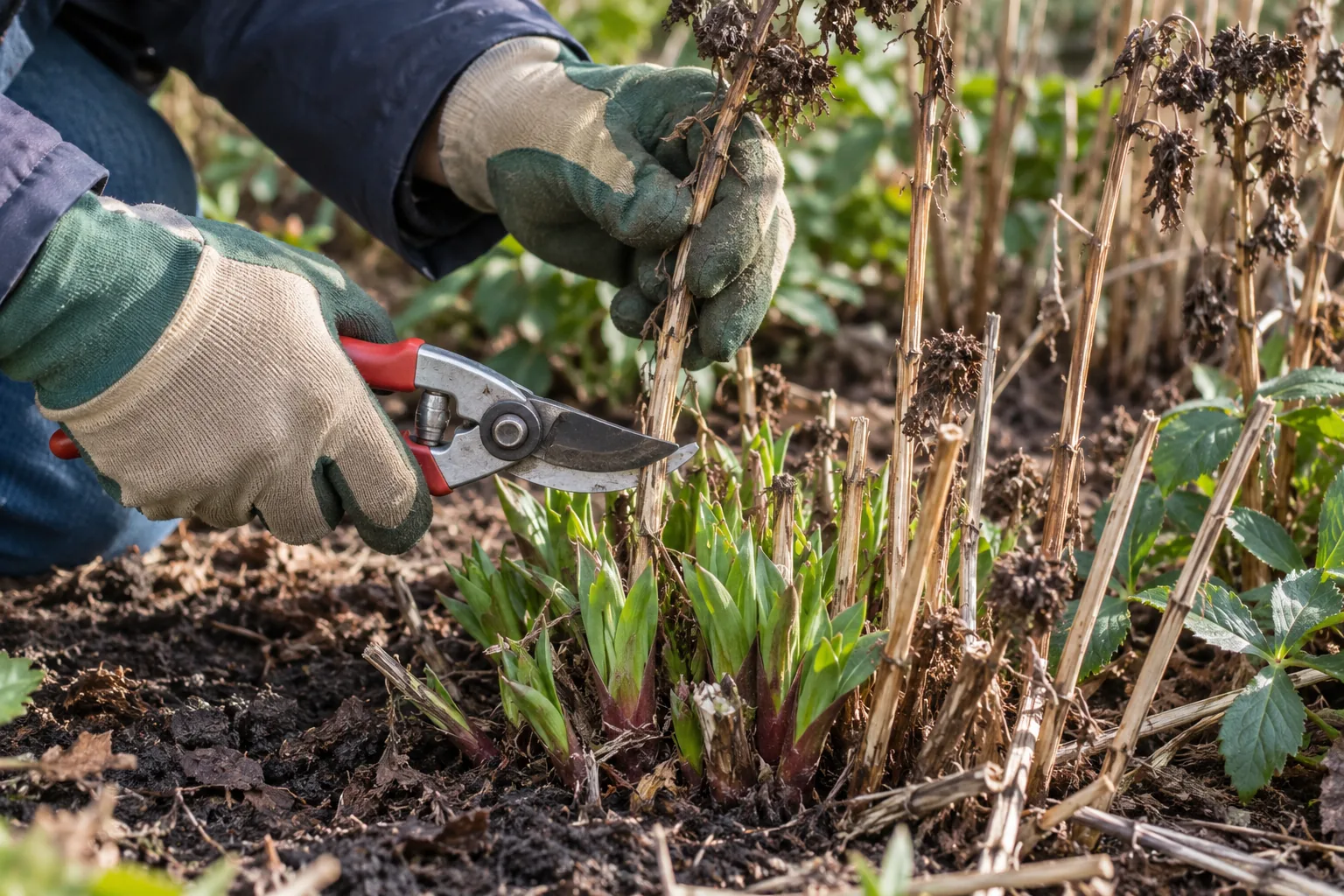
The timing of the eventual cut matters. If you wait until late winter or spring, check for new shoots before taking the old stems down. The plant may already be moving. Cut dead material above emerging growth rather than slicing blindly at soil level. The RHS advises starting spring cutback from around March in many cases, but local weather and plant development are more useful than the date alone.
If the soil is waterlogged, do not trample the bed simply to finish a planned cut. The RHS points out that cutting back can wait until the ground is drier rather than compacting soggy soil. Work from an existing path where possible. A few remaining dry stems do less harm than deep footprints around the crowns.
Which plants need a more cautious autumn approach?
Borderline-hardy or more tender perennials may benefit from keeping old top growth as a little protection. The RHS specifically highlights penstemons in its general guide. Its penstemon growing advice describes a modest autumn reduction while leaving enough foliage for winter protection, with further decisions in spring. That is different from cutting all stems flush with the soil as soon as flowering ends.
Evergreen perennials also need different treatment from plants that die back completely. Instead of a ground-level cut, remove dead or damaged leaves at a suitable time while keeping living foliage. Ornamental grasses vary; some retain attractive winter form, while evergreen types are usually tidied rather than cut to the crown. Check the particular plant rather than relying on a generic list.
If you have no label and cannot confidently identify the clump, leave it for now. Photograph foliage, flowers or old stems and look for a reliable plant guide. A season of observation is usually preferable to losing a plant through an unnecessarily hard cut.
How to make a careful cut
Use clean, sharp secateurs or shears suited to stem thickness. Part the old growth so you can see the base. On a fully dormant herbaceous clump, dead stems can be cut close to the crown, but avoid damaging buds or young shoots. Where fresh basal growth is visible, cut just above it. Put a hand beneath a stem as you cut so it does not fall onto neighbouring plants.
Work in small sections and step back. If a clump holds useful seedheads at the back but blocks a path at the front, remove the front stems only. Keep off the soft soil around crowns. Separate healthy material that can be composted from diseased material and from ripe seedheads you do not want to spread through the garden.
The cut should reveal the plant, not scalp the whole border. After removing the old growth, look for weeds close to the crown and remove them carefully. A suitable mulch can be applied around established plants, but do not bury fresh shoots or heap material against stems. Established perennials do not automatically need fertiliser because they have been cut back.
What about plants that flower early in the year?
“Perennial” describes a long-lived plant, not one identical flowering cycle. Some flower early and respond to a cut after flowering by producing fresh foliage. Others build the display on growth that should be left alone until a different time. The RHS describes cutting back some early-flowering herbaceous plants after flowering as a separate operation from autumn or spring tidying.
Do not use the winter cutback rule for shrubs or climbers simply because they sit in the same border. Spring-flowering shrubs may already carry buds. Woody climbers vary greatly in their pruning groups. A mixed planting bed needs a plant-by-plant plan even if a gardener visits for one session.
If your border contains many species, write a short map or attach unobtrusive labels. Note which clumps to leave until spring, which can be cut earlier, and which need identification. This makes future garden maintenance visits more accurate and helps avoid the accidental removal of deliberate winter structure.
Fit cutback into the wider seasonal tidy
Cutting back is only one part of seasonal care. Clear the route, remove heavy leaf mats from lawn and check containers and drains. Our autumn garden maintenance checklist helps put those tasks in order. If you are preparing the entire space for colder weather, the guide to winter preparation without stripping it bare provides a broader framework.
The quantity of stems also affects the job. A few dry clumps can be dealt with during ordinary maintenance. A neglected border full of coarse material may need selective garden clearance and a plan for disposal. Explain which plants should stay. “Cut everything back” is a risky instruction when the bed includes evergreen or tender specimens.
During the next growing season, observe which plants hold shape and which collapse. That information makes the following autumn easier. A border may look better if a few strong seedheads remain while the genuinely untidy material is removed. There is no prize for finishing the entire cutback in one day.
A decision for each clump
Identify the plant. Check whether the stems are sound, diseased, obstructive or protecting the crown. Decide whether their winter form or wildlife value is worth keeping. If cutting now, find the crown and any new shoots before placing the blades. If leaving the plant, mark a spring return and make sure it is not smothering a neighbour.
This small decision repeated across the border produces a more useful winter garden than a uniform cut. The path stays open, vulnerable plants are treated with care, and the stems that earn their place can remain until the garden begins to grow again.