
How to weed a flower border without disturbing the plants you want
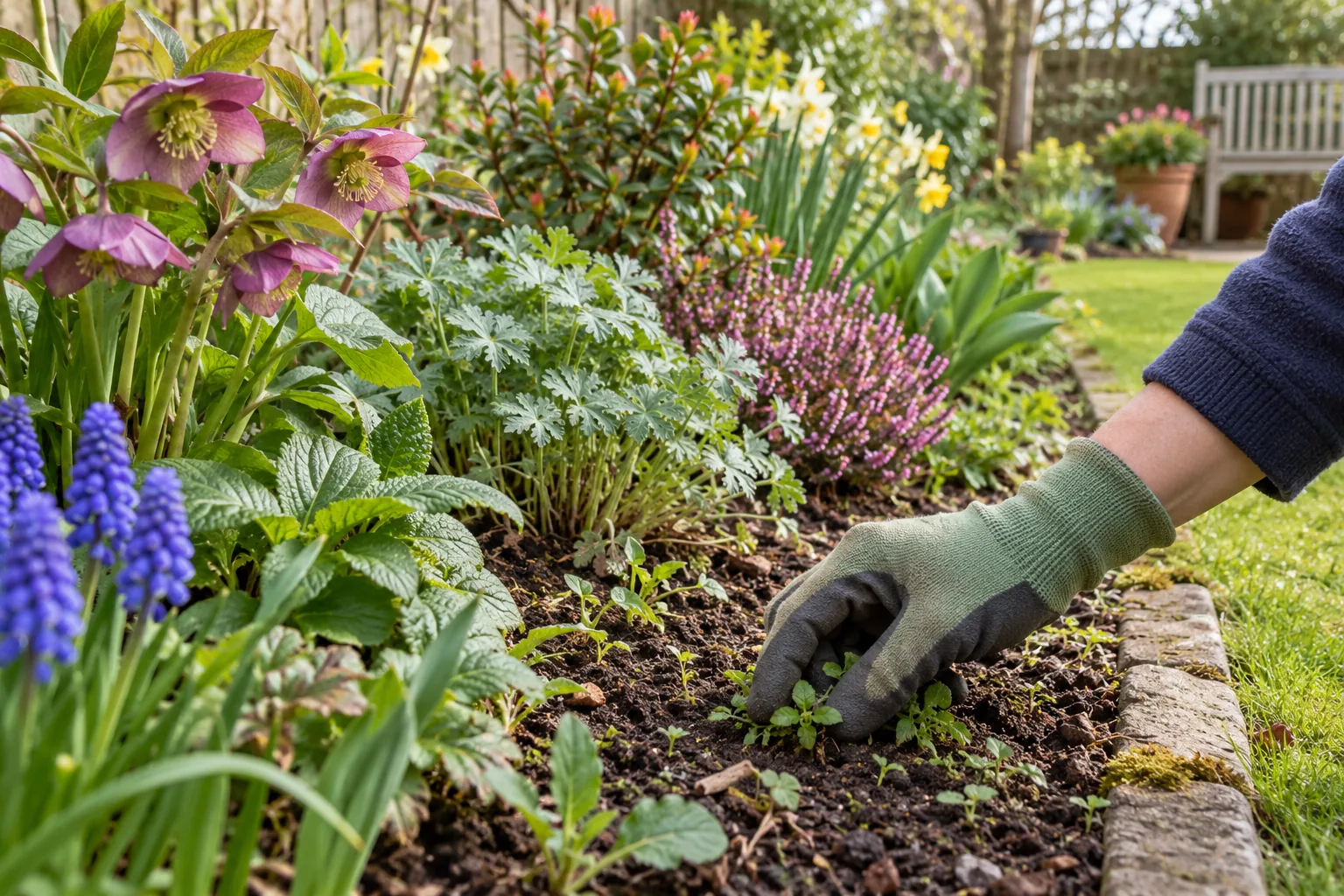
The awkward part of weeding a flower border is rarely pulling a plant out of the ground. It is deciding which plant to pull, finding its roots among the plants you mean to keep, and leaving the border in better condition afterwards. A quick sweep with a hoe can work on open soil. It is a poor choice beside a clump of emerging perennials or in a bed where spring bulbs are coming through.
Give yourself permission to work slowly. In a mixed border, accuracy matters more than the number of weeds removed in an hour. A short, careful session while weeds are young is usually easier than a wholesale clear-out after their roots have threaded through other plants.
Begin with identification, not a tool
Look at the whole border before you kneel down. Which plants have been deliberately placed? Where were the gaps last summer? If you have old photographs, compare them with the new growth. Mark known perennials with simple labels while they are visible; that makes the next visit much less uncertain. Newly emerging growth can look quite different from the mature foliage you remember.
A plant is a weed in this context because it is growing where you do not want it. That does not mean every unlabelled seedling must go. Self-seeded ornamentals can be useful, and some flowering plants support wildlife. On the other hand, a small seedling directly against the crown of a treasured plant may become a problem even if it looks harmless today. The RHS guide to identifying common weeds suggests looking at leaves, flowers, growth habit and roots rather than relying on one glimpse of a shoot. In a neglected plot, first clear the garden in stages so retained plants can be identified before roots are disturbed.
If you cannot identify a plant and it is not causing immediate trouble, photograph it and wait for another clue. Do not pull a whole row of similar seedlings merely because the first one is unfamiliar. In a bulb-filled border, it is particularly useful to know where bulbs were planted before disturbing the soil with a fork.
Choose the section you can finish properly
Divide a crowded border into short lengths. Begin near the path, where you can reach without stepping into planted soil, and work towards the back. Put a board or kneeling pad on a firm access point if you need to spread your weight. Avoid working a bed that is saturated and sticking heavily to your tools; rough handling of wet soil can leave both the structure and nearby plants in poor shape.
Carry a bucket for removed weeds and a separate place for material you want to inspect. This prevents a rooted weed from being dropped onto open soil and forgotten. Keep small labels to hand if you discover a wanted plant that was hidden by growth. A narrow hand fork, a weeding knife and gloves are enough for most careful work. A large spade close to established crowns often gives you less control, not more.
Set a modest target, such as clearing the edge around three known plants and removing weeds about to set seed. That gives you a useful result even if a tangled area takes longer than expected. The RHS step-by-step bed-weeding advice places particular emphasis on identifying unknown plants and working carefully around border plants.
Lift small weeds before they become entangled
Young annual weeds are usually easiest to remove. Hold them low, loosen the soil close to their base and lift the roots rather than snapping off the top. After rain, soil may release them easily, provided it is not too wet to work without damage. In very dry soil, a light watering and a little patience can be kinder to neighbouring roots than a hard tug.
Put one hand between the weed and the wanted plant to protect the latter as you lift. If their foliage is intertwined, separate the shoots gently before pulling anything. A small hand fork lets you tease soil away and see what is attached to what. It also makes it easier to spot a bulb shoot or self-seeded perennial that would otherwise come up with the weed.
Hoeing has its place on bare stretches between established plants. Use a shallow motion on a suitable dry day and stop well short of crowns and emerging shoots. Deep, repeated chopping is neither necessary for tiny annuals nor wise where desirable roots sit close to the surface. On a crowded border, hand weeding is often the more efficient method once accidental damage is counted.
Treat spreading roots as a separate job
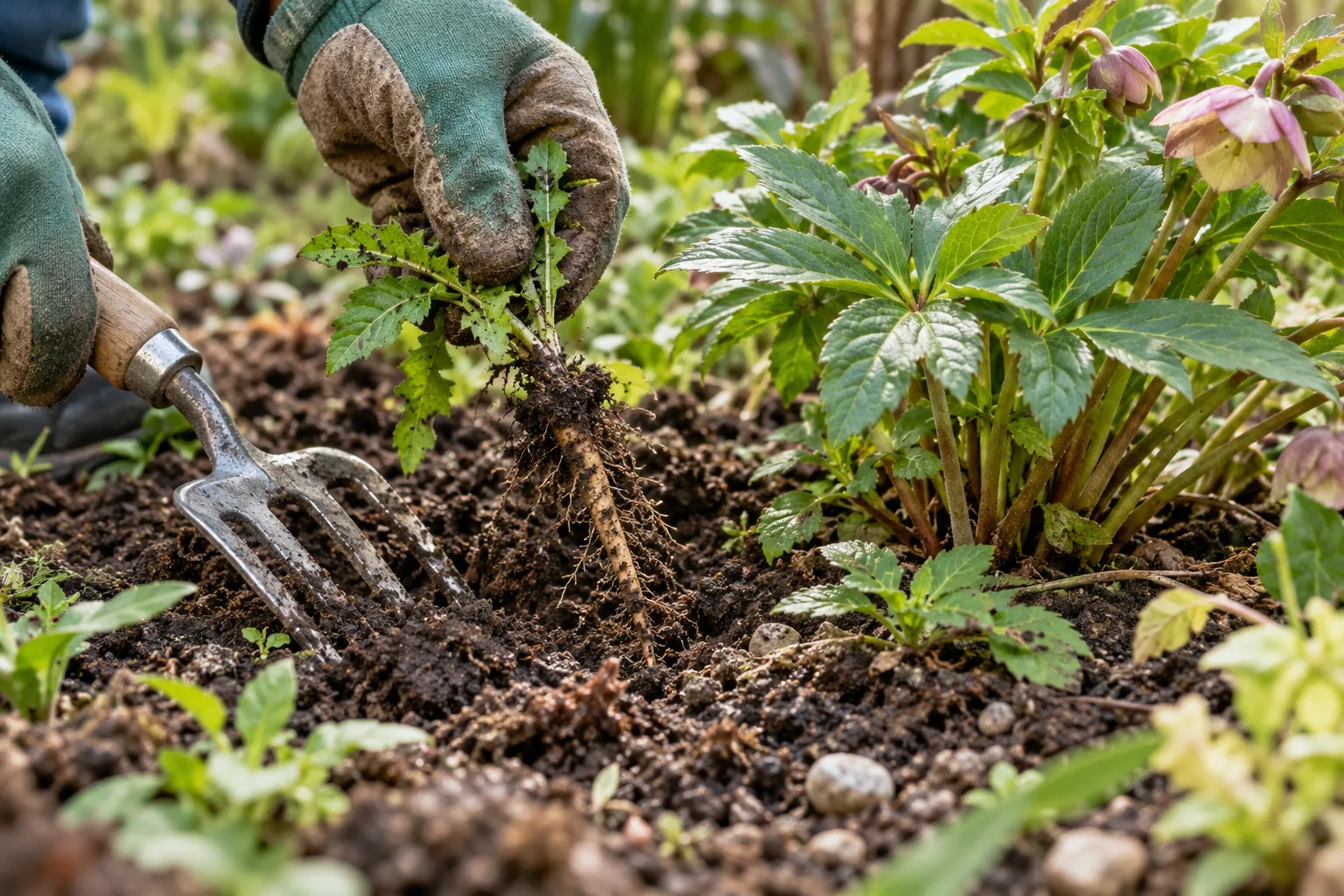
A perennial weed that returns from its roots needs a different approach from a scattering of annual seedlings. Trace the shoot to its base, then use a fork to ease up as much of the root system as you can without shredding it. Keep an eye on fragments as you sift the loosened soil. Some spreading weeds regrow from pieces left behind, so a hurried chop can create more follow-up work.
What if the weed runs through the middle of a wanted plant? Do not wrench the entire clump apart in the middle of its active season. The RHS explains that repeatedly cutting or pulling the weed's shoots can gradually weaken it where the roots cannot be removed without disturbing a border plant. Mark the spot and return regularly. In a severe, long-established infestation, lifting a dormant herbaceous perennial to clean its roots may be an option, but it is a deliberate renovation task, not ordinary weeding.
Watch the boundary of the bed too. A weed creeping in from under a fence or through a neighbouring patch of open soil will keep returning if only the visible centre is cleared. Record its route, then plan repeated control where you have access. Do not dig beyond your property or damage boundary planting while chasing roots.
Clear around the wanted plants, then protect the soil
Once you can see the planting again, check for exposed roots, displaced labels and small plants that were accidentally loosened. Firm a loose plant gently back into its original position and water if the soil needs it. Remove weeds that are flowering or setting seed before you spread compost or mulch, otherwise you may simply cover the next crop of seedlings.
A suitable organic mulch can reduce light at the soil surface, help conserve moisture and make later hand weeding easier. It will not reliably kill an established deep-rooted weed. The RHS mulching guide recommends a substantial layer, around 5–7.5cm, on clear soil and a mulch-free gap around woody stems. Keep mulch away from the crowns of herbaceous perennials and do not bury low-growing plants. Check the material suits the border and can be delivered and moved without compacting the beds.
Mulch also makes missed shoots easier to spot. Lift them while they are small rather than waiting for a perfect once-a-year clear. Where suitable gaps remain, a planting plan with appropriate groundcover may reduce exposed soil and future weeding, but account for mature spread and access first. Plants packed too closely can create another maintenance problem.
Decide what happens to the material you remove
Do not leave flowering weeds lying on a path or bed where seed might spread. Separate obvious seed heads and persistent roots from ordinary green material. Composting may be appropriate for some weeds under the conditions of your system, but a cool home heap is not a reliable way to deal with every seed or vigorous perennial root. If you are uncertain, use the garden-waste route accepted locally rather than putting material back into a border.
Keep soil and wanted plants out of the waste pile. Shake loose soil back into the bed when it can be done without scattering seeds. If the border has been neglected for a long time, the volume of removed growth can be surprising. Agree collection or storage before beginning a large session; bags left across a narrow path turn a careful job into an access problem.
Plan the return visit while the clues are fresh
Take a photograph of the cleaned section and note anything you left deliberately: an unidentified seedling, a perennial weed to weaken by repeated cutting, or a gap to plant later. Revisit before remaining weeds flower or run through neighbouring roots. A few minutes of regular inspection can avoid another invasive clear-out.
If you ask for garden maintenance, show which plants should stay and which areas need special care. A photo from a previous season is useful. Where the border needs a new layout rather than another round of weeding, discuss the conditions, mature plant sizes and access as part of a garden design brief. The aim is a border that remains recognisably yours, with less competition around the plants you chose to grow.