
Garden clearance versus routine maintenance: which do you need?
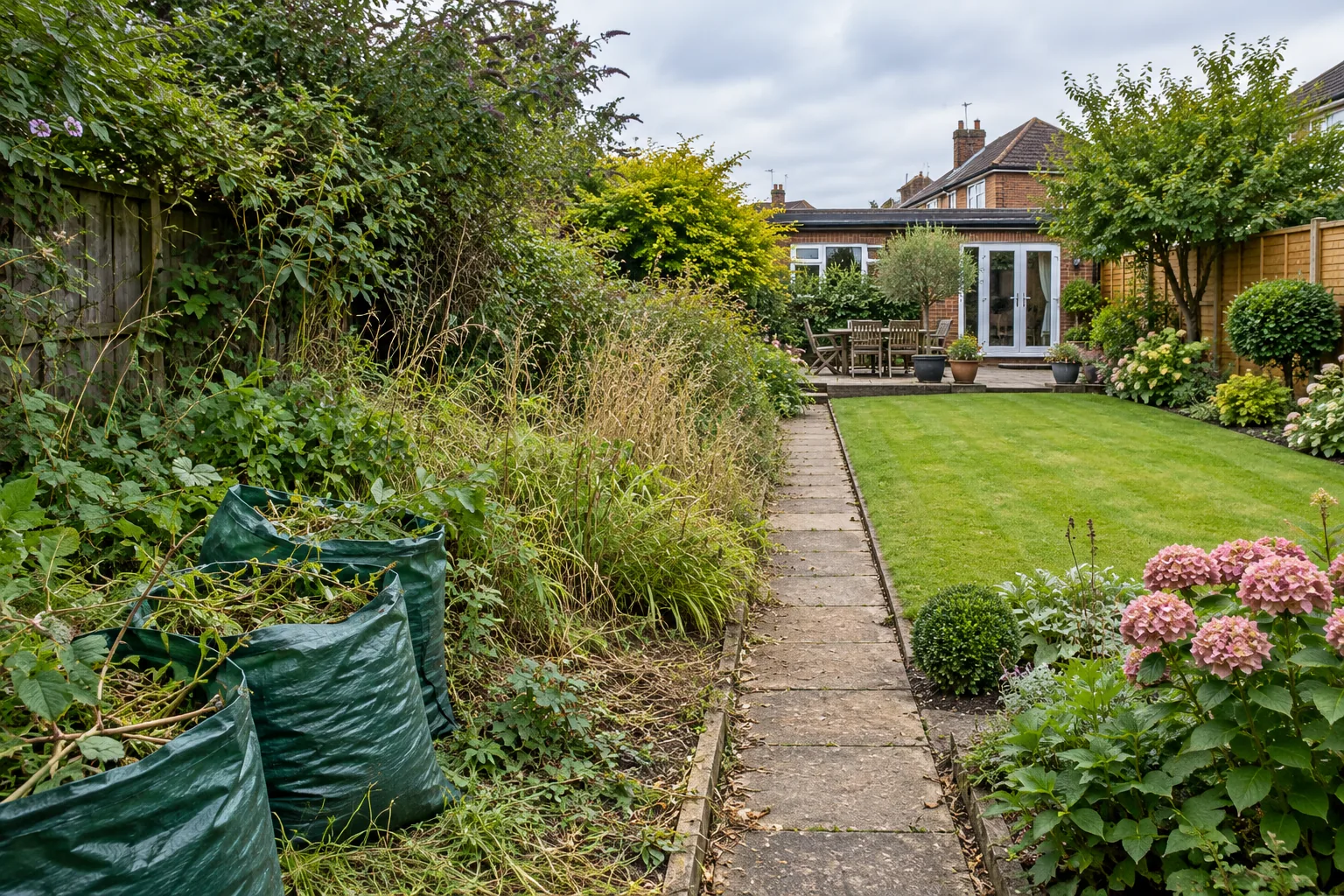
“The garden needs a tidy” can describe two very different jobs. One garden has a lawn, beds and paths that are already usable but need regular attention. Another has blocked access, hidden planting and a backlog of material to remove. Calling both jobs maintenance can lead to a disappointing quote or a visit that runs out of time before the important work is done.
Garden clearance is usually a defined project that removes an accumulation and restores access. Routine maintenance is repeated care that keeps a functioning garden in shape. There is overlap: a clearance may include selective trimming, and a maintenance visit may produce some waste. The difference lies in the starting condition, the volume of work and what should happen next.
The most useful choice comes from describing the garden honestly, not choosing a service name from a menu. Look at access, what is worth retaining, how much material must leave the site and whether the underlying problem will recur. A one-off clear without a follow-up plan can leave you back in the same position next season.
What routine maintenance usually covers
In an established garden, regular work may include mowing when conditions suit, managing weeds, trimming accessible growth, caring for beds and containers, clearing paths and checking seasonal issues. The emphasis is continuity. Each visit observes what has changed and deals with manageable growth before it obstructs access or overwhelms planting.
The tasks vary with weather and season. A mild spring can make grass grow quickly, while a wet winter visit may involve no mowing at all. A flowering shrub needs plant-specific pruning, not an automatic haircut on every appointment. Our monthly garden maintenance routine explains how to prioritise a limited visit without treating every month as identical.
Routine garden maintenance is a reasonable starting point if you can already walk through the garden, recognise the main plants and reach the work areas. It can also follow a clearance once the space has been restored. Before booking, specify whether the visit should include waste removal, lawn work or a particular hedge; those details affect time and equipment.
When a one-off clearance is more realistic
A clearance becomes more likely when brambles or shrubs block access, waste is piled up, paths are hidden, or a lawn has become rough vegetation with unknown objects beneath it. The first work may be investigative: open a route, identify keepers, inspect the ground and sort material. This takes longer than a routine visit, even in a small garden.
A good clearance is selective. You may want to keep a mature shrub, tree, flowering clump or useful screening. State that before cutting begins. Our guide to clearing an overgrown garden in stages explains why opening access and identifying plants first can produce a better result than stripping everything in one day.
One-off garden clearance may also be appropriate for a heavy seasonal backlog after a period away, even if the garden is not fully overgrown. The key is the amount and type of material, not an arbitrary threshold of how untidy the space looks. A large hedge reduction, for example, may produce far more waste than a month of light bed care.
Use a simple condition test
Ask yourself four questions. Can you reach the main work areas safely? Can you identify most of the planting that should stay? Will the cut material fit within your normal disposal route? Could the garden be kept in shape with modest repeat visits after today's work? If the answer to most is yes, maintenance may fit. If several are no, start with a scoped clearance.
This test is only a guide. A tiny courtyard with broken containers and rubble may need a clear despite its size. A large but well-kept garden may need regular maintenance without any clearance. A tree with a dangerous branch is a separate specialist issue, not something to fold into either service by default.
Take photographs from the house, the far end and the access route. Show the places hidden behind growth, not only the tidiest corner. A realistic view lets someone estimate tools, time and waste handling more accurately. If you are unsure what the plants are, mark the ones you know you want kept and say the rest needs assessment before removal.
Waste changes the scope more than many people expect
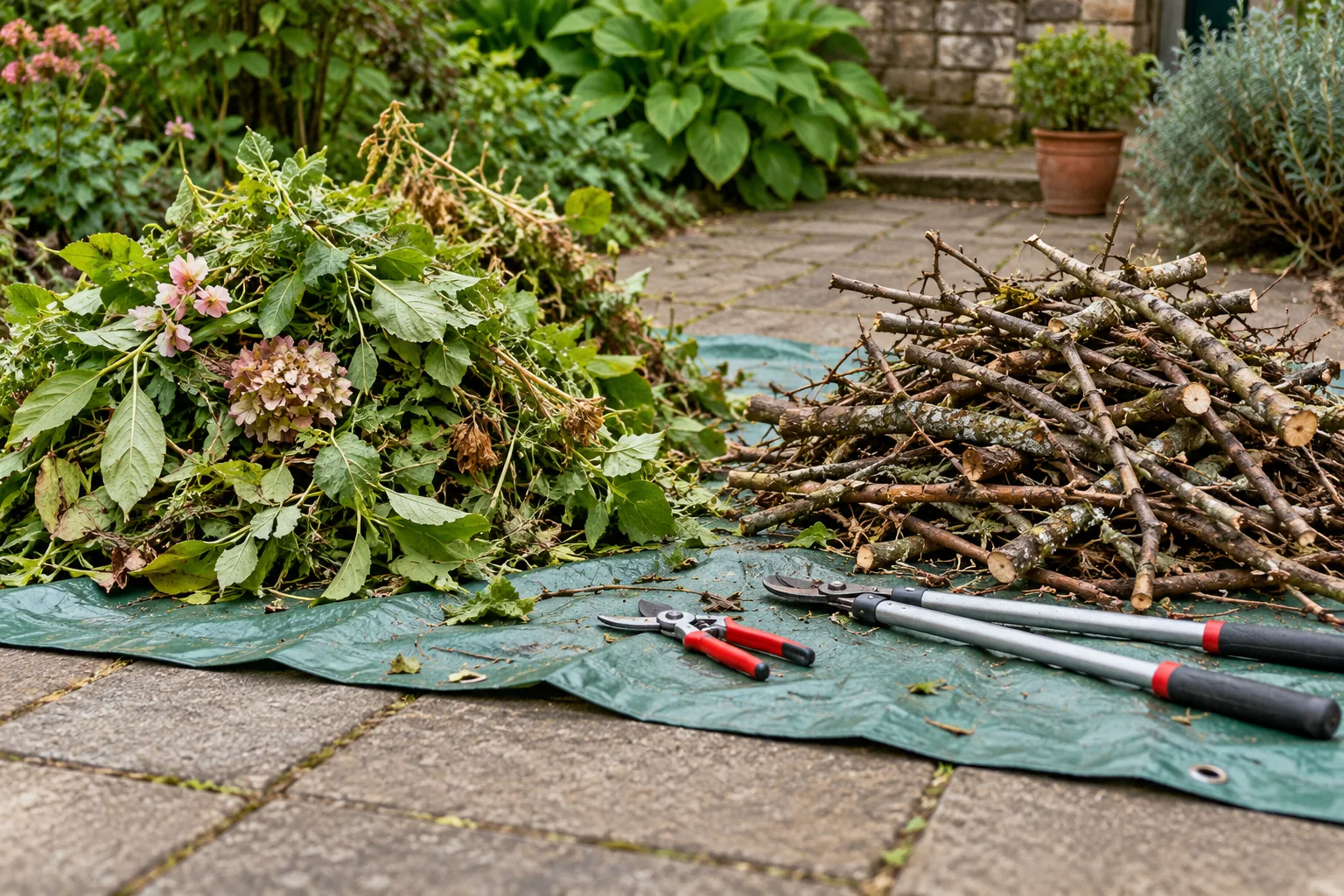
Cut vegetation occupies space. Woody branches, wet roots and dense bags of leaves are awkward to carry, particularly through a narrow passage or a home. Decide whether material will be composted on site, placed in an authorised council collection or removed as part of the service. Check local council rules rather than assuming every green bin accepts every material.
Separate garden waste from rubble, plastics, treated timber and general rubbish. An old shed panel or pile of broken pots is not ordinary green waste. If both are present, describe them separately and ask how each will be handled. A quote that includes cutting but no removal can look cheaper and still leave you with an unusable garden full of piles.
You may also want to reuse clean material. Healthy leaves can make leafmould and some cuttings can be composted if there is space and a workable system. Do not retain more than you can manage. A small garden can quickly acquire a new backlog of “useful” bags that block the same path you just cleared.
Retained planting deserves a place in the brief
Photograph any tree, shrub, climber or perennial you want to keep. Mark uncertain plants for identification. Explain whether the goal is better access, more light, a neat view from the house or a new use for the space. “Clear the border” could mean removing weeds around established plants or taking out the border entirely; those are not the same instruction.
Wildlife checks can affect timing. An active bird nest in a hedge or climber can mean postponing that section while other work continues. Protected trees and substantial tree work may need permissions or a specialist assessment. A staged clearance leaves room to handle these issues without stopping all progress.
The RHS advises observing a mature garden before major changes where possible, since established planting may reveal itself through the seasons. You can still remove hazards and aggressive weeds promptly. The point is to distinguish reversible tidying from permanent removal of a plant you have not yet seen at its best.
Plan the first few visits after the clear
Once the main debris is gone, light reaches soil that may have been shaded for years. Weed growth can follow. Remaining roots may send up new shoots. Grass may need repair, or the newly visible layout may reveal that a path is more important than more turf. A clearance is therefore an opening step, not the whole maintenance strategy.
Agree a realistic follow-up. It might be a visit a few weeks later to remove regrowth, followed by a less frequent routine. A new bed may need mulching and planting when conditions suit. A newly laid lawn needs protection and establishment care. If the garden's use is changing substantially, a garden design plan can clarify routes, levels and planting before money is spent on repeated temporary fixes.
For a straightforward garden, use the first maintenance visit to record what grows quickly and where access remains awkward. Set priorities rather than demanding a perfect finish everywhere. The long-term goal is a garden that is practical to care for, not a photograph of one unusually neat day.
Describe the job so the right work is quoted
Give the approximate garden size, access width and number of steps. Say whether a vehicle can park nearby, whether material must pass through the home, and what waste is present. List the plants and structures to retain. State the outcome you want: “open the gate and path, keep the rose and small tree, remove the old cuttings, then propose ongoing care” is much clearer than “make it tidy”.
Ask what is included and what would be priced separately. Mowing, hedge work, bulky waste, non-green rubbish and disposal can all affect scope. A clear brief protects the garden and makes it easier to compare proposals on the same basis.
If the space is usable but slipping out of shape, begin with maintenance. If you cannot safely reach or identify much of it, begin with a selective clearance and a plan for the first follow-up. Many gardens need both, in that order. Choosing the sequence makes each visit more effective and keeps a one-off rescue from becoming an annual event.