
A realistic monthly garden maintenance routine for a busy home
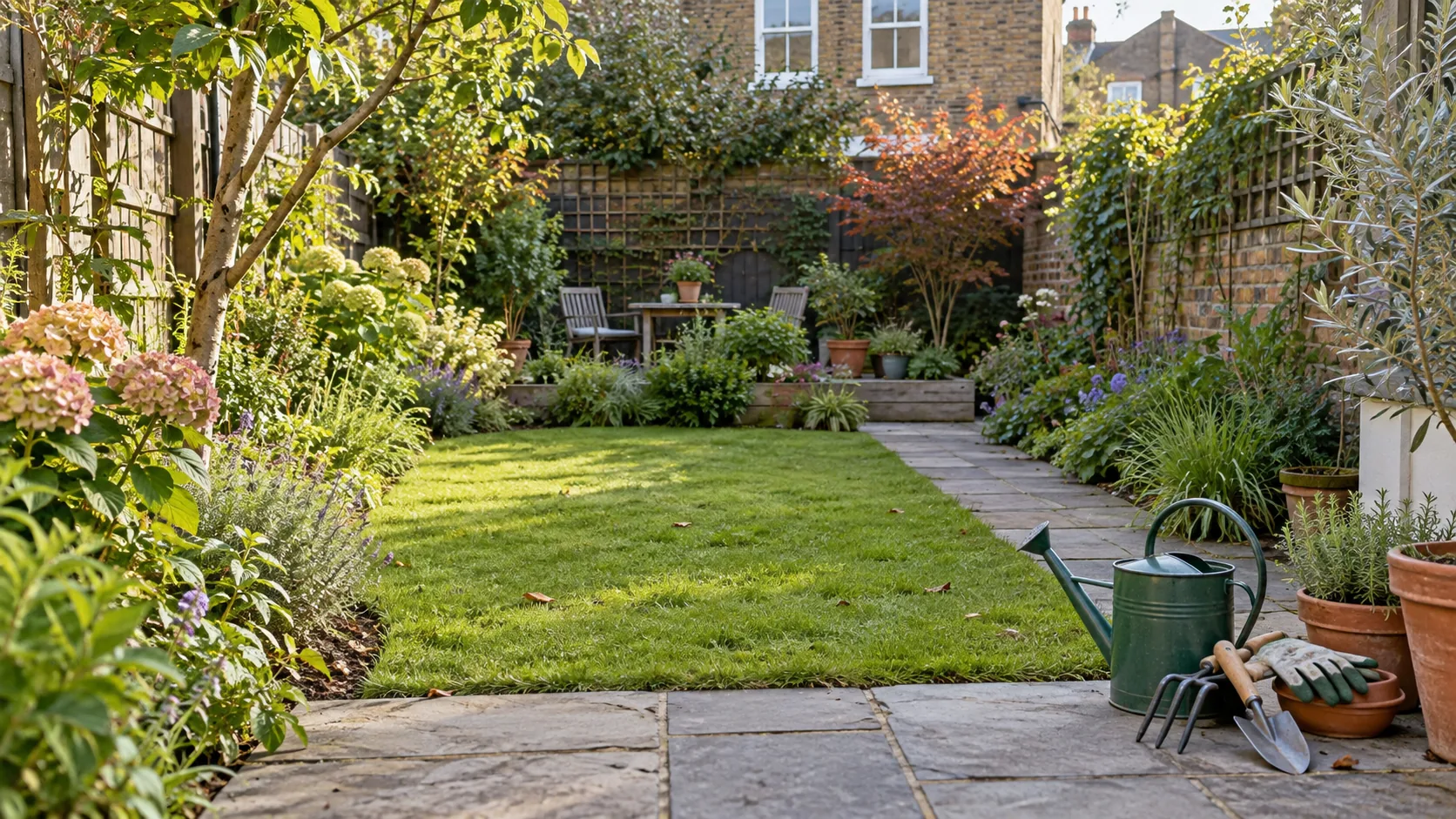
A monthly garden visit can keep a small space usable, but it cannot make every job happen at the perfect time. Grass may surge after a wet, mild fortnight. A border can sit quietly for weeks. A windy night can fill the path with leaves the day after it was cleared. The useful routine is therefore a set of priorities, not an identical checklist repeated twelve times.
Think of each visit as an inspection followed by a decision. What is obstructing access? Which plants are growing into other plants or paths? Does the lawn need mowing, or is the ground too wet? Is there a seasonal job that must happen now rather than next month? This approach helps a homeowner use limited time well and makes a clearer brief for anyone helping with the garden.
The RHS monthly gardening advice changes by season and by plant group. That is a useful reminder that “monthly maintenance” describes a frequency of attention, not a fixed set of operations. The same garden might need two short mowing visits in a fast-growing period and no mowing at all during a cold, saturated spell.
Begin with a five-minute circuit
Walk the garden before opening the tool shed. Start at the route from the house to the gate, bins or seating area. Note slippery leaves, overhanging stems, loose edging and any water that has nowhere obvious to go. Look at the lawn from the side: is it actively growing, worn in one place, or hidden beneath debris? Then check borders and containers for weeds, fallen material, dry compost and plants crowding one another.
This circuit prevents a common mistake: spending the whole visit on the most visible task while missing an access or plant-health issue. A lawn with slightly uneven length may be less urgent than a blocked step. An attractive border might need watering during a dry spell even though there are no obvious weeds. The priorities come from conditions, not from the order in which tools are stored.
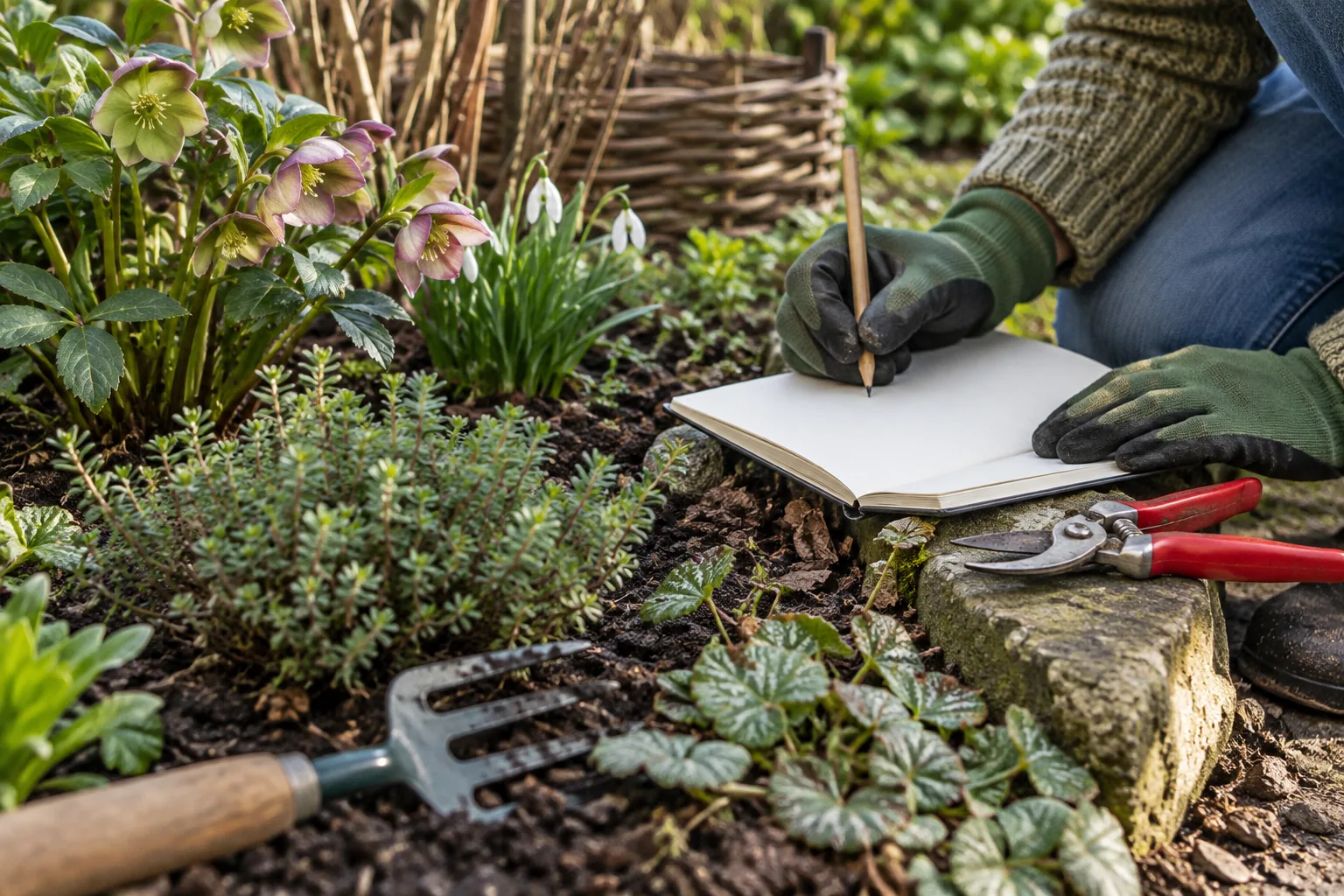
Take a photo from the same two or three positions each month. It shows growth, gaps and recurring wet spots better than memory does. Keep notes brief: “path clear, pot by wall dry, hedge side approaching gate, lawn too soft to mow”. You do not need a formal logbook, but those observations make the next visit more purposeful.
Protect the usable parts of the garden
Clear entrances, steps and regularly used paving first. Lift debris from drains without pushing it into the opening. Trim only the growth that is actually encroaching on the route, after checking what plant it belongs to and whether wildlife is using it. Move unstable pots before wind or heavy rain turns them into a hazard. In a small garden, these modest actions can make more difference to daily use than a perfect lawn stripe.
Do not turn every visit into a total clearance. Healthy fallen leaves can have a use in borders or leafmould, while dense layers on paths and lawns may need moving. A deliberate autumn garden maintenance checklist is more helpful than treating every brown leaf as waste. Likewise, some dry perennial stems can remain through winter if they are not blocking a route or smothering plants.
When access is a repeated issue, look at the design. Is the path too narrow for its actual use? Does a shrub need annual hard cutting to fit a space it has outgrown? Monthly trimming can contain the symptom, but may be more costly than a one-time planting or layout change. Record the issue and discuss it separately from ordinary upkeep.
Let the lawn set its own pace
Mowing is the task most likely to escape a monthly timetable. During active growth, a single cut every four weeks may remove too much at once, leaving a poor finish and stressing the grass. In winter, a visit might arrive when the lawn is wet, frosty or not growing enough to justify a cut. Our UK lawn mowing frequency guide explains how growth and ground conditions should drive the interval.
At each monthly check, look for dense leaves, bare routes, mossy or persistently wet patches, and mower access. Decide whether a cut is suitable now, and whether another short visit should be arranged before the next monthly appointment. A formal lawn and a hard-used family patch may need different heights and expectations. The goal is healthy usable grass, not compliance with a date in a diary.
Lawn care also includes noticing problems early. If water repeatedly sits in one area, note it after rain. If a worn track reappears, consider how people move through the garden. Seed or feed applied without addressing the cause may only briefly improve the look. A lawn care plan can be scoped around the actual grass and how it is used rather than an automatic monthly treatment.
Give borders a selective visit
In planted beds, start by identifying what you want to keep. Remove obvious weeds before they seed or establish deeper roots, taking care around self-sown plants and new growth. Check whether vigorous plants are overshadowing smaller neighbours. Tie in or support growth that is falling across a route. Cut damaged material where appropriate, but avoid a blanket haircut for plants whose flowering or winter structure you value.
Mulch, watering and deadheading depend on the season and the plants. A container in a sheltered corner can dry out while open beds remain moist; a shaded bed can need less watering than sun-exposed pots. Push a finger into the compost rather than assuming rain has reached a pot beneath eaves. During a wet spell, use the visit to inspect drainage and growth, not to water by habit.
Pay attention to the edge between beds and paving. Weeds in joints and plants arching over the path can quickly make a tidy garden feel neglected. A few minutes spent on those edges often has a greater practical effect than working deep into a bed while the entrance remains blocked.
Use seasonal windows without turning them into rigid rules
Spring often brings faster growth, new weeds and opportunities to repair worn grass when conditions suit. Summer may shift attention to watering containers, keeping access open and managing strong growth. Autumn brings leaves and a chance to assess the garden before winter, while winter visits may focus on safe routes, storm debris and plant protection. Those are broad patterns; the weather in a particular week decides the actual work.
Some tasks need a separate visit or more time than a routine monthly slot. Hedge trimming requires species timing, access, a nesting-bird check and waste handling. A neglected border may need a staged clear rather than being squeezed into the last twenty minutes. New planting needs preparation and follow-up. Record these as distinct jobs so the routine visit remains realistic.
If the weather blocks a planned task, substitute one that helps. A wet lawn may be left alone while pots are inspected from the path. A frosty morning is unsuitable for some pruning and mowing, but you can note damage, clear a safe route and plan later work. A useful maintenance visit is not measured by how many tools were used.
Agree what a monthly visit includes
For a small garden, write down three priority outcomes rather than a long list: keep the main route clear, manage growth before it blocks access, and monitor the lawn and planting. Add seasonal work when needed. If you are booking garden maintenance, explain the size and access of the garden, where waste can go, and which plants must be retained.
Clarify whether mowing is included, whether waste removal is needed, and how additional work is agreed. A routine visit may cover light weeding and trimming, but an overgrown hedge or major clearance is a different scope. If you are doing the work yourself, the same distinction prevents a modest monthly session from becoming an exhausting attempt to catch up on every neglected corner.
Build a little flexibility into the schedule. The ideal day may move because of rain, active nesting, a heatwave or a family event. A clear list of priorities lets the visit adapt without losing its purpose. Once a month is a useful check-in point; it is not a promise that the garden will stay static between visits.
The most reliable routine is one you can repeat. Walk, observe, protect access, attend to the plants that need action, and note what deserves a separate job. In a year, those small decisions usually matter more than a heroic clear-out followed by months of silence.