
An autumn garden maintenance checklist for a London home

Autumn tidying is easiest when it begins with how the garden is used. A slippery route to the gate matters sooner than a fading flower head at the back of a border. A lawn that is soft underfoot needs a different plan from one that is still growing steadily. Walk the space first, note the jobs that affect access or plant health, and leave purely cosmetic work until conditions are right.
This checklist is for a typical home garden, including small courtyards and mixed lawns and beds. It is a way to set priorities, rather than a fixed instruction to cut everything back on one October weekend. In London, as elsewhere in the UK, the weather, exposure and soil in the particular garden determine what is sensible on the day.
Start with a ten-minute inspection
Take a slow circuit after rain if you can do so safely. Notice where water stands, which paving feels slick, whether leaves block a drain, and where the ground gives under your shoes. Look for loose edging or branches that obstruct the route you use every day. Record the problem with a photograph from a safe position; there is no need to climb or tug at a damaged limb.
Then look at the plants. A perennial that has finished flowering is not automatically a problem. A climber pulling away from its support, a broken branch and a container that no longer drains deserve more immediate attention. Check what you want to retain before anyone begins clearing. Spring bulbs, self-seeded plants and small shrubs can be hard to distinguish from unwanted growth once their top growth has faded.
Write three short lists: access and safety, plant care, and appearance. This makes it easier to use a dry afternoon well. It also gives a gardener a clear brief if you book garden maintenance rather than presenting every corner as equally urgent.
Clear the routes you need, then deal with leaves elsewhere
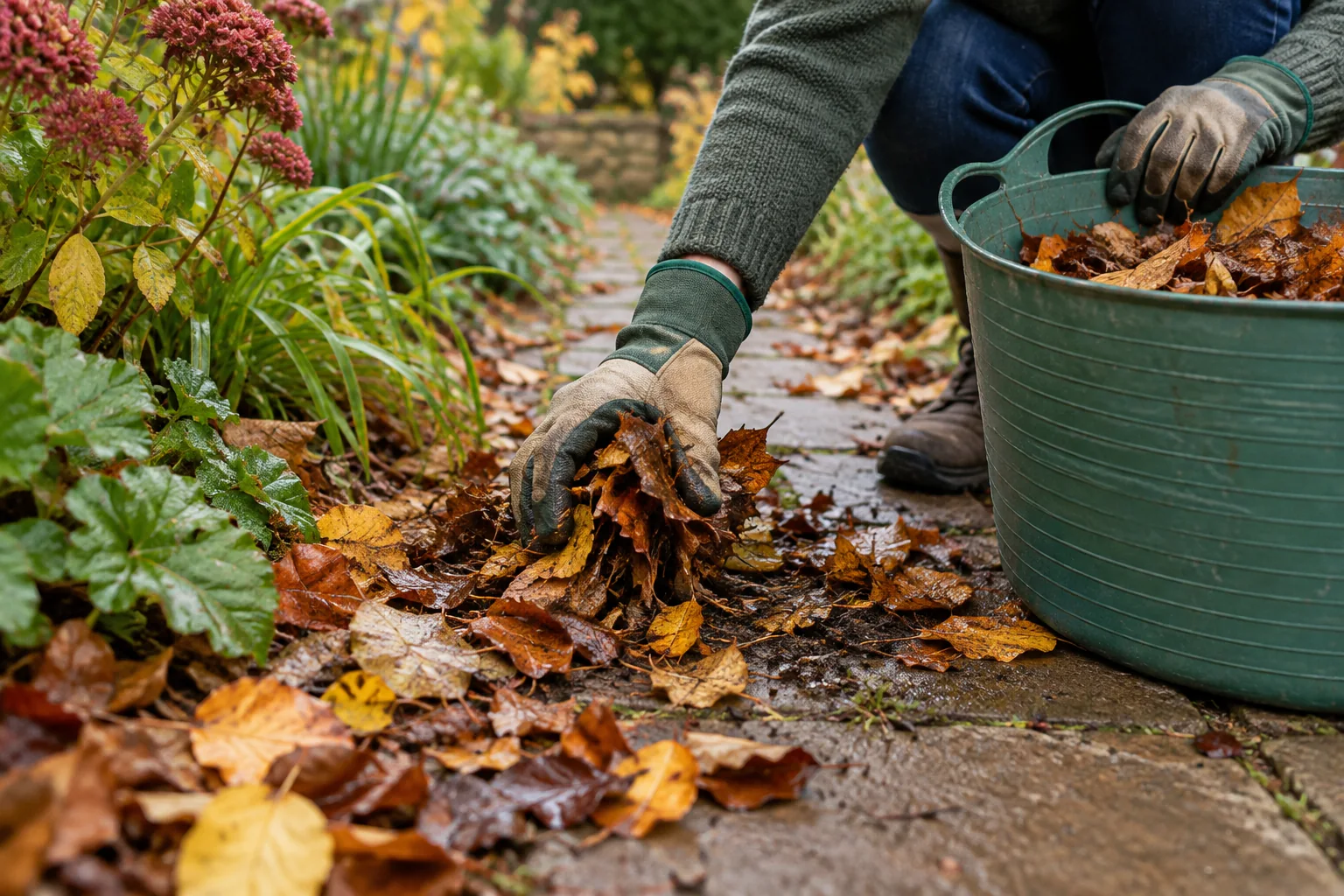
Sweep or lift leaves from steps, narrow paths, drainage channels and entrances before they build into a wet layer. Work from a firm surface and avoid directing a pile into a public footway or a neighbour’s drain. If a path is loose or uneven beneath the leaves, cleaning it does not repair the underlying defect; mark that for separate attention.
Leaves across a lawn need monitoring too. A light scattering can be gathered during a suitable mow, but a thick mat left on grass shuts out light and traps moisture. Rake gently when the surface is firm enough to stand on without leaving marks. You do not need to remove every leaf from a planted border. In a suitable position, some can shelter soil and provide habitat, provided they are not smothering small plants or blocking drainage.
Sort what you collect. Clean, suitable leaves can be kept for leaf mould or added in modest quantities to a compost system. Material mixed with litter, diseased growth or unknown debris may need a different route. If the volume is large, decide where bags will stand and who will remove them before the job starts. The site’s garden clearance service is a more relevant discussion for a substantial accumulation than assuming an ordinary tidy includes unlimited removal.
Decide whether the lawn should be cut at all
Do not put a final mow on the calendar simply because it is autumn. Grass may continue growing during mild spells, so judge the lawn you have. If the blades and soil are wet, frosty or easily marked, leave the mower in the shed and do other jobs. Mowing under poor conditions can tear the grass, give an uneven finish and compact soft ground. The RHS mowing guide recommends watching growth and checking that the grass and soil are not overly wet.
When conditions are suitable, avoid taking the lawn very short in one pass. Check the mower, remove stones or toys, and keep people away from the cutting area. A shaded or heavily used patch may benefit more from reducing foot traffic than another treatment. Photograph persistent mud or standing water so that a lawn care discussion can start with the cause, rather than a generic product recommendation.
Autumn is sometimes a useful period for lawn repair, aeration or scarifying, but it is not an instruction to do all three. According to the RHS October lawn advice , scarifying should be avoided when soil is waterlogged or conditions are very wet, dry or frosty. If those windows have passed in your garden, plan a spring assessment instead of working damaged ground to satisfy a checklist.
Keep pruning tied to a plant and a purpose
Look at each shrub or hedge before reaching for shears. Ask what needs changing: is growth blocking a path, covering a window, rubbing against another plant, or simply looking less neat than it did in summer? Identify the plant if you can. Flowering time and growth habit affect how it responds to cutting; one autumn rule cannot serve every species.
Inspect hedges, trees and climbers for birds before work begins. An active nest is protected even if the calendar says autumn. Government guidance on garden hedges also points out that some hedge work may involve protected trees or conservation-area requirements. If a tree may be affected, check with the relevant council before making a cut. Do not turn a routine garden visit into substantial tree work without a separate assessment and agreed scope.
On a small shrub, the best autumn job may be removing a broken or obstructing stem and leaving the larger reshaping until the correct season. On a hedge, decide how cuttings will be handled and whether the team can reach both sides safely. If you cannot see or control the cut, stop. A neat outline is not worth damaging a plant, disturbing wildlife or risking a fall.
Look after beds without emptying them
Weed while you can still tell wanted plants apart from unwanted ones. Lift small weeds from accessible soil without pulling up nearby bulbs or seedlings. Do not work a bed so wet that it sticks heavily to boots and tools; that can damage its structure. A photograph from summer can help identify what should return next year.
Some spent stems can remain through winter where they are stable and do not obstruct access. They can provide structure and shelter, and leaving them often reduces work now. Remove material that is diseased, collapsing over a path or likely to damage another plant, but be selective. If you plan to mulch, clear perennial weeds first and keep mulch away from the crowns and woody stems of plants. The aim is to protect soil and ease future care, not bury the planting.
Check pots separately. Make sure drainage holes are open, heavy containers are stable and tender plants have an appropriate place if cold weather is forecast. A pot sheltered under a roof can still dry out, so check the compost rather than assuming every autumn container is wet. Empty saucers that are holding unwanted water. Move heavy pots only with suitable help and a clear route.
Agree what happens to cuttings and debris
A tidy is unfinished if bags block the side passage afterwards. Before cutting, estimate the likely volume of leaves, hedge growth and woody material. Ask which material can be composted on site, which can go into a council collection under its current rules, and which needs paid removal. Keep soil, rubble, plastic and treated timber separate from green waste. A routine green-waste allowance may be smaller than a large hedge produces.
Do not rely on a bonfire as the default disposal plan, particularly for damp leaves or mixed material. Nor should unknown plants be put into a home compost heap without checking whether they can spread. Make the end state explicit: clear path, retained plants undamaged, agreed material removed or stored safely, and a note of any follow-up work.
Finish with a short plan for winter
Walk the garden once more after the tidy. Check that gates open, drains are clear, tools are away and the lawn has not been left rutted. Note a loose slab, recurring puddle or struggling plant for later investigation. Not every problem can be solved on the same visit, but it should not disappear beneath a clean surface.
Set the next check by need rather than habit. A tree over a path may drop more leaves next week; a courtyard may stay almost clear. During mild weather, grass can grow enough to need an occasional suitable cut. A regular garden may need fewer tasks in winter but still benefit from keeping routes usable and noticing damage early.
If the list is longer than the time you have, send Go Gardeners the garden’s condition, access details and your top priorities. Agree the scope and waste arrangements before booking. The useful outcome is a garden you can move through and care for over winter, with the living parts left in better shape for the seasons ahead.