
Why is my lawn muddy after rain? Find the cause before repairing it
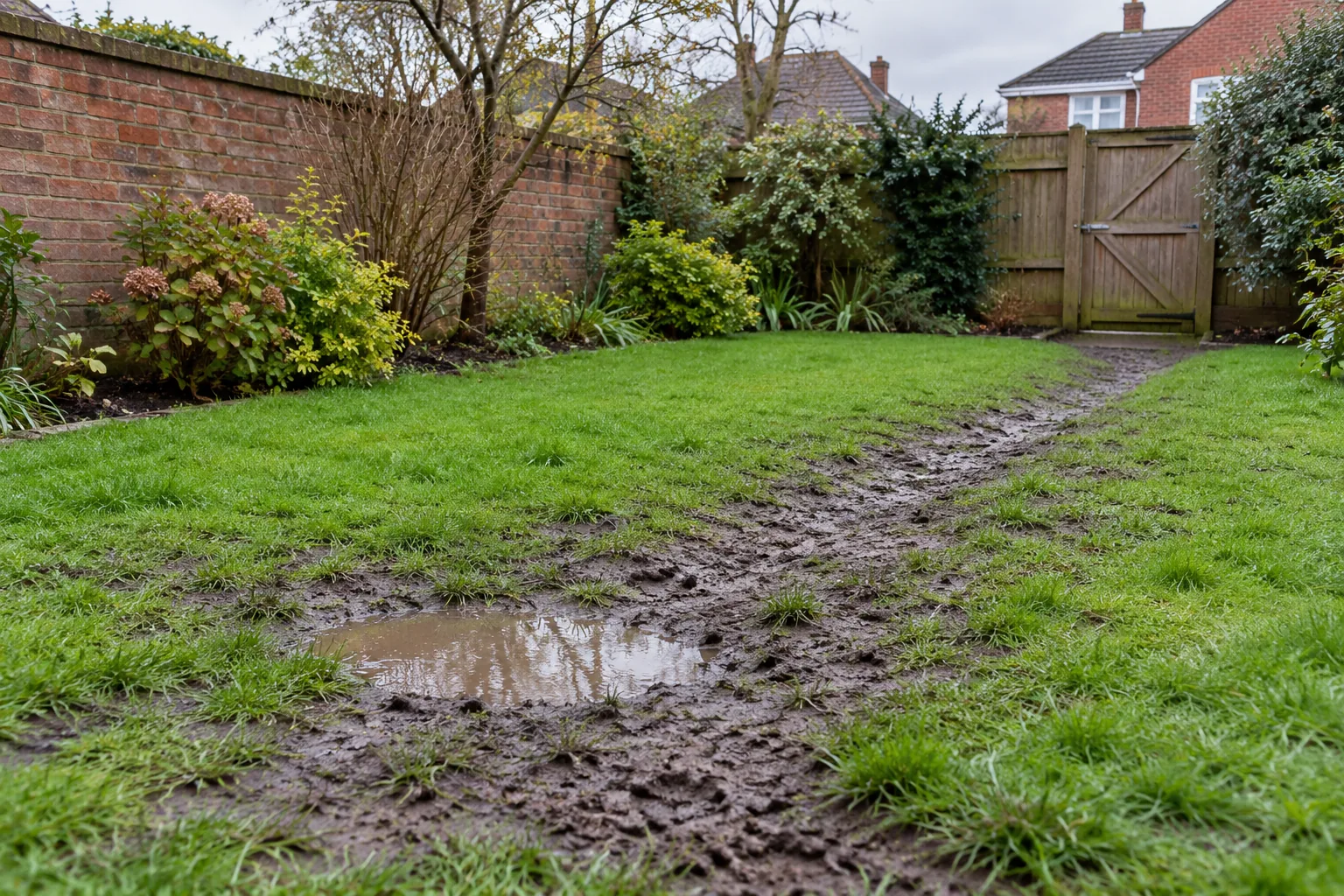
You can scatter seed over a bare patch, but if the same feet cross it every wet morning, the mud will return. A lawn that turns soft after rain may be suffering from heavy use, compacted soil, slow drainage, shade, or a combination. The right repair depends on which of those is actually happening.
Start by watching the lawn rather than working on it. Where does water sit? How long does it remain after rain stops? Does the mud follow the route to the shed, or spread across the lowest part of the plot? Is the grass thin only beneath a tree or fence? These observations cost nothing and can prevent an ill-timed attempt to dig, aerate or reseed saturated ground.
The RHS guide to waterlogged lawns describes compaction and heavy soil as common causes, and warns that walking on waterlogged turf can make the surface worse. Its advice is a useful basis for deciding when to intervene. A brief puddle after a hard shower is different from standing water that lingers for days.
Read the pattern left by the rain
Take two photographs from the same position: one during or just after rain, another the following day. Mark the wet areas and the routes people use. If water collects next to a patio or shed, look at the direction it travels from those surfaces. If it sits in a hollow in the lawn, notice whether the surrounding ground is also wet. If a narrow strip is muddy while the rest is firm, foot traffic or shade may be the stronger clue.
Check more than one storm before deciding. A prolonged spell can saturate almost any garden, while the first shower after a dry period may reveal a different pattern. Ask whether downpipes, overflowing water butts or hard surfaces are sending water onto the grass. Do not divert water towards a neighbour's property or a building as an improvised fix.
Try to distinguish standing water from soft soil. Turf may feel spongey even when no puddle is visible. Press a finger into an inconspicuous spot to judge whether the top few centimetres are sticky and saturated. Resist walking repeated test routes across the whole lawn. You are collecting evidence, not conducting a stress test.
Traffic can create a mud path without a drainage fault
A short lawn often doubles as a corridor. The straight line to the bin store, washing line or gate receives many more steps than the rest of the grass. In wet weather, that pressure can wear leaves away and compress the surface. A narrow muddy ribbon surrounded by reasonable turf points towards use as much as water.
Keep people and pets off the soft strip where practical until it recovers. An established path or a few suitable stepping stones may be more durable if the route cannot change. The RHS October lawn advice suggests stepping stones through a lawn that is regularly crossed in wet weather to reduce damage and muddy patches. Plan the route so it works for ordinary use, including bins or a wheelbarrow, rather than adding isolated stones that nobody naturally follows.
Do not cover a muddy grass route with a thin scattering of gravel and expect a lasting surface. Without suitable groundwork it can mix with soil, create an awkward mowing edge and fail to solve the access problem. If a proper route is needed, treat it as a small garden design decision: levels, edges, drainage and usable width all matter.
Compaction is common, but wait for the right conditions
Soil under a regularly used lawn can lose air spaces. Water then moves through it less readily, roots have poorer conditions, and the surface becomes easier to damage. Building work or heavy machinery can compact a whole area, but ordinary repeated footfall can affect a smaller one. Compaction is plausible when the affected strip aligns with use and when water sits on the surface despite no obvious inflow.
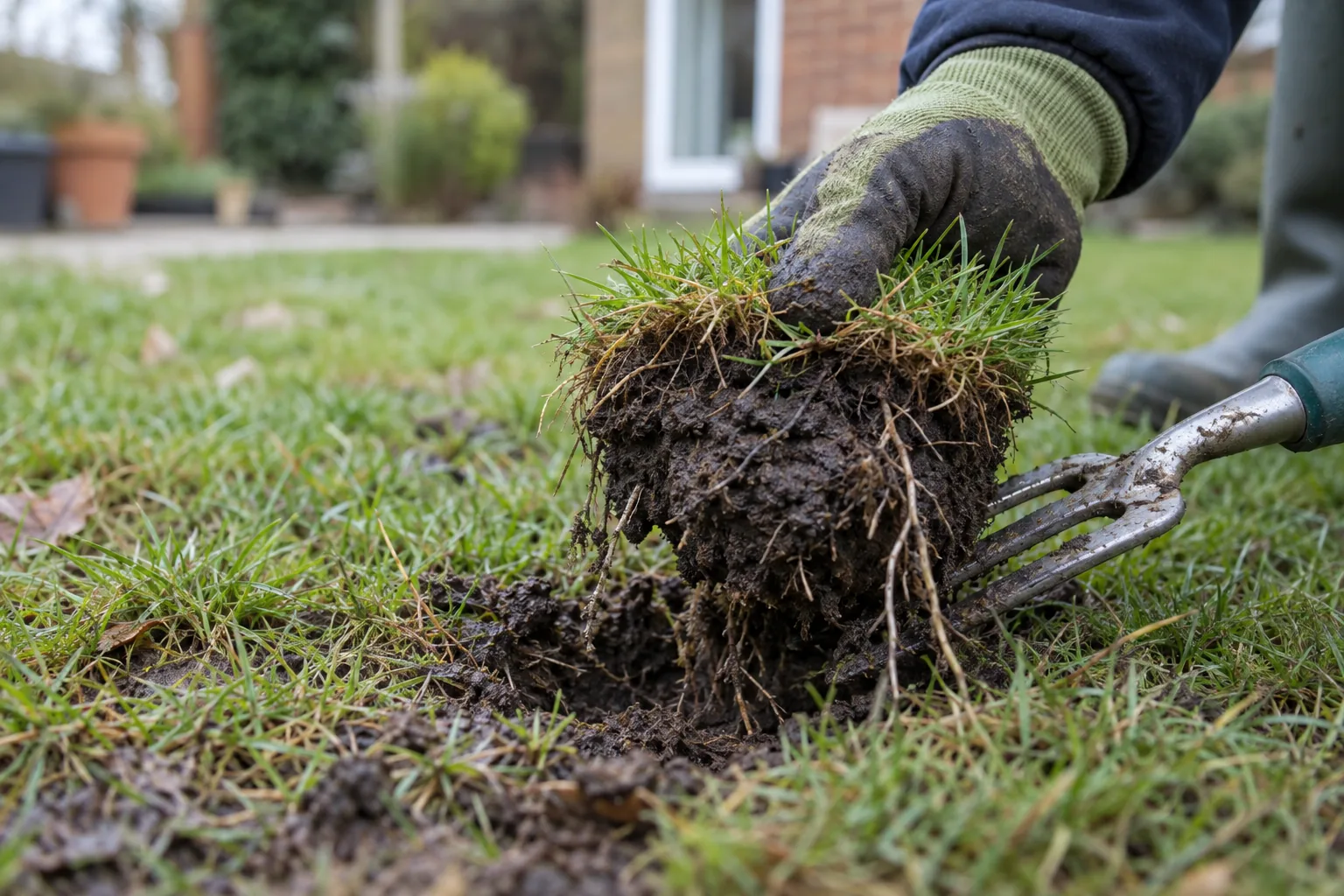
Aerating can help compacted turf, but timing is crucial. The RHS recommends waiting until standing water has drained before spiking or hollow-tine aerating a waterlogged lawn. Pushing a fork into a flooded, glue-like surface and then walking repeatedly on it can make a mess rather than repair it. If the soil remains saturated, leave the work for a suitable interval.
When conditions improve, decide whether a garden fork is enough for a small patch or whether a hollow-tine tool is warranted. Work carefully around buried services, irrigation or shallow roots. Do not assume every wet lawn needs the same depth or frequency of treatment. Aeration addresses compaction; it cannot magically give water an exit where the whole site lacks one.
Shade can keep a patch thin and slow to dry
Grass beneath a tree, beside a tall fence or between buildings may receive little light. It can struggle to fill worn gaps and may dry more slowly after rain. Shade alone does not explain every puddle, but it often combines with traffic: the only walkway is also the darkest strip. The result looks like a drainage problem even when use and poor grass growth are central.
Map the shade in more than one season if possible. A deciduous tree changes the light over the year; a wall does not. Avoid recommending severe tree pruning simply to rescue turf. Trees and their roots deserve consideration in their own right, and pruning may be regulated or harmful if done indiscriminately. A different route, a suitable surface or planting that tolerates the conditions may be more realistic than repeatedly reseeding grass in deep shade.
The RHS guidance on lawns in shade offers management options and recognises that turf close to trees can be problematic. Even a more shade-tolerant seed mix cannot withstand unlimited foot traffic and waterlogging. Fix the pattern of use and the wetness before buying a new seed product.
Repeated standing water calls for a broader assessment
If much of the lawn becomes a shallow pond after ordinary rain, look beyond the bare patch. Soil type, compaction, poor preparation before turf was laid and the levels of surrounding surfaces can all matter. A hollow can trap water locally. Hard paving may direct more runoff to the lawn than it can absorb. A neighbouring slope may add water from outside your garden. No photograph alone proves the cause.
The RHS says drainage systems may be worth considering where water repeatedly stands, provided there is a suitable place for excess water to go. That proviso is central. A channel with no lawful, workable outlet can move the problem without solving it. More substantial changes should begin with a site assessment, not a promise that a few holes or a trench will cure every wet patch.
Keep a record of how long water remains, its depth and any effect on buildings or access. If water enters or threatens a building, seek appropriate professional advice promptly. A gardening article can help you describe the symptom, but persistent flooding or drainage design requires site-specific judgement.
Why reseeding too soon often disappoints
Grass seed needs a prepared surface and suitable growing conditions. On a muddy route, it may be washed away, buried too deeply by traffic, or worn out as soon as the first shoots emerge. Turf can also fail if laid over unresolved saturated or compacted ground. Repair the cause first, then choose the repair method and season.
For now, protect the area where possible and lift any dense leaf layer that blocks the remaining grass. Let the ground become firm enough to work without leaving deep footprints. If a brief dry spell arrives, do not rush into a heavy mowing or cultivation session before checking the soil. Our guide to how often to mow a UK lawn explains why growth and ground conditions should guide the visit rather than a fixed weekly appointment.
When a repair window arrives, prepare the patch according to its cause. A small worn area may need soil preparation and seed, plus a period of protection from traffic. A larger area of compacted lawn may benefit from aeration before patch repair. A chronically wet section may require a change in access or drainage plan. A shaded corner may be better planted or surfaced than repeatedly forced into turf.
What to ask for if you need help
Give a clear description rather than saying only “the lawn is muddy”. Note the affected area, whether water stands, how long it remains, who crosses it and what is uphill or paved nearby. Add photographs from different days. Explain whether you want the lawn kept, would accept a path, or are considering a broader change to the garden. Those details make an assessment more useful.
For grass maintenance and a realistic recovery plan, lawn care may be the right starting point. If the pattern suggests a new route, changed levels or a redesigned wet corner, discuss it as a garden design problem. Neither service should be treated as a guaranteed drainage cure without seeing the site.
Until then, the best immediate action may be restraint: keep off the softest ground, clear leaves from surviving grass, and watch where the next rain goes. A lawn often tells you what is wrong through its pattern. Repairing that pattern gives the next seed or turf a fairer chance than treating mud as a purely cosmetic defect.