
Six practical ways to make your garden more inviting
A few well-placed changes can make a garden easier to enjoy. Before buying furniture or ornaments, look at where you sit, how you move through the space and which parts are difficult to maintain.
Advice reviewed on 16 October 2026.
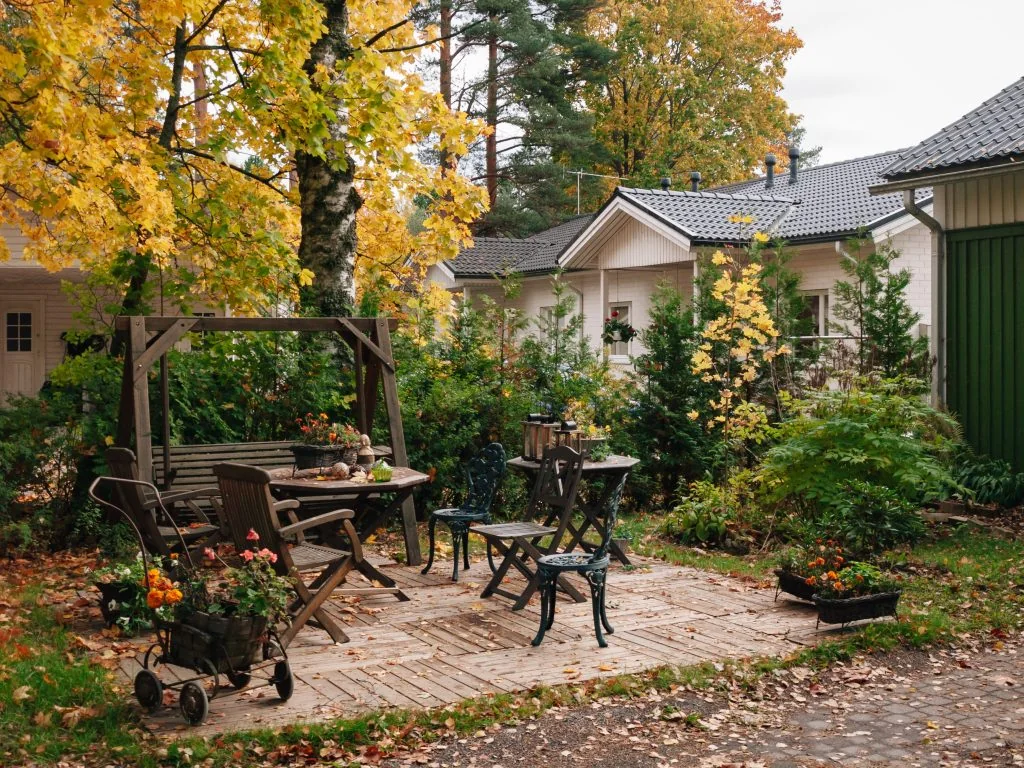
Choose seating that fits everyday use
Measure the space with chairs pulled out, not just the table folded away. Keep enough room for the route to a gate, bin store or shed. Try sitting in the intended position at different times so that shade, glare and shelter are part of the decision.
Choose outdoor furniture you can store or maintain realistically. Heavy pieces need a suitable stable surface and a practical delivery route. A compact bench can be a better fit than a dining set that leaves no room to pass.
Plan lighting around paths and places to sit
Start with the route used after dark and any steps or changes of level. Avoid adding bright fittings simply to illuminate every bed. Consider neighbours, wildlife and the direction of the light as well as its appearance from indoors.
Use equipment suitable for the location and arrange electrical work with an appropriate professional where required. Keep cables out of walking routes and do not treat a weather-resistant label as permission for any installation. Include lighting routes early in a garden layout discussion so completed surfaces do not need lifting afterwards.
Treat water features as an ongoing commitment
A small water feature can add sound and interest, but it needs a stable position, access for cleaning and the correct water and power arrangements. Consider children, pets and wildlife before choosing a pond or open reservoir.
Ask what maintenance the actual product requires and where leaves or other debris will collect. A garden does not need a water feature to feel finished. If care or safe access would be difficult, planting or a different focal point may be the more practical choice.
Make paths comfortable before making them decorative
Walk the usual route with a bag, watering can or other item you regularly carry. Notice awkward turns, uneven surfaces and planting that catches clothing. A path should connect the places you actually use, rather than being designed only for the view from a window.
Identify loose slabs or damaged joints before cleaning or covering them. Cleaning suitable paving can improve its appearance, but it does not repair an unstable surface. Material, finish and drainage should be considered before choosing a cleaning method or a new finish.
Use containers and height without blocking access
Group pots where they can be reached for watering and where their mature plants will have enough room. A hanging basket needs an appropriate secure support and a realistic watering routine. Do not place it where people will brush past it or have to lean across a drop to maintain it.
Check light, moisture and root space before choosing plants. An attractive display in a photograph may not suit a shaded courtyard or an exposed doorway. Leave room to weed and inspect the area behind containers rather than packing every gap.
Give a focal point some breathing room
A sculpture, large pot or other object works best when its position has a purpose. View it from the house and from the seating area before fixing it in place. Check stability, weather resistance and the route used to bring it into the garden.
Leave enough surrounding space for planting to grow and for maintenance. Repeating a material or colour can connect the object to the rest of the garden without filling every empty area. Keep any work on trees or permanent structures separate from the choice of ornament.
Finish with a care routine
After making changes, decide who will water, clear fallen leaves and keep the routes open. Regular garden maintenance can help with an agreed list, while pots and newly planted beds may need attention between appointments.
Make one or two changes first and live with them before buying everything on a wish list. You will learn whether the seating is useful, the route remains comfortable and the planting is manageable. That is a more reliable guide to the next purchase than trying to reproduce an entire photograph at once.